Commercial apiaries need an integrated Varroa control program, not a single product. The required setup combines mite-monitoring equipment, screened bottom boards, removable drone-brood comb, and treatment tools suitable for organic acids or approved acaricides. Treatments should be applied according to the product label, rotated by active ingredient, and verified through regular mite counts to prevent resistance and protect bees, honey, and brood.
The most effective commercial approach is layered control: modify the hive to support physical mite removal, apply targeted treatments at the correct time, and monitor results closely enough to change strategy before colonies are damaged.
Build the Hive for Varroa Management
Install Screened Bottom Boards
A wire-screen bottom board allows fallen mites to drop away from the adult bee population instead of returning to the colony. It also provides a practical surface for observing natural mite fall after treatment.
Screened floors are a supporting control measure rather than a complete solution. They should be combined with monitoring and treatments when mite levels exceed the operation's intervention threshold.
Use Removable Drone-Brood Comb
Varroa mites preferentially reproduce in drone brood cells, which have a longer capped development period than worker brood. Commercial apiaries can exploit this behavior by installing specialized drone-comb frames.
Once the drone brood is capped and sufficiently infested, the frame is removed and destroyed or otherwise managed according to the apiary's approved protocol. The frame can then be replaced so the process is repeated systematically.
Maintain Replaceable Frames and Foundation
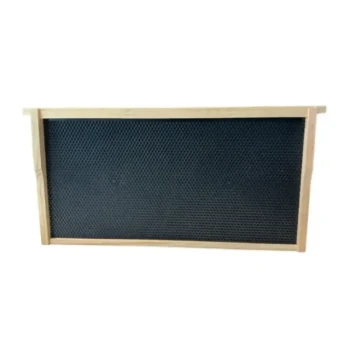
During intensive control programs, colonies may require clean replacement frames and foundation sheets, particularly when using brood interruption or shook-swarm methods. These materials help establish a controlled brood cycle and reduce the carryover of mites and contaminated comb.
Frame compatibility matters in commercial operations. Standardized dimensions and consistent supply are important because mismatched equipment slows field work and complicates inventory management.
Select Treatment Methods Carefully
Apply Formic Acid With Controlled Delivery
Formic acid is an organic treatment that can affect mites under capped brood, making it useful when mites are reproducing inside sealed cells. It is commonly delivered through an absorbent pad, tray, or a purpose-designed dispenser placed above or below the frames.
Application duration, concentration, temperature range, placement, and ventilation are safety-critical. The cited three-day cycle should not be treated as universal: commercial beekeepers must follow the approved product label and local regulations, because incorrect exposure can injure bees, damage brood, or cause queen loss.
Use Oxalic Acid During an Appropriate Brood Window
Oxalic acid is commonly applied as a dribble, spray, or vapor treatment, depending on the approved product and local practice. Its effectiveness is generally strongest when little or no capped brood is present, because mites protected beneath capped cells are less exposed.
A 3-4% oxalic acid syrup spray or dribble must be prepared and applied precisely. Operators should avoid saturating brood areas, use the required protective equipment, and follow the registered formulation and dosage rather than adapting a concentration from another product.
Consider Approved Synthetic Acaricides
Ready-to-use products containing active ingredients such as amitraz or fluvalinate may provide efficient treatment for large commercial operations. Their advantages include standardized dosing, simple deployment, and reduced preparation time.
They must be used only when registered for the intended crop, bee species, hive condition, and application method. Residue management is especially important when honey supers are present or honey is intended for regulated markets.
Evaluate Thermal Treatment Where Practical
Thermal treatment equipment uses controlled heat to exploit the greater heat sensitivity of Varroa mites compared with honey bees. It can reduce dependence on chemical pesticides, but it requires precise temperature control and equipment suitable for the hive design.
Thermal treatment is best viewed as a specialized option within an IPM program. It should be validated against local operating conditions and monitored for effects on brood, queens, and colony performance.
Add Monitoring and Application Equipment
Use Reliable Mite-Count Tools
Commercial apiaries need a repeatable method to measure infestation before and after treatment. Common monitoring workflows use alcohol washes, sugar rolls, or sticky boards, with the chosen method applied consistently across yards and colonies.
The purpose is not merely to confirm that mites are present. Monitoring identifies treatment failure, detects reinvasion between apiaries, and shows whether the selected intervention has reduced the population sufficiently.
Standardize Treatment Application
Organic acids and other miticides require consistent application tools, including dispensers, trays, absorbent substrates, protective equipment, and accurate measuring supplies. Standardization reduces variation between workers and helps prevent underdosing or excessive exposure.
For a distributor or commercial buyer, these consumables should be sourced as a coordinated product range. Treatment chemicals without compatible delivery equipment can create operational delays and inconsistent field results.
Plan for Safety and Residue Control
Workers handling formic acid, oxalic acid, or synthetic acaricides need appropriate protective equipment and clear application procedures. Storage, transport, ventilation, spill response, and disposal should be part of the procurement specification.
Honey and wax should also be managed with food-safety and residue requirements in mind. Treatment timing and product selection must account for honey supers, harvest schedules, and the rules of the destination market.
Rotate Treatments to Delay Resistance
Avoid Continuous Use of One Active Ingredient
Repeated reliance on the same synthetic miticide, such as fluvalinate, amitraz, or coumaphos, can select for resistant mite populations. A product that worked reliably in previous seasons may eventually produce inadequate control.
Rotation should be based on different modes of action, not merely different brands. Organic acids, thymol-based products, and approved synthetic formulations can contribute to a broader seasonal program when used legally and correctly.
Combine Chemical and Physical Controls
Drone-brood removal, screened floors, brood interruption, thermal treatment, and chemical applications address different parts of the mite life cycle. Combining them reduces the pressure placed on any single control method.
Physical controls do not eliminate the need for chemical treatment in heavily infested colonies. Their value is cumulative: they reduce mite reproduction and help lower the treatment burden over time.
Account for Brood and Climate
In mild climates where colonies maintain brood throughout much of the year, Varroa mites may reproduce continuously. This makes seasonal assumptions unreliable and increases the importance of frequent monitoring.
Treatment schedules should therefore be based on colony condition, brood status, mite counts, weather, and honey-flow timing rather than on a fixed calendar alone.
Understanding the Trade-offs
Hardware Does Not Replace Treatment
Screened bottom boards and drone comb are relatively low-residue tools, but they cannot reliably control a severe infestation by themselves. Their main benefit is to support a broader program and improve the operator's ability to remove or measure mites.
Organic Does Not Mean Risk-Free
Formic and oxalic acids are compatible with residue-conscious programs when properly used, but they can harm bees, brood, and queens if concentration, temperature, dose, or placement is wrong. “Organic” describes the treatment category; it does not remove the need for technical controls.
Synthetic Products Improve Efficiency but Increase Constraints
Ready-to-use acaricides can reduce labor and simplify deployment across thousands of colonies. However, resistance, residue restrictions, label limitations, and market requirements make continuous or indiscriminate use unsustainable.
Thermal Treatment Requires Capital and Process Control
Heat-based systems may reduce chemical exposure, but they require investment, operator training, and tight control of treatment conditions. Their economics depend on apiary scale, labor availability, equipment throughput, and local validation.
Reinvasion Can Defeat a Good Program
Mites can move between colonies, apiaries, and neighboring operations. Even a well-treated yard may be rapidly reinfested if surrounding colonies remain untreated, so commercial operators should compare mite levels across sites and coordinate control where possible.
Making the Right Choice for Your Goal
A practical commercial program should be built around compatible hardware, approved treatments, repeatable monitoring, and dependable replenishment.
- If your primary focus is low-residue honey production: Prioritize screened bottom boards, drone-brood comb, brood-window oxalic acid programs, and strict harvest-interval and residue controls.
- If your primary focus is rapid treatment across large apiaries: Use standardized ready-to-apply acaricides or approved organic-acid delivery systems supported by accurate application tools and trained crews.
- If your primary focus is resistance management: Rotate products with different modes of action and combine chemical treatments with drone-brood removal, brood interruption, or other physical controls.
- If your primary focus is reliable wholesale supply: Source hive hardware, treatment consumables, application equipment, protective gear, and replacement frames through a coordinated supplier with fast fulfillment and technical support.
- If your primary focus is long-term colony survival: Monitor mite levels routinely, verify treatment performance, and adjust the program for brood status, climate, reinvasion, and local regulations.
Effective Varroa control comes from a measured system that combines the right hive hardware, correctly applied treatments, and disciplined monitoring across every commercial yard.
Summary Table:
| Control Layer | Key Components | Purpose |
|---|---|---|
| Hive Modifications | Screened bottom boards, removable drone-brood comb, replacement frames | Facilitate physical mite removal and monitoring |
| Chemical Treatments | Formic acid, oxalic acid, synthetic acaricides | Target mites with different modes of action |
| Physical Methods | Thermal treatment, brood interruption | Non-chemical mite reduction |
| Monitoring & Application | Mite-count tools, standardized dispensers, protective gear | Measure infestation and ensure accurate application |
Ready to Enhance Your Varroa Control Program?
At HONESTBEE, we supply commercial apiaries and distributors with a comprehensive range of beekeeping equipment, from screened bottom boards and drone comb frames to organic acid dispensers and protective gear. Our one-stop sourcing, rapid delivery, and expert support help you maintain effective mite control while maximizing efficiency.
Contact us today to discuss your specific needs and benefit from our dedicated service and competitive wholesale pricing. Get in touch with our team →
Related Products
- HONESTBEE Professional Long Handled Hive Tool with Precision Cutting Blade
- Steel Round Disc Entrance Reducer for Flexzion Bee Hive Nuc Box Gate
- HONESTBEE Premium Italian Style Hive Tool with Hardwood Handle
- Professional Grade Foldable Beehive Handles
- Metal Bee Hive Stand Bee Box Stand for Beekeeping
People Also Ask
- Why are professional hive tools considered indispensable? Master Beekeeping Maintenance with Precision Leverage
- What is the role of professional hive tools in routine apiary maintenance? Expert Tips for Hive Health and Longevity
- What is a bee hive tool? Discover Why It’s the Most Essential Hand Tool for Every Beekeeper
- How do hive tools and queen rearing equipment facilitate the bee colony splitting process? Restore Your Apiary Faster
- Why are professional hive tools & observation equipment necessary for queen rearing evaluation? Master Your Quality