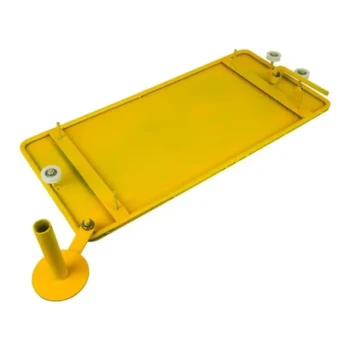
The primary role of a wire mesh screen is to function as a selective physical isolation barrier. It is installed specifically to allow small particles—such as dead Varroa mites and debris—to fall through to a collection tray while preventing honeybees from accessing that area. By mechanically separating the bees from the sampling surface, the screen prevents the colony from cleaning away the fallen mites, ensuring the resulting data is preserved for analysis.
The Integrity of Your Data Depends on Isolation Honeybees are instinctively hygienic and will actively remove dead mites and debris from the hive floor if accessible. The wire mesh ensures that mite mortality counts reflect the true drop rate—undisturbed by bee activity—allowing for a precise evaluation of treatment efficacy.
The Mechanics of Selective Isolation
Physical Separation of Colony and Sample
The wire mesh creates a necessary divide between the active living space of the colony and the monitoring equipment.
Its specific mesh size is engineered to be a selective filter. It is large enough to allow falling mites and fine debris to pass through freely but small enough to physically block adult bees from entering the collection zone.
Preventing Hygienic Interference
Honeybees possess a strong drive to keep their hive clean. Without a barrier, worker bees would access the bottom board and carry away dead mites as trash.
The mesh screen neutralizes this behavior in the monitoring zone. By preventing the bees from reaching the fallen mites, the screen ensures that the "sample" (the dead mites) remains exactly where it fell until the beekeeper performs a count.
Why This Matters for Data Accuracy
Validating Treatment Efficacy
When testing mite-killing treatments, you need to know exactly how many parasites have been eliminated.
If bees remove a portion of the fallen mites, your data will show a falsely low mortality rate. The mesh screen guarantees that the count on the collection tray represents the total drop, providing a mathematically accurate assessment of how well a treatment is working.
Standardization of Metrics
For statistical data to be useful, variables must be controlled.
By eliminating the variable of "bee cleaning intensity"—which differs from hive to hive—the mesh ensures that data collected is standardized. This allows for reliable comparisons between different colonies or different treatment methods.
Understanding the Trade-offs
Debris Obscuration
While the mesh allows mites to pass, it also allows wax cappings, pollen, and other hive trash to accumulate on the tray.
In high-activity hives, this debris can cover the fallen mites, making them difficult to count visually. This requires the beekeeper to carefully sift through the layout or use a magnifying aid to distinguish mites from general hive detritus.
Potential for Clogging
The mesh itself is not immune to hive activity.
Over time, bees may attempt to bridge gaps with propolis or large debris may bridge the mesh openings. If the screen becomes clogged, mites may get stuck before reaching the tray, which again compromises the accuracy of the drop count. Regular inspection of the screen clarity is essential.
Making the Right Choice for Your Goal
To maximize the utility of your monitoring setup, apply the following principles:
- If your primary focus is evaluating treatment efficacy: Ensure the mesh completely seals the collection area to prevent any bee access, as even a few bees can significantly skew mortality data.
- If your primary focus is routine population monitoring: Pair the wire mesh with a high-contrast white sticky board underneath to make distinguishing mites from the inevitable wax debris faster and more accurate.
A monitoring system is only as good as its ability to preserve the evidence; the wire mesh is the safeguard that makes accurate counting possible.
Summary Table:
| Feature | Function & Impact |
|---|---|
| Primary Role | Selective physical isolation barrier between bees and monitoring tray. |
| Mesh Size | Optimized to pass mites/debris while blocking honeybee access. |
| Data Integrity | Prevents bees from cleaning away dead mites, ensuring accurate counts. |
| Metric Standard | Eliminates 'cleaning intensity' variables for reliable colony comparison. |
| Maintenance | Requires regular inspection to prevent clogging from propolis or wax. |
Elevate Your Beekeeping Operations with HONESTBEE
At HONESTBEE, we specialize in empowering commercial apiaries and distributors with high-performance beekeeping solutions. Whether you need precision-engineered wire mesh screens for mite monitoring or industrial-grade hive-making and honey-filling machinery, our comprehensive wholesale portfolio has you covered.
From essential industry consumables to specialized hardware and honey-themed cultural merchandise, we provide the tools you need to scale your business and ensure colony health. Contact us today to discuss your bulk equipment needs and discover how our expertise can streamline your production.
References
- Ziyad Abdul Qadir, Jun Li. Effectiveness of Different Soft Acaricides against Honey Bee Ectoparasitic Mite Varroa destructor (Acari: Varroidae). DOI: 10.3390/insects12111032
This article is also based on technical information from HonestBee Knowledge Base .
Related Products
- Langstroth Screen Bottom Board for Beekeeping Wholesale
- Professional Square Folding Wire Mesh Beekeeping Veil
- HONESTBEE Adjustable Voltage Wire Embedder with Digital Display
- HONESTBEE Professional Frame Wiring Board and Jig
- Varroa Easy Check Mite Tester Kit Counter Alcohol Wash Jar
People Also Ask
- Why is the combination of a screen bottom board and a sticky trap board essential for monitoring Varroa mite? Guide
- What role do screen bottom boards and monitoring inserts play in assessing Varroa mite mortality and maintaining hive hygiene in Langstroth hives?
- What is the primary function of a standard screen bottom board when assessing honeybee grooming behavior? - Key Mite Data
- What is the primary function of a screen bottom board? Achieve Accurate Varroa Mite Assessment in Your Apiary
- Why might a screen bottom board be less effective for pest control? Understanding the 'Mixed Sunlight' Complication