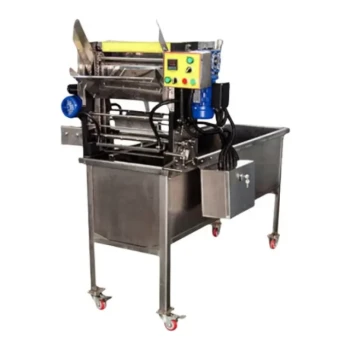
Automated honey processing and filling systems function as the central mechanism for quality assurance and standardization in the production of high-value monofloral honey. These machines execute a synchronized sequence of filtration, precise temperature regulation, and volumetric filling to package raw honey while strictly maintaining its distinct flavor profiles and physicochemical integrity.
By automating filtration, dehydration, and packaging within a closed, temperature-controlled environment, these systems preserve the delicate properties of monofloral honey while ensuring the consistency required for high-end global markets.
Preserving Integrity Through Precision Processing
The primary challenge in handling monofloral honey is maintaining its unique biological and flavor characteristics while preparing it for sale. Automated systems address this by stabilizing the product environment.
Precise Temperature Regulation
High-value honey is sensitive to heat, which can degrade its enzymes and volatile aroma compounds. Automated machines utilize precise temperature control systems during processing.
This ensures the honey remains fluid enough for filtration and filling without exceeding thermal limits that would damage its physicochemical properties or nutritional value.
Comprehensive Hygiene Control
To meet food safety standards, modern equipment operates as a closed environment. This typically involves fully enclosed stainless steel piping systems.
By preventing the honey from contacting open air, these machines eliminate the risk of secondary contamination and significantly reduce oxidation, preserving the honey's organic status.
Standardization of Raw Material
Before filling, the equipment integrates filtering, dehydration, and refining processes.
This allows producers to precisely control moisture levels and remove physical impurities. The result is a standardized product with an extended shelf life, essential for modern food processing logistics.
Enhancing Commercial Value
Beyond preservation, these machines serve as the bridge between bulk agricultural production and the retail consumer market.
High-Precision Volumetric Filling
Using servo-driven or pneumatic control systems, industrial fillers utilize high-precision metering pumps to dispense exact quantities of honey.
This accuracy is critical for reducing material waste of expensive monofloral varieties. It ensures every unit meets strict weight regulations required for commercial distribution.
Transitioning to Differentiated Retail
Automated lines enable the shift from bulk wholesale to retail-ready packaging.
They incorporate sealing and labeling capabilities that allow producers to brand their products effectively. This is necessary for meeting certification requirements (such as organic standards) and entering high-premium consumer markets.
Understanding the Trade-offs
While automation adds value, it introduces specific operational constraints that producers must manage.
The Balance of Filtration
While filtration is necessary for visual clarity and shelf stability, over-processing can be detrimental to high-end honey.
If filtration is too aggressive, it may remove the specific pollen grains that identify the honey as "monofloral," potentially lowering its market value.
Temperature vs. Viscosity
Automated fillers rely on consistent viscosity for speed and accuracy.
Operators must find the delicate balance where the honey is warm enough to flow through metering pumps efficiently, but cool enough to maintain its raw, enzymatic integrity.
Making the Right Choice for Your Goal
Selecting the right automation level depends on where you want to position your product in the market.
- If your primary focus is preserving artisanal quality: Prioritize machines with advanced temperature safeguards and closed-loop piping to prevent oxidation and thermal damage.
- If your primary focus is retail scalability: Focus on equipment with high-speed servo-driven metering and integrated labeling systems to maximize throughput and shelf appeal.
Automation is not just about speed; it is the tool that secures the consistency required to turn a raw agricultural product into a premium global commodity.
Summary Table:
| Feature | Function in Production Chain | Key Benefit for Monofloral Honey |
|---|---|---|
| Precise Temperature Control | Regulates heat during filtration/filling | Preserves heat-sensitive enzymes and volatile aromas |
| Closed-Loop Processing | Prevents exposure to air and contaminants | Eliminates oxidation and maintains organic integrity |
| Dehydration & Filtration | Standardizes moisture and removes impurities | Extends shelf life while ensuring visual clarity |
| Servo-Driven Metering | High-precision volumetric filling | Minimizes waste of expensive, high-value product |
| Integrated Packaging | Sealing and retail-ready labeling | Enables transition from bulk to premium retail markets |
Elevate Your Honey Production with HONESTBEE
Are you ready to transform your raw monofloral harvest into a premium global commodity? HONESTBEE specializes in empowering commercial apiaries and distributors with the tools needed for success. From high-precision honey-filling machines to industrial hive-making equipment, our comprehensive wholesale portfolio is designed to maximize your efficiency and preserve your product's unique biological integrity.
Why partner with HONESTBEE?
- Precision Engineering: Maintain the delicate enzymatic profile of your honey with our advanced thermal regulation systems.
- Scalable Solutions: Transition seamlessly from bulk production to retail-ready branding with our integrated labeling and packaging machinery.
- Full-Spectrum Support: We supply everything from heavy machinery to essential industry consumables and cultural merchandise.
Contact HONESTBEE today to discuss how our specialized hardware can enhance your commercial apiary's value and market reach!
References
- Gabriela Byskov Petersen. 317 Applications for molecular breeding tools in honeybee populations.. DOI: 10.1093/jas/sky404.265
This article is also based on technical information from HonestBee Knowledge Base .
Related Products
- Fully Automatic Honey Filling Packaging Machine for Processing Line
- Automatic Honey Filling and Filtering Machine for Beekeeping Bottle Filling
- Precision Automated Packaging Turntable Honey Spoon Filling Sealing Packing Machine
- Precision Durable Efficient HONESTBEE Rotary Honey Filling Machine
- Automatic Single-Dose Snap & Squeeze Honey Sachets Packing Machine
People Also Ask
- Why are fully automatic honey filling and packaging lines essential? Boost Your Honey's Market Value and Quality
- What is a fully-automatic honey filler? Streamline Your Production with High-Precision Automation
- How do automated honey filling and packaging machines affect profitability? Boost Margins with HONESTBEE Technology
- How do automated honey filling and packaging machines contribute to the market value of honey products? Maximize Your ROI
- How do industrial-grade automated honey filling and packaging machines mitigate the risk of physical contamination?