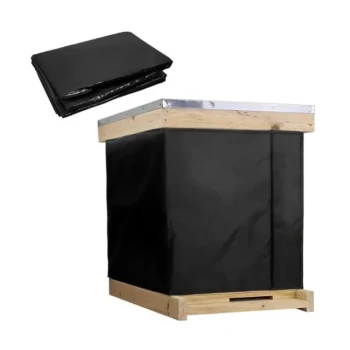
Current analysis indicates that hives made of synthetic materials or added insulation do not significantly alter the specific mortality rates of overwintering colonies.
While superior insulation changes the internal physics of the hive, it is not the primary variable that determines whether a colony survives the winter. The deciding factors are consistently the biological health of the colony and the management practices employed by the beekeeper.
The material of the hive is secondary to the condition of the bees inside it. While insulation improves energy efficiency, it cannot compensate for poor colony health, disease, or inadequate food stores.
The Hierarchy of Survival Factors
To understand why hive material has a negligible impact on mortality statistics, you must look at what actually kills bees in winter.
Biological Health is Paramount
The primary driver of overwintering success is the physiological status of the colony. A hive with high pest loads (such as Varroa mites) or viral infections will likely fail regardless of the enclosure's thermal properties.
The Role of Management
Successful overwintering relies on the beekeeper's preparation. This includes ensuring adequate food reserves, proper pest treatments, and verifying the queen's status. No amount of insulation can save a starving or queenless colony.
Where Insulation Actually Matters: Energy Efficiency
While the primary reference notes that survival rates are statistically similar, supplementary data suggests that insulated or synthetic hives do offer mechanical advantages. These benefits relate to efficiency rather than raw survival.
Conservation of Caloric Resources
Insulated hives significantly reduce the rate of heat loss from the cluster to the environment. This means the bees burn less "fuel" (honey or syrup) to maintain their survival temperature.
Improved Feed Conversion
Because the colony expends less energy on thermoregulation, the nutrients they consume can be redirected. Energy from internal feeders or stored honey can support brood rearing and royal jelly secretion rather than just generating heat.
Thermal Inertia and Stability
High-precision synthetic hives often feature tighter construction and better airtightness. This creates a stable microclimate with higher thermal inertia, meaning the internal temperature is less susceptible to rapid spikes or drops in external weather.
Understanding the Trade-offs
It is critical to distinguish between survival (living through the winter) and efficiency (how much resource was consumed to stay alive).
False Security
A common pitfall is relying on the hardware to do the work of the beekeeper. A "warm" hive can still starve if the bees cannot access food stores, or if internal feeders are not replenished.
The "Fuel" Factor
Insulation works like a thermos: it keeps heat in, but it does not generate heat. The bees generate the heat via metabolism. If the colony is too small or lacks carbohydrates to fuel that metabolism, the insulation becomes irrelevant.
Making the Right Choice for Your Goal
While the data suggests mortality rates are comparable, the choice of hive material still impacts your operation's efficiency.
- If your primary focus is increasing survival rates: Prioritize aggressive mite management, disease monitoring, and ensuring massive food reserves in late autumn.
- If your primary focus is resource efficiency: Utilize insulated or synthetic hives to lower honey consumption during winter and reduce the stress of thermoregulation on the cluster.
- If your primary focus is spring buildup: Insulated hives may allow colonies to expand brood rearing earlier in the season due to the more stable internal microclimate.
Ultimately, a healthy colony in a wooden box will outperform a sick colony in a high-tech synthetic hive every time.
Summary Table:
| Factor | Wooden Hives | Synthetic/Insulated Hives | Impact on Overwintering |
|---|---|---|---|
| Survival Rate | Standard | Comparable | Minimal (Health dependent) |
| Energy Efficiency | Lower | High (Conserves honey) | Significant resource savings |
| Thermal Stability | Moderate | High Thermal Inertia | Reduces temperature spikes |
| Resource Need | Higher | Lower | Affects caloric consumption |
| Early Spring Growth | Normal | Faster | High due to stable climate |
Maximize Your Colony Success with HONESTBEE
At HONESTBEE, we understand that whether you use traditional wood or advanced synthetic materials, your equipment must support the biological health of your bees. As a premier partner for commercial apiaries and distributors, we provide a comprehensive range of professional beekeeping tools, from high-precision hive-making machinery to industrial honey-filling equipment and essential consumables.
Our mission is to empower your operation with durable hardware and expert supplies that enhance efficiency and scale your business. Don't let equipment limitations hinder your growth—let us help you build a more resilient apiary today.
Ready to upgrade your wholesale supply? Contact HONESTBEE today and let's optimize your beekeeping operations together.
References
- Hannes Oberreiter, Robert Brodschneider. Austrian COLOSS Survey of Honey Bee Colony Winter Losses 2018/19 and Analysis of Hive Management Practices. DOI: 10.3390/d12030099
This article is also based on technical information from HonestBee Knowledge Base .
Related Products
- Professional Insulated Plastic Bee Hives
- Professional Insulated Winter Hive Wrap for Beekeeping
- Inner Beehive Cover for Beekeeping Bee Hive Inner Cover
- Stainless Steel Round Beehive Air Vents for Ventilation
- Durable Plastic Interlocking Hive Connector for Beekeeping
People Also Ask
- What are the advantages of plastic bee hives? Boost Efficiency & Durability for Your Apiary
- Are plastic bee hives any good? Unlock Durability & Efficiency for Your Apiary
- How do plastic bee hives compare to wooden hives in handling? Reduce Strain & Boost Efficiency
- Are plastic bee hives good? Durable, Low-Maintenance Hives for Modern Apiaries
- What are the disadvantages of plastic beehives? Key Operational and Environmental Risks Exposed