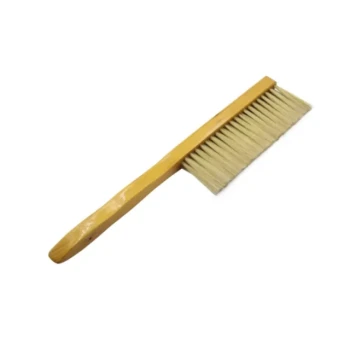
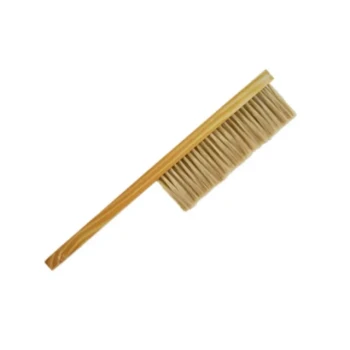
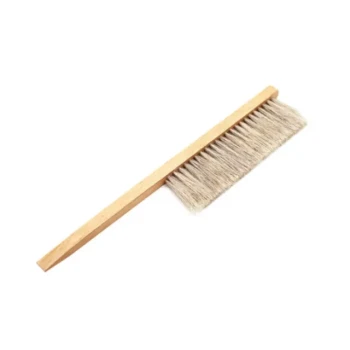
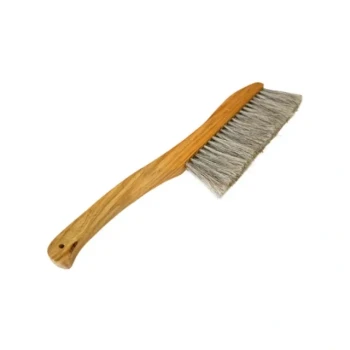
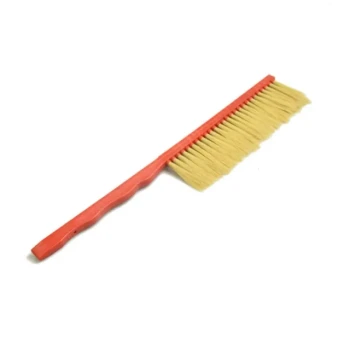
A bee brush is a specialized apiary tool featuring long, soft bristles designed to gently sweep honey bees off frames, hive walls, and other surfaces. Its primary purpose is to clear bees from a specific area during inspections or honey extraction without causing physical injury to the insects or inciting a defensive stress response from the colony.
Core Takeaway: The bee brush is the bridge between safety and visibility in beekeeping. While shaking a frame removes most bees, the brush provides the precision needed to gently remove the remaining bees—allowing for honey harvesting or detailed inspection—while maintaining a calm hive environment.
The Mechanics of Gentle Management
Soft Bristles for Safety
The defining characteristic of a bee brush is the pliability of its bristles, which are often made from soft materials like camel hair or specialized synthetics.
Unlike standard cleaning brushes, these are designed to roll over the bees rather than scrape them. This design prevents damage to the bees' delicate wings and legs, ensuring that moving them does not harm the workforce.
Precision When Shaking Fails
Experienced beekeepers often attempt to dislodge bees from a frame by giving it a sharp shake. However, this method rarely clears every single insect.
The bee brush is used as the secondary, precision tool to sweep away the stubborn bees that remain clinging to the honeycomb. This ensures the frame is completely clear without requiring violent motion that could damage the comb or nectar.
Primary Use Cases
Preparing for Honey Extraction
This is the most critical application of the tool. Before a frame of honey can be uncapped and placed into an extractor, it must be entirely free of bees.
Beekeepers use the brush to sweep every bee off the honeycomb capping. This ensures that no bees are accidentally transported out of the apiary and into the processing area.
Detailed Hive Inspections
During a routine check, a beekeeper may need to visually inspect the comb for eggs, larvae, or the queen.
If the frame is covered in a dense layer of nurse bees, the brush allows the keeper to gently clear a visual path. It is also used to move bees away from "crush zones," such as the rim of a feeder or the inner cover, before closing the hive.
Understanding the Trade-offs
The Risk of Agitation
While the tool is designed to be gentle, the act of brushing can still be intrusive if performed incorrectly.
If a beekeeper brushes too vigorously or uses a brush with stiff bristles, it can roll the bees too aggressively. This may trigger the release of alarm pheromones, causing the colony to become defensive despite the tool's intended safety.
Maintenance Requirements
Because the brush comes into direct contact with honey, wax, and propolis, the bristles can become sticky over time.
A dirty brush can clump bees rather than sweeping them, or potentially transfer pathogens between hives. Regular cleaning is required to ensure the soft bristles remain effective and safe for the bees.
Making the Right Choice for Your Goal
To use a bee brush effectively, match your technique to the task at hand:
- If your primary focus is Honey Extraction: Ensure you gently sweep all bees off the frame to prevent bringing them into your extraction room.
- If your primary focus is Hive Inspection: Use the brush sparingly to spot-clear small areas for visibility, rather than sweeping the entire frame.
The bee brush is an essential instrument for safe apiary management, allowing you to prioritize the physical safety of the bee while efficiently managing the hive.
Summary Table:
| Feature | Description | Primary Benefit |
|---|---|---|
| Bristle Material | Soft synthetic or natural hair (e.g., camel hair) | Prevents injury to wings and delicate legs |
| Main Function | Clearing bees from frames and hive walls | Enables clear visibility for inspections |
| Extraction Use | Removing stubborn bees from honeycombs | Prevents transporting bees to the honey room |
| Design Focus | Pliability and precision | Reduces colony stress and defensive behavior |
Elevate Your Apiary Efficiency with HONESTBEE
At HONESTBEE, we understand that professional beekeeping requires precision and reliability. Whether you are managing a large-scale commercial operation or distributing equipment, we provide a comprehensive wholesale range of high-quality tools—from gentle bee brushes and specialized hardware to advanced hive-making and honey-filling machinery.
Why partner with HONESTBEE?
- Full-Spectrum Supply: Access everything from essential industry consumables to honey-themed cultural merchandise.
- Commercial Scale: Tailored solutions specifically for commercial apiaries and global distributors.
- Quality Guarantee: Equipment designed to optimize honey production while prioritizing bee health.
Ready to scale your beekeeping business? Contact us today to explore our wholesale catalog and discover how our expertise can drive your success.
Related Products
- Wooden Bee Brush with Triple Row Artificial Fiber for Beekeeping
- Classic Wooden Bee Brush with Double-Row Boar Bristles
- Double Row Artificial Fiber Bee Brush for Beekeeping
- Wooden Bee Brush with Double-Row Horsehair Bristles
- Premium Triple-Row Horsehair Bee Brush
People Also Ask
- What is the specific function of a bee brush? Ensure Pure Harvests and Colony Welfare During Honey Extraction
- What are the key characteristics of the bristles on a bee brush? Master Gentle and Efficient Bee Removal
- What is the purpose of using a bee brush during the inspection of hive components? Safe & Precise Hive Management
- What problem does a bee brush solve? Protect Your Colony with Gentle Precision Tools
- Why is a bee brush necessary when extracting honeybee hive frames that contain larvae? Protect Your Brood and Colony