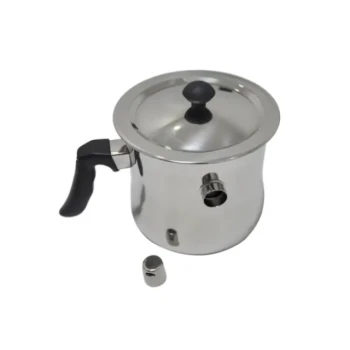
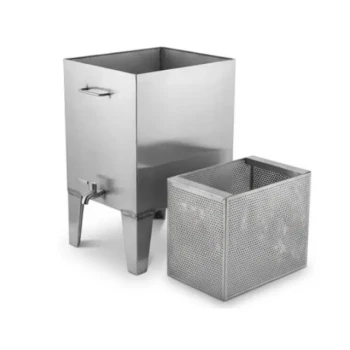
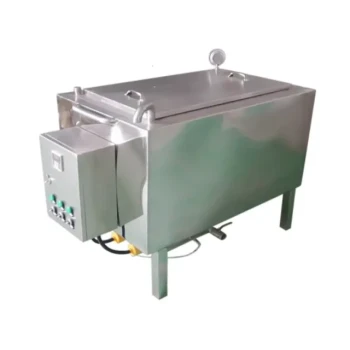
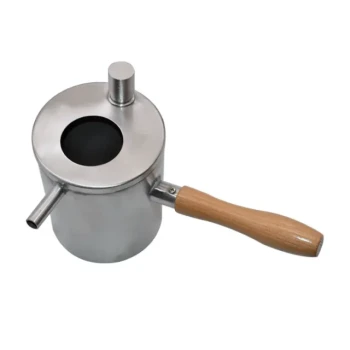
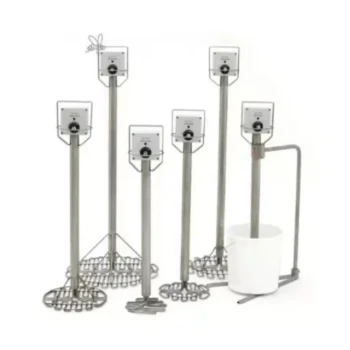
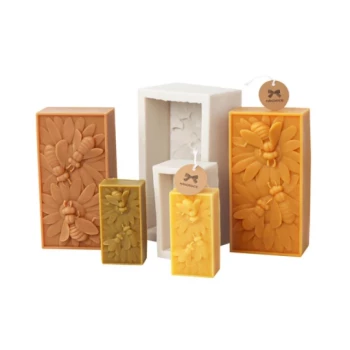
The primary advantage of a temperature control feature is the ability to prevent overheating, which ensures your beeswax retains its natural color and prevents discoloration. For optimal results, it is recommended to use a heat setting no greater than 80 degrees Celsius (approximately 176°F).
Core Takeaway Temperature precision is critical because the window between melting beeswax and damaging it is surprisingly narrow. By capping your heat source at 80°C, you ensure the wax liquefies completely while protecting its visual quality and natural properties.
Why Temperature Precision Matters
Preserving Visual Quality
The most immediate risk of uncontrolled heating is discoloration.
When beeswax is subjected to temperatures exceeding its stable range, it begins to darken.
This discoloration is irreversible and can ruin the aesthetic of candles, cosmetics, or crafts that rely on the wax's natural golden hue.
Protecting the Aroma
Beyond color, high temperatures degrade the wax's chemical structure.
Supplementary data indicates that exceeding safe temperatures causes the wax to lose its characteristic honey-like aroma.
Once this scent is burned off, the final product loses much of the sensory appeal that makes natural beeswax valuable.
Ensuring Safety
Beeswax is a fuel source, and temperature control is a vital safety mechanism.
While melting requires relatively low heat, the wax has a flashpoint of 400°F (204°C).
Precise control prevents the wax from ever approaching temperatures where it could become volatile or extremely flammable.
The Ideal Heating Range
The Melting Point
To work with beeswax, you only need to reach a modest temperature.
Beeswax naturally transitions from solid to liquid between 143°F and 151°F (61°C - 66°C).
You do not need to exceed this range significantly to achieve a workable consistency.
The "Danger Zone"
Damage to the wax begins to occur almost immediately after it melts if the heat continues to rise.
Discoloration and scent loss can begin as low as 170°F (77°C).
This is why the recommended cap of 80°C is crucial; it provides enough heat to maintain a liquid state without pushing the wax deep into the temperature range where degradation occurs.
Common Pitfalls to Avoid
Avoiding Direct Heat
Even with temperature control, applying heat directly to the wax can create "hot spots."
It is highly recommended to use a double boiler system (a smaller pan inside a larger pan of hot water).
This ensures the heat is distributed evenly, preventing localized overheating even if your temperature setting is correct.
The Trap of Impatience
A common mistake is turning the temperature dial up to "speed up" the melting process.
Beeswax should always be melted gently and slowly.
Rushing the process by exceeding the 80°C limit risks scorching the wax before the entire block has liquefied.
Making the Right Choice for Your Project
To ensure the best results for your specific application, follow these guidelines:
- If your primary focus is preservation: Keep the temperature between 65°C and 70°C, just above the melting point, to maximize scent retention and color purity.
- If your primary focus is efficiency: Set your control to the maximum recommended limit of 80°C, but stir continuously to ensure even melting without exceeding the safety threshold.
Mastering your temperature settings ensures your finished product looks as good as the raw material you started with.
Summary Table:
| Feature | Recommended Range | Why It Matters |
|---|---|---|
| Melting Point | 61°C - 66°C (143°F - 151°F) | Minimum temp required for liquefication. |
| Ideal Working Temp | 65°C - 75°C (149°F - 167°F) | Balances workable consistency with quality retention. |
| Maximum Safe Limit | 80°C (176°F) | Prevents irreversible discoloration and scent loss. |
| Flashpoint | 204°C (400°F) | Safety threshold where wax becomes volatile. |
Elevate Your Beekeeping Business with HONESTBEE
Precision matters whether you are a commercial apiary or a growing distributor. At HONESTBEE, we provide more than just tools—we deliver quality assurance through our comprehensive wholesale offering. From specialized hive-making and honey-filling machines to premium beekeeping equipment and industry consumables, we ensure you have the technology needed to maintain the integrity of your products.
Partner with us to scale your operations efficiently:
- High-End Machinery: Streamline production with our honey-themed hardware.
- Global Distribution: Reliable supply chains for all beekeeping tools and merchandise.
- Expert Support: Leverage our industry knowledge to optimize your workflow.
Ready to enhance your production quality? Contact us today to explore our full catalog!
Related Products
- Beeswax Melter for Candle Making Honey Bee Wax Melter
- Steam Beeswax Melter Wax Warmer for Wax Processing
- Electric Commercial Beeswax Melter for Factory Use
- Solar Beeswax Melter Easy Solar Wax Melter for Beeswax
- Professional Stainless Steel Wax Melter for Beekeeping and Crafts
People Also Ask
- What is the best way to melt beeswax? Safely Preserve Quality with Indirect Heat
- What is the best way to melt beeswax? Use a Solar Wax Melter for Simple, Pure Results
- What types of beeswax melters are available for beekeepers? Choose the Right One for Your Operation
- What safety precautions should be taken when melting beeswax? A Guide to Flammable Wax Handling
- What types of beeswax melters are available for different scales of beekeeping? Solar vs. Electric Melters Compared