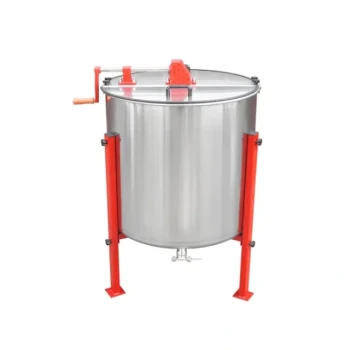
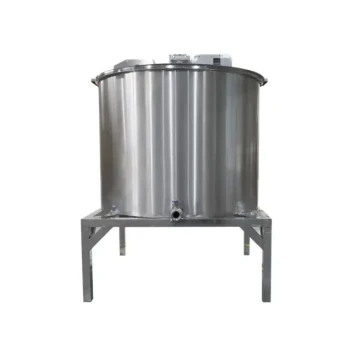
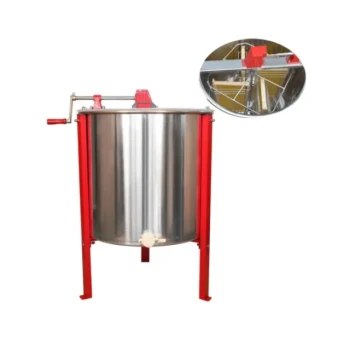
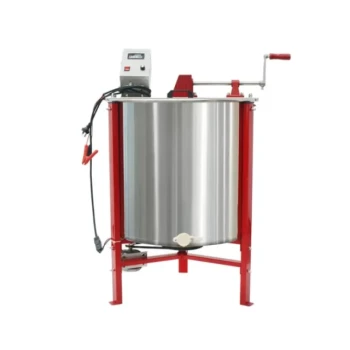
The biosecurity significance of using food-grade stainless steel lies in its ability to eliminate pathogen reservoirs and prevent chemical contamination. Its non-porous, ultra-smooth surface denies bacteria and spores the crevices they need to survive, while its chemical stability allows for aggressive disinfection without degrading the equipment. Furthermore, it resists the natural acidity of honey, preventing the leaching of metal ions that compromises biological safety and product quality.
Food-grade stainless steel is the industry standard not just for durability, but because it provides a "cleanable" surface that ensures the total removal of biological residues, effectively breaking the chain of disease transmission between hives and harvest batches.
The Mechanics of Pathogen Control
Eliminating Microscopic Hiding Spots
The primary biosecurity advantage of food-grade stainless steel is its surface smoothness. Unlike plastic or lower-grade metals, it lacks the microscopic pores and fissures where honey residues and wax debris accumulate.
By eliminating these physical crevices, you remove the "safe harbors" where pathogens can survive. This prevents dormant disease spores from lingering in your extractor or storage tanks to infect future harvests.
Facilitating Rigorous Disinfection
Bio-security is only as effective as your cleaning protocol. Stainless steel offers excellent chemical stability, meaning it can withstand the harsh cleaning agents and hot water required to kill pathogens.
Because the material does not degrade or react under these conditions, you can perform thorough chemical disinfection repeatedly. This ensures that every nook of the equipment is sterile before processing a new batch.
Preventing Cross-Contamination
Honey processing often involves extracting frames from multiple hives or apiaries. Using stainless steel prevents cross-contamination between these different biological sources.
Because the surface can be completely stripped of biological matter between batches, a disease present in one batch is less likely to be mechanically transferred to the next via the equipment.
Chemical Stability and Product Purity
Resisting Acidic Corrosion
Honey is naturally acidic. Standard metals react to this acidity, leading to corrosion and the release of metal ions into the food product.
Food-grade stainless steel is specifically engineered to resist this acidic attack. This preserves the physicochemical stability of the honey and ensures the equipment remains distinct from the product it holds.
Ensuring Sensory Purity
When equipment corrodes or degrades, it introduces foreign contaminants that alter the honey's flavor and safety profile. Stainless steel filtration systems and tanks maintain sensory purity.
By preventing the leaching of heavy metals, the equipment ensures that the final product remains biologically safe and retains its natural taste and color.
Understanding the Trade-offs
Vulnerability to Physical Abrasion
While stainless steel is durable, its biosecurity value is compromised if the surface is scratched. Using abrasive cleaning tools (like steel wool) creates deep scratches that mimic the crevices found in porous materials.
Once scratched, these areas become new reservoirs for pathogens and are difficult to disinfect effectively.
Initial Cost vs. Long-Term Safety
Stainless steel represents a significantly higher upfront cost compared to food-grade plastics. However, plastics degrade over time, developing scratches and retaining odors that compromise biosecurity.
The investment in steel is a trade-off for longevity and the ability to maintain a sterile environment over decades of use.
Making the Right Choice for Your Operation
For beekeepers and processors, the choice of material dictates the sanitation protocol.
- If your primary focus is Disease Management: Prioritize stainless steel for all contact surfaces to ensure you can use high-temperature and chemical sterilization methods effectively.
- If your primary focus is Market Quality: Rely on stainless steel storage and filtration to prevent acidic reactions that cause off-flavors or metal contamination in your bottled product.
In summary, food-grade stainless steel is the only material that successfully bridges the gap between mechanical durability and the rigorous hygiene standards required to maintain a pathogen-free honey processing line.
Summary Table:
| Biosecurity Feature | Benefit of Stainless Steel | Impact on Honey Quality |
|---|---|---|
| Surface Texture | Non-porous & ultra-smooth | Prevents pathogen reservoirs and bacterial growth |
| Chemical Stability | Resistant to acidic corrosion | Stops metal leaching and preserves sensory purity |
| Sanitation | Withstands high heat & harsh agents | Enables total sterilization between harvest batches |
| Durability | Long-term structural integrity | Reduces cross-contamination risks from material degradation |
Secure Your Apiary’s Success with HONESTBEE
At HONESTBEE, we understand that biosecurity is the backbone of a profitable honey business. As a premier partner for commercial apiaries and distributors, we provide high-performance, food-grade stainless steel solutions designed to meet the most rigorous industry standards.
From advanced honey-filling machines and high-capacity extractors to essential consumables and honey-themed cultural merchandise, our wholesale portfolio is built for durability and hygiene. Let us help you eliminate contamination risks and elevate your product quality with equipment that lasts.
Ready to upgrade your processing line?
Contact our expert team today to discuss our comprehensive range of beekeeping tools and machinery.
References
- Ayşe Ebru BORUM. BIOSECURITY AND GOOD BEEKEEPING PRACTICES IN BEEKEEPING. DOI: 10.31467/uluaricilik.1175874
This article is also based on technical information from HonestBee Knowledge Base .
Related Products
- Stainless Steel Beekeeping Honey Extractor Lid
- 10L Stainless Steel Honey Wax Press Extractor for Wax Cappings
- 10L Stainless Steel Electric Honey Press Machine
- Commercial 48-Frame Stainless Steel Honey Extractor
- Stainless Steel 3 Frame Manual Honey Extractor Spinner for Bee Honey Extraction
People Also Ask
- How do specialized organic beekeeping tools impact production efficiency? Maximize honey yields and ensure compliance.
- What are the advantages of selecting a stainless steel honey extractor over a plastic one? Pro Beekeeping Guide
- What is a stainless steel honey extractor? Boost Your Apiary's Efficiency with Professional Extraction
- What are the key features of a stainless steel honey extractor? Ensure Purity & Longevity for Your Honey
- What are the key features and benefits of a stainless steel honey extractor? Upgrade to Professional Purity