The primary function of adding honey supers is vertical expansion. These additional boxes provide the critical physical volume required for worker bees to store incoming nectar during a honey flow, preventing the rapid influx of resources from overwhelming the permanent hive structure.
By dynamically increasing the hive's internal volume, supers prevent nectar "backfilling" into the brood nest. This preserves the queen's egg-laying space and suppresses the colony's natural instinct to swarm due to overcrowding.
The Mechanics of Colony Management
Preventing Brood Nest Congestion
During a nectar flow, bees collect resources at a rate that can quickly saturate the hive. Without additional space, workers will store nectar in the brood nest cells meant for new larvae.
Adding supers diverts this storage upward into a dedicated "superstructure." This ensures that the brood nest remains available for the queen to continue laying eggs without interference.
Suppressing the Swarming Instinct
Swarming is the natural result of overcrowding; when a colony feels compressed, it prepares to split and migrate.
By timely adding supers, you effectively relieve the density pressure within the brood nest. This signals to the colony that there is ample room to grow, which inhibits the urge to swarm and keeps the population united.
Encouraging Resource Collection
The presence of available storage space directly influences worker bee behavior.
When bees have empty comb to fill, they are encouraged to collect more nectar. Conversely, a lack of space can cause the colony to throttle down production or focus on swarming rather than foraging.
Understanding the Trade-offs
The Importance of Timing
While the function of a super is to add space, the timing of this addition is a critical management variable.
The goal is "dynamic adjustment." You must provide space exactly when the honey flow peaks to capture the surplus.
Managing Colony Focus
If you fail to add supers, the colony shifts its energy from production to reproduction (swarming).
However, if you add too much space too early (though not explicitly detailed in the source, this is the logical inverse of "timely" addition), you risk spreading the colony too thin. The key is adding space to match the "nectar flow" or "honey flow" specifically.
Optimizing Your Hive Management
To effectively use honey supers, you must align your actions with your management goals:
- If your primary focus is Swarm Control: Prioritize adding supers early in the flow to relieve brood nest crowding and maintain a cohesive colony.
- If your primary focus is Maximum Yield: Ensure supers are added continuously to encourage workers to collect more nectar rather than slowing down due to full stores.
By strategically managing vertical space, you transform a congested, swarm-prone hive into a stable, high-production colony.
Summary Table:
| Function | Key Benefit | Impact on Colony |
|---|---|---|
| Vertical Expansion | Increases physical storage volume | Prevents nectar backfilling in brood cells |
| Swarm Suppression | Relieves internal hive density | Keeps the population united and productive |
| Resource Incentive | Provides empty comb space | Encourages workers to forage more nectar |
| Brood Protection | Keeps laying space clear | Ensures continuous queen productivity |
Maximize Your Harvest with HONESTBEE Beekeeping Solutions
Ready to scale your honey production? HONESTBEE specializes in supporting commercial apiaries and distributors with a comprehensive range of high-quality wholesale beekeeping equipment. From durable honey supers and specialized hive-making machinery to professional honey-filling machines, we provide the tools you need to manage your colony's expansion effectively.
Don't let a heavy honey flow catch you unprepared. Whether you need industrial hardware or essential consumables, our team is here to ensure your operation runs at peak efficiency.
Enhance your apiary's productivity today—contact us for a wholesale quote!
Related Products
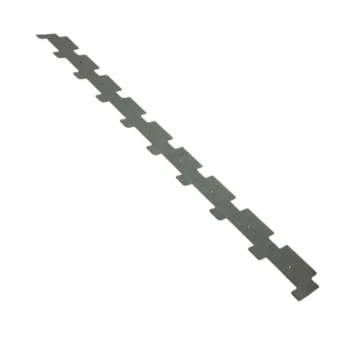
- Heavy Duty Castellated Iron Frame Spacer for Honey Supers
- Durable 16 Way Circular Bee Escape for Efficient Honey Harvesting
- Digital Honey Refractometer for Precision Measurement of Optimal Honey Quality
- Precision Honey Refractometer Instrument for Quality Assessment
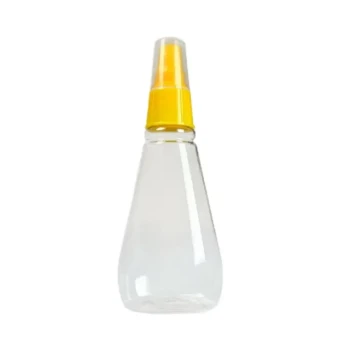
- Professional Plastic Honey Dipper for Easy Honey Drizzling
People Also Ask
- What are honey super frames and what foundation options are available? Choose the Best Support for Your Bees
- What are the reasons and drawbacks of using nine frames in a ten-frame honey super? Boost Extraction Speed Today
- What are honey super frames and how many are needed per box? A Beekeeper's Essential Guide
- What are honey super frames and their foundation options? Choose the Best Support for Your Hive's Honey Production
- Why might a beekeeper use fewer than the standard number of frames in a honey super? Boost Extraction Efficiency