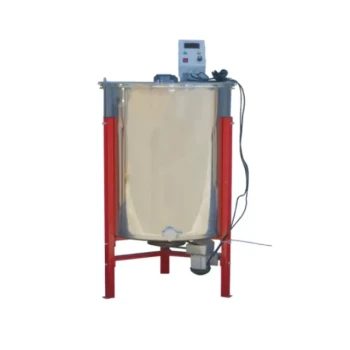
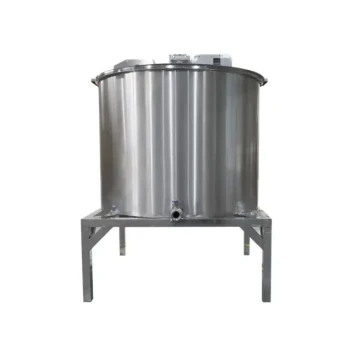
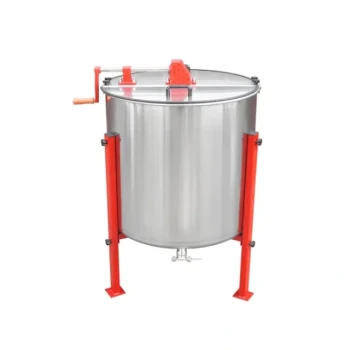
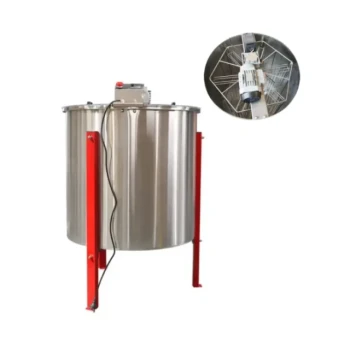
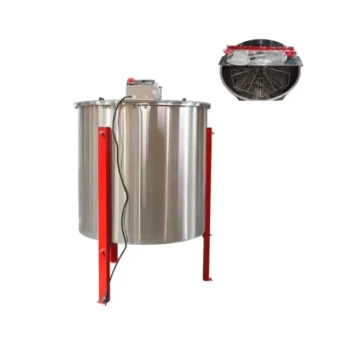
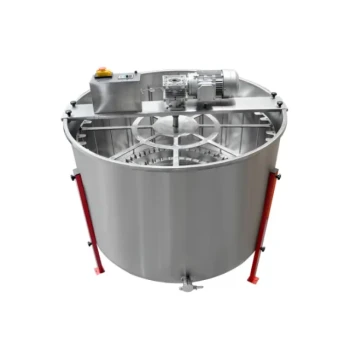
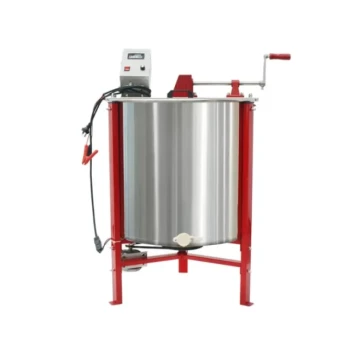
The primary function of an industrial centrifugal honey extractor in risk assessment is to generate a statistically representative sample. By utilizing high-speed rotation to separate liquid honey from honeycomb frames after the flowering period, this equipment isolates the exact substance that enters the consumer supply chain. This isolation allows for the precise quantification of pesticide residues that have migrated through the biological cycle—from soil to nectar-producing plants and finally into the honey.
The accuracy of pesticide risk assessment relies on testing the product as it will be consumed. Centrifugal extraction serves as the critical processing step that transforms raw hive material into a testable liquid sample without altering its chemical composition or introducing external contaminants.
The Role of Extraction in Data Accuracy
Mirroring Commercial Production
To assess risk accurately, researchers must analyze honey in the state it reaches the market. The industrial centrifugal extractor replicates the standard commercial production process. This ensures that the pesticide levels detected in the sample correlate directly to the potential exposure levels for the general population.
Tracking Bio-Accumulation
Pesticide residues often follow a migration path from contaminated soil to the plant, and finally to the nectar. Because the extractor isolates honey harvested specifically after the flowering period, it captures the cumulative result of this biological transfer. This allows toxicologists to link specific agricultural spraying windows directly to residue levels in the final product.
Ensuring Sample Homogeneity
Traditional methods, such as crushing or straining, often result in inconsistent samples containing wax or brood particles. Centrifugal extraction uses rotational force to spin honey out cleanly. This produces a homogeneous liquid sample, which is essential for consistent laboratory results when testing for parts-per-billion pesticide concentrations.
Technical Advantages for Chemical Analysis
Preservation of Chemical Integrity
Unlike extraction methods that rely on heating to lower viscosity, centrifugal extractors operate mechanically. This "cold" extraction prevents thermal degradation of both honey enzymes and potential pesticide compounds. Preserving the original chemical structure of residues is vital, as heat could break down certain pesticides, leading to false negatives in safety testing.
Exclusion of Biological Impurities
Crushing methods often mix larval fluids or high amounts of wax into the honey. Supplementary data indicates that centrifugal force extracts honey while leaving the comb structure and larvae intact. By preventing these biological impurities from entering the sample matrix, analysts avoid "noise" in the data that could obscure the detection of specific chemical residues.
Minimizing Environmental Exposure
Modern industrial extractors are designed to be efficient and often enclosed. This reduces the surface area exposed to airborne contaminants and moisture during the extraction process. This containment ensures that any contaminants found in the sample are derived from agricultural sourcing, rather than accidental environmental pollution in the processing facility.
Understanding the Trade-offs
Specificity to Liquid Matrices
While highly effective for analyzing hydrophilic (water-soluble) pesticides in honey, this method does not extract the wax comb. Lipophilic (fat-soluble) pesticides tend to accumulate in beeswax rather than the honey itself. Therefore, relying solely on centrifugal honey extraction may overlook contamination present in the structural components of the hive.
Equipment Maintenance and Cross-Contamination
Industrial extractors are large, complex pieces of machinery. If not cleaned thoroughly between batches from different hives or regions, the equipment itself can become a source of cross-contamination. Residues from a highly contaminated batch could theoretically transfer to a subsequent clean batch, skewing risk assessment data.
Making the Right Choice for Your Goal
When designing a sampling protocol for pesticide analysis, the extraction method dictates the validity of your results.
- If your primary focus is Consumer Safety: Use centrifugal extraction to obtain a liquid sample that perfectly mimics the final edible product found on store shelves.
- If your primary focus is Hive Health History: Acknowledge that this method isolates honey only; you must sample the wax separately to detect historic, fat-soluble pesticide accumulation.
The industrial centrifugal extractor is not merely a harvesting tool; it is a standardization device that ensures the biological reality of the hive is accurately reflected in the analytical data of the lab.
Summary Table:
| Feature | Role in Pesticide Risk Assessment | Benefit to Chemical Analysis |
|---|---|---|
| Rotational Force | Produces a homogeneous liquid sample | Ensures consistency in parts-per-billion (ppb) detection |
| Cold Extraction | Prevents thermal degradation of compounds | Preserves the original chemical structure of residues |
| Commercial Replication | Mimics standard production processes | Correlates lab data directly to consumer exposure levels |
| Impurity Exclusion | Leaves wax and larvae intact | Reduces data "noise" from biological contaminants |
| Enclosed Design | Minimizes exposure to airborne pollutants | Prevents external contamination during the extraction phase |
Elevate Your Beekeeping Operations with HONESTBEE
At HONESTBEE, we understand that precision and purity are the cornerstones of successful commercial beekeeping. Whether you are a large-scale commercial apiary or a global distributor, our comprehensive wholesale offerings provide the tools you need to excel.
Our Value to You:
- Advanced Machinery: From high-capacity industrial honey-filling machines to specialized hive-making equipment.
- Comprehensive Inventory: A full spectrum of beekeeping tools and essential industry consumables.
- Tailored Solutions: We cater specifically to the needs of professionals, ensuring your honey production meets the highest safety and quality standards.
Ready to scale your production with industry-leading equipment? Contact us today to discuss your wholesale needs and discover how HONESTBEE can support your growth.
References
- А. Lishchuk, N. Karachynska. Ecological risks of pesticide pollution of beekeeping products. DOI: 10.33730/2077-4893.2.2023.283697
This article is also based on technical information from HonestBee Knowledge Base .
Related Products
- electric honey extractor honey centrifuge 3 frame honey extractor stainless steel honey frame extractor
- HONESTBEE 72 Frame Industrial Electric Honey Extractor for Beekeeping
- Manual Hand Crank 4 Frame Honey Extractor Centrifuge for Beekeeping
- Professional 4 Frame Self Reversing Electric Honey Extractor for Beekeeping
- Commercial 48-Frame Stainless Steel Honey Extractor
People Also Ask
- What are the characteristics of electric honey extractors? Boost Your Apiary Efficiency with Automated Technology
- What are the disadvantages of using an electric honey extractor? Weighing Cost, Power, and Comb Safety
- What are the advantages of an electric honey extractor? Boost Efficiency and Scale Your Honey Production
- What are the technical advantages of electric honey extractors? Maximize Yield and Protect Your Bee Colony
- How does an electric honey extractor affect the quality of honey? Preserve Flavor & Purity with Precision Extraction