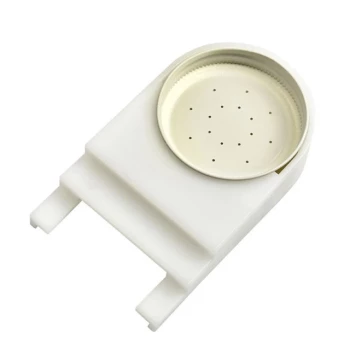
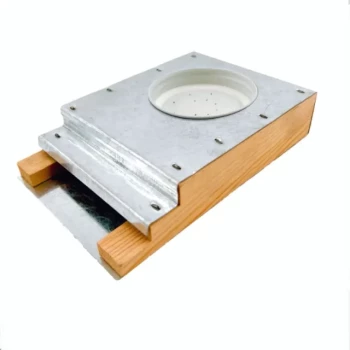
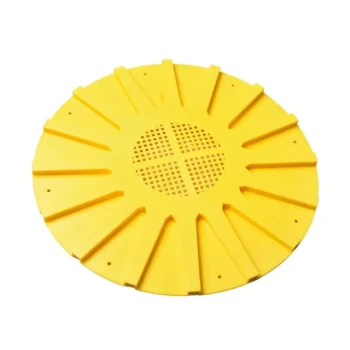
An internal feeder functions as a precise instrument for delivering standardized supplemental syrups, such as high-fructose corn syrup or invert sugar, directly to the colony. In the context of scientific studies, its primary role is to enable researchers to simulate and quantify how these non-natural sources dilute specific insect-derived lipid markers in the final honey product. This controlled delivery is the foundation for establishing accurate models used to detect honey adulteration.
Internal feeders provide a controlled environment to quantify the chemical impact of supplemental feeding on honey composition. By regulating the intake of syrups, researchers can establish necessary baselines for lipid markers, which is crucial for distinguishing authentic honey from adulterated products.
The Role in Honey Authenticity Research
Standardizing Nutrient Intake
In research settings, variables must be strictly controlled to yield valid data. An internal feeder allows scientists to provide a specific, measurable amount of carbohydrate feed.
By using standardized syrups like high-fructose corn syrup, researchers eliminate the variability found in natural nectar flow. This ensures that any changes in the honey's chemical profile are directly attributable to the supplemental feed.
Quantifying Marker Dilution
Authentic honey contains specific insect-derived lipid markers produced by the bees. When bees consume supplemental syrup, these markers are naturally diluted.
The internal feeder facilitates the precise measurement of this dilution effect. Researchers use this data to understand the ratio between natural bee secretions and the external syrup source.
Building Adulteration Models
The ultimate goal of using internal feeders in these studies is to create robust detection models. By understanding how legitimate supplemental feeding alters honey chemistry, scientists can better identify fraudulent practices.
This helps regulatory bodies distinguish between honey that has been incidentally impacted by necessary winter feeding and honey that has been intentionally adulterated for profit.
Operational Benefits in Hive Management
Preventing Resource Robbing
Beyond chemical analysis, the physical design of internal feeders supports study integrity by minimizing "robbing." Robbing occurs when bees from other colonies invade a hive to steal accessible sugar syrup.
Feeders such as division board frames, one-gallon pails, or small jars are secured inside the hive or under the outer cover. This protection ensures the test colony consumes the specific dosage intended for the study without outside interference.
Ensuring Colony Survival
While the study focus may be chemical, the biological function of the feeder is to replicate necessary management practices. Internal feeders provide critical energy reserves during periods of nectar scarcity or winter months.
This mimics real-world scenarios where beekeepers must intervene to prevent colony mortality due to starvation. Studying bees under these conditions ensures the research reflects actual industry practices.
Understanding the Trade-offs
The Dilution Conundrum
The primary trade-off in supplemental feeding is the inevitable alteration of the honey's profile. While necessary for survival or research, the introduction of syrup through internal feeders immediately compromises the "purity" of the honey relative to a 100% nectar source.
Complexity of Marker Analysis
Reliance on lipid markers requires precise baselines. If the internal feeding is not strictly controlled or recorded, the resulting dilution data can be misinterpreted.
Variations in feeder types (e.g., rapid uptake via division boards vs. slow-drip pails) can potentially alter how quickly the syrup is processed and stored, adding another variable to the analysis.
Implications for Research and Management
How to Apply This to Your Project
- If your primary focus is detecting adulteration: Utilize internal feeders to deliver precise, measured quantities of syrup to establish a clear curve of lipid marker dilution.
- If your primary focus is colony maintenance: Select internal feeders with large capacities (like hive-top or division board feeders) to ensure adequate winter reserves while protecting against robbing.
Understanding the specific chemical impact of your feeding method is the key to balancing colony health with product integrity.
Summary Table:
| Key Function | Scientific Contribution | Practical Benefit |
|---|---|---|
| Standardization | Eliminates natural nectar variability in datasets | Ensures uniform nutrient intake across colonies |
| Marker Quantification | Measures dilution of insect-derived lipid markers | Establishes baselines for detecting adulteration |
| Controlled Delivery | Facilitates precise dosage for chemical modeling | Prevents resource robbing by neighboring hives |
| Survival Replication | Simulates commercial hive management practices | Maintains colony health during winter or dearth |
Elevate Your Beekeeping Operations with HONESTBEE
At HONESTBEE, we specialize in supporting commercial apiaries and distributors with a comprehensive range of professional-grade beekeeping solutions. Whether you are conducting scientific research or scaling production, our wholesale portfolio offers everything from essential consumables and tools to advanced specialized hardware like hive-making and honey-filling machines.
Why choose HONESTBEE?
- Comprehensive Supply: Access the full spectrum of beekeeping machinery and equipment.
- Commercial Expertise: Tailored offerings designed for large-scale operations and distributors.
- Quality & Reliability: Tools built to ensure colony health and product integrity.
Enhance your efficiency and research accuracy with a partner who understands the industry. Contact us today to explore our wholesale offerings!
References
- Elisabetta Schievano, Marco Tessari. Floral origin modulates the content of a lipid marker in Apis mellifera honey. DOI: 10.1016/j.foodchem.2021.130050
This article is also based on technical information from HonestBee Knowledge Base .
Related Products
- Professional In-Hive Bee Feeder HONESTBEE Frame for Beekeeping
- HONESTBEE Round Hive Top Bee Feeder for Syrup
- HONESTBEE Entrance Bee Feeder Professional Hive Nutrition Solution for Beekeeping
- HONESTBEE Professional Entrance Bee Feeder Hive Nutrition Solution
- HONESTBEE Entrance Bee Feeder Efficient Hive Front Liquid Feeding Solution for Beekeeping
People Also Ask
- When should beekeepers stop feeding their bees? Let Your Bees Tell You
- Why is the use of a beekeeping feeder for syrup supplementation important? Boost Colony Growth and Survival
- What are the common types of internal and external feeders used in beekeeping? Choose the Right Feeder for Your Hive
- What is a feeder in the context of beekeeping? Optimize Your Hive Nutrition and Growth
- How do specialized feeders contribute to effective artificial feeding? Scientific Apiary Management & Colony Health