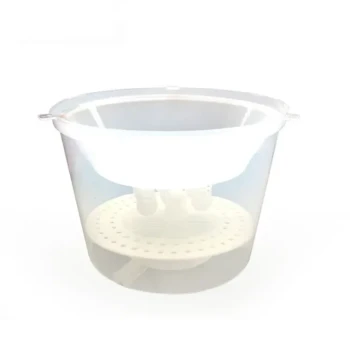
Front-mounted pollen traps serve as a specialized filtration system installed directly at the beehive entrance. Their primary function is to mechanically intercept foraging bees returning to the colony, stripping pollen pellets from their hind legs using a calibrated grid and depositing the harvest into a collection drawer. This process allows for the collection of fresh pollen while permitting the bees to enter the hive unharmed.
The core utility of a front-mounted pollen trap is to enable the systematic, non-destructive harvesting of fresh bee pollen, allowing beekeepers to diversify apiary output without interrupting the colony’s daily operations.
The Mechanics of Collection
Strategic Interception
The trap is installed at the hive entrance, the singular choke point for all returning foragers. By positioning the device here, the beekeeper can intercept 100% of the returning traffic without opening the hive or disturbing the brood nest.
The Physical Grid
The central component of the trap is an isolation grid featuring specific apertures. As worker bees attempt to squeeze through these holes to enter the hive, the physical barrier scrapes the pollen pellets carried on their hind legs.
Non-Destructive Harvesting
Once dislodged, the pollen falls through a screen into a lower collection drawer. This isolates the pollen from the bees immediately, preventing them from retrieving it and ensuring the sample remains clean and fresh for later collection.
Operational Purposes and Benefits
Diversifying Apiary Income
For commercial operations, these traps turn a standard byproduct into a harvestable commodity. They facilitate the continuous, industrial-scale harvesting of pollen, which is a high-value product distinct from honey production.
Environmental Analysis
Beyond production, these traps function as scientific sampling tools. Because the pollen is fresh and collected systematically, it provides a direct representation of local floral resources.
Quality Verification
The samples collected allow for detailed analysis, including botanical classification and purity verification. Researchers and producers can analyze the pollen for volatile organic compounds (VOCs), lipids, and fatty acids to assess environmental health and nutritional quality.
Critical Trade-offs and Precision
The Importance of Aperture Precision
The functionality of the trap hinges entirely on the precision of the grid's hole diameter. This is a delicate mechanical balance that requires high-quality manufacturing.
Risk of Physical Injury
If the grid apertures are too small or poorly finished, the friction required to remove the pollen can physically injure the worker bees. A properly designed trap removes the payload without harming the carrier.
Balancing Production
While references note that these tools allow for harvesting "without negatively impacting honey production," they do remove a protein source from the hive. The goal is to strip enough pollen for harvest while allowing the colony to maintain its necessary operations.
Making the Right Choice for Your Goal
These devices are versatile tools, but your specific objective dictates how you should view their utility.
- If your primary focus is Commercial Resilience: These traps allow you to diversify your revenue stream by harvesting high-value pollen by-products without disrupting honey yields.
- If your primary focus is Environmental Research: Use these traps to obtain systematic, raw samples that provide accurate data on local floral diversity and purity levels.
Front-mounted pollen traps transform the beehive entrance from a simple doorway into a sophisticated, non-invasive collection point for high-quality biological data and products.
Summary Table:
| Feature | Function & Benefit |
|---|---|
| Installation Point | Hive entrance for 100% traffic interception without hive disturbance. |
| Isolation Grid | Calibrated apertures mechanically strip pollen from foraging bees' legs. |
| Collection Drawer | Safeguards harvested pollen from debris and retrieval by workers. |
| Revenue Stream | Converts pollen into a high-value commodity alongside honey production. |
| Data Analysis | Provides fresh samples for botanical classification and purity testing. |
Maximize Your Apiary’s Potential with HONESTBEE
At HONESTBEE, we understand that commercial success in beekeeping requires precision and diversification. We provide commercial apiaries and distributors with a comprehensive wholesale range of professional-grade beekeeping tools and machinery. Whether you are looking to integrate high-precision front-mounted pollen traps or scaling up with our advanced hive-making and honey-filling machines, our portfolio is designed to enhance your operational efficiency.
From essential industry consumables to specialized hardware and honey-themed cultural merchandise, we offer the full spectrum of equipment needed to grow your business. Contact us today to learn how our wholesale solutions can optimize your production and bring superior value to your customers.
References
- Ljiljana Primorac, Ivana Flanjak. The specificity of monofloral bee pollen fatty acid composition from Croatia and its nutritional value. DOI: 10.5513/jcea01/24.1.3784
This article is also based on technical information from HonestBee Knowledge Base .
Related Products
- 30 cm Plastic Entrance Hole Bee Pollen Trap and Collector
- Removable Plastic Pollen Trap With Ventilated Tray for Bees Pollen Collector
- Plastic Bee Pollen Trap Strips Comb Catcher Collector
- High-Efficiency Diamond Maze Bee Escape for Clearing Supers
- 8 Frame and 10 Frame Propolis Trap Collector Screen for Propolis Collection
People Also Ask
- What are the design principles and advantages of pollen traps in the collection of bee pollen? Boost Your Apiary Yield
- Why is frequent harvesting of bee pollen from traps necessary for quality control? Ensure Freshness and Prevent Mold.
- How often should bee pollen be harvested from a trap and why? Master Freshness and Prevent Spoilage
- What function do pollen traps serve in quantitative collection? Boost Your Apiary's Data & Production Efficiency
- What is the primary function of bee pollen traps? Optimize Your Pollen Harvest with Advanced Extraction Efficiency