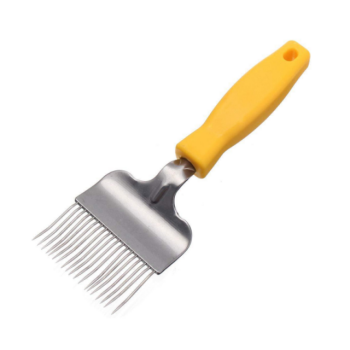
The Specialized Drone Brood Comb functions primarily as a biological stimulant designed to manipulate colony behavior for targeted Apilarnil production. By utilizing specifically sized cells, this tool compels the queen bee to lay unfertilized eggs, creating the essential foundation for cultivating drone larvae rather than worker bees.
The comb serves as the critical interface between biological instinct and production efficiency, converting the hive’s reproductive focus into a standardized source of drone pupae.
The Mechanics of Drone Induction
Manipulating Queen Behavior
The core function of this comb is to trigger a specific biological response from the queen. The specifically sized cells act as a physical signal, inducing the queen to lay unfertilized eggs.
These unfertilized eggs are the biological precursors that develop into drone larvae. Without this specific physical trigger, the queen would naturally prioritize laying fertilized worker eggs, which are unsuitable for Apilarnil production.
Providing a Biological Substrate
Beyond simple induction, the comb acts as the primary biological substrate for the colony. It provides the physical housing necessary for the drone pupae to develop safely and uniformly.
This structure supports the larvae throughout their growth cycle, holding them in place until they reach the optimal stage for extraction.
Optimizing for Harvest Efficiency
Ensuring Structural Precision
The comb provides a precise physical structure within the hive. Much like standard foundation mills ensure uniform thickness for worker combs, the specialized drone comb ensures the drone cells are consistent across the frame.
This uniformity is vital for commercial or scalable production. It eliminates the irregularities found in natural wild comb, where drone cells are often scattered or mixed with worker brood.
Facilitating Extraction
The ultimate goal of this structural precision is to ensure efficient subsequent harvesting. Because the larvae are grouped densely and uniformly, the extraction process is streamlined.
Standardization allows for mechanical or manual harvesting methods to remove the biological material cleanly, without damaging the hive infrastructure or contaminating the harvest with worker larvae.
Understanding the Necessity
The Consequence of Mixed Brood
Without this specialized equipment, a colony will naturally regulate its own drone population, often keeping it low. This results in a "mixed brood" scenario where drone cells are interspersed with worker cells.
Production Efficiency vs. Natural Instinct
Harvesting Apilarnil from a mixed frame is labor-intensive and inefficient. The specialized comb overrides the colony's natural tendency to limit drone production, effectively turning the hive into a focused production unit for drone larvae.
Making the Right Choice for Your Goal
To successfully produce Apilarnil, you must align your equipment with your production targets.
- If your primary focus is volume: Use specialized combs to maximize the density of drone larvae per frame, overriding the colony's natural population caps.
- If your primary focus is purity: Rely on the specific cell sizing to prevent the queen from laying fertilized worker eggs, ensuring the harvest consists solely of drone extract.
The Specialized Drone Brood Comb is not just a storage vessel; it is the active tool that dictates the biological output of the hive.
Summary Table:
| Feature | Function in Apilarnil Production | Impact on Output |
|---|---|---|
| Cell Size Induction | Triggers queen to lay unfertilized eggs | Guarantees 100% drone larvae foundation |
| Uniform Substrate | Provides standardized housing for larvae | Ensures consistent growth and development |
| Structural Precision | Eliminates scattered "mixed brood" patterns | Maximizes density of harvestable material |
| Extraction Design | Streamlines mechanical or manual removal | Reduces labor and prevents hive damage |
Maximize Your Apiary’s Potential with HONESTBEE
At HONESTBEE, we understand that commercial success in Apilarnil production requires precision and scale. As a premier partner for commercial apiaries and distributors, we provide a comprehensive wholesale range of beekeeping tools, specialized machinery, and essential consumables designed for efficiency.
From drone-specialized hardware to advanced honey-filling machines and hive-making equipment, our portfolio is built to transform your operations. Let us help you streamline your production and enhance your market value with our expert solutions.
Ready to scale your production? Contact us today to explore our wholesale offerings!
References
- Sahin Aydin, Serhat Solmaz. An Ontology for Apiculture Practices (Onto4API): Towards Semantic Interoperability and Knowledge Sharing in the Apiculture Community. DOI: 10.18615/anadolu.1749470
This article is also based on technical information from HonestBee Knowledge Base .
Related Products
- Professional Frame Comb Fork and Lifter for Efficient Handling
- Heart-Shaped Comb Honey Frame and Honeycomb Cassette
- Professional Bent Tine Honey Uncapping Fork with Ergonomic Grip
- Professional Wide Blade Honey Scraper for Beekeeping and Honey Processing
People Also Ask
- What is the specific design and purpose of a frame lifter hive tool? Master Gentle Hive Inspections
- How does the frame lifter hive tool function? Master Safe and Gentle Frame Removal
- What are the technical benefits of using a frame lifter? Maximize Hive Safety and Inspection Efficiency
- What are the roles of frames and combs in a beehive? Essential Infrastructure for Healthy Apiaries
- What is the function of specialized beekeeping tools and hive frames? Enhance Efficiency & Yield in Your Apiary