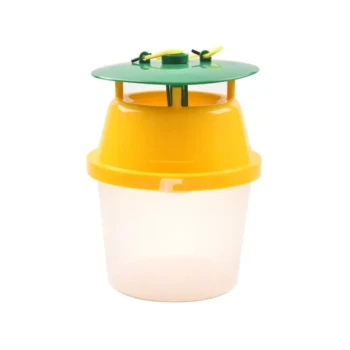
Pheromone attractants function by chemically mimicking the biological signals of the honey bee host. Rather than relying on passive contact, these synthetic cues actively manipulate the behavior of Varroa destructor, luring mites away from the safety of the brood or adult bees and directing them toward specific surfaces treated with high-concentration miticides.
By shifting pest control from a passive to an active strategy, this mechanism forces the pest to seek out the pesticide. This targeted approach dramatically increases lethal exposure rates while simultaneously allowing for a significant reduction in the total volume of chemicals applied to the hive.
The Mechanics of Behavioral Manipulation
To understand the efficacy of attract-and-kill processes, one must look at how the system exploits the mite's natural sensory reliance.
Mimicking Host Signals
The fundamental mechanism is signal mimicry. The attractants are formulated to replicate the specific scent cues emitted by honey bees.
Redirecting Mite Movement
This chemical deception overrides the mite's instinct to stay hidden. It draws them out from deep within brood cells or detaches them from the bodies of adult bees.
Creating Targeted Kill Zones
Instead of wandering randomly, mites are navigated toward specific treated areas. These designated zones effectively become "traps" fueled by the mite's own sensory drive.
Increasing Control Efficiency
The primary goal of using attractants is to optimize the delivery of the medicinal agent.
Maximizing Contact Probability
Traditional treatments often fail because mites evade contact with the chemical. Pheromone attractants increase the probability of contact by aggregating mites onto the treated surface.
Ensuring Lethal Dosage
Because the mites are drawn to a specific location, that surface can utilize high-concentration medicinal coatings. This ensures that once a mite makes contact, it ingests or absorbs a sufficient dosage to ensure mortality.
Understanding the Trade-offs
While highly effective, the attract-and-kill mechanism is not a magic bullet and relies on precise biological principles.
Dependency on Signal Strength
The synthetic attractant must be potent enough to compete with the natural signals of thousands of living bees. If the artificial lure is overpowered by the hive's natural scent, the "pull" effect will be diminished.
The Necessity of Proximity
Mites do not travel long distances independently. The treated surfaces must be placed strategically to ensure the attractant reaches the mites where they reside.
Making the Right Choice for Your Goal
When incorporating pheromone-based attract-and-kill methods into your Integrated Pest Management (IPM) strategy, consider your specific objectives.
- If your primary focus is minimizing chemical residues: Prioritize this method to confine pesticides to specific strips or traps, keeping the rest of the comb and honey chemical-free.
- If your primary focus is efficacy in high-infestation hives: Combine this approach with brood cycle management to expose mites hiding under cappings where signals might be blocked.
This mechanism represents a shift from chemically saturating the environment to surgically targeting the pest.
Summary Table:
| Feature | Passive Control (Traditional) | Active Attract-and-Kill (Pheromone) |
|---|---|---|
| Mechanism | Random contact with chemicals | Directed movement via signal mimicry |
| Mite Behavior | Stays hidden in brood or on bees | Lured toward specific kill zones |
| Chemical Load | High (Saturation required) | Low (Targeted application) |
| Contact Rate | Low/Uncertain | High/Aggregated |
| Primary Goal | Area treatment | Optimized lethal delivery |
Scale Your Apiary Success with HONESTBEE
Are you a commercial apiary or a distributor looking to modernize your pest management strategy? HONESTBEE is your strategic partner in bee health. We specialize in providing the global beekeeping industry with the full spectrum of high-performance tools, machinery, and essential consumables.
From advanced hive-making and honey-filling machines to the specialized beekeeping equipment needed to implement effective attract-and-kill protocols, we deliver the quality and reliability your business demands. Let us help you maximize hive productivity while minimizing chemical residues.
Ready to elevate your wholesale beekeeping supply? Contact HONESTBEE Today to Discuss Your Needs
References
- Philip J. Lester. Integrated resistance management for acaricide use on Varroa destructor. DOI: 10.3389/frbee.2023.1297326
This article is also based on technical information from HonestBee Knowledge Base .
Related Products
- Oxalic Acid Vaporizer 12V for Bee Varroa Mite Treatment
- Durable 12V Oxalic Acid Vaporizer for Varroa Mite Treatment Beehive Beekeeping Tool
- Compact Circular Bee Mite Treatment Dispenser
- Heavy Duty 12V Oxalic Acid Evaporator Vaporizer for Bee Varroa Mite Treatment Beekeeping Fumigator Atomizer
- Adjustable Formic and Acetic Acid Dispenser for Bee Mite Treatment
People Also Ask
- What factors determine how often to treat for varroa mites with oxalic acid? Time Your Treatment for Maximum Efficacy
- What are the technical advantages of using professional Sublimators? Maximize Mite Control with Precision Vaporizers
- What is the technical objective of applying oxalic acid via a sprayer? Maximize Varroa Resistance in Your Apiary
- How can oxalic acid treatment be applied effectively when capped brood is present? Master the 3-Stage Vapor Protocol
- What is the overall goal of using oxalic acid in late fall for beekeepers? Maximize Winter Survival with a Broodless Treatment