Bee pollen functions as a vital organic catalyst in mead production. Its primary mechanism is serving as a concentrated source of natural nitrogen, which is fundamentally lacking in diluted honey. By introducing essential amino acids and proteins into the must (the unfermented honey-water mixture), bee pollen bridges the nutritional gap required for yeast to metabolize sugars into alcohol effectively.
The core challenge in mead making is that honey is a sugar-rich but nutrient-poor medium. Bee pollen solves this by acting as a critical nitrogen reservoir, ensuring yeast has the biological building blocks necessary for growth, preventing stalled fermentations, and significantly accelerating the production timeline.
The Nutritional Deficit in Honey
The "Sugar-Only" Environment
To understand the mechanism of bee pollen, you must first understand the limitations of honey.
While honey provides an abundance of fermentable sugars, it is naturally deficient in other critical nutrients. Specifically, it lacks the nitrogen levels found in other fermentation bases like grape juice or malted barley.
The Yeast Requirement
Yeast requires more than just sugar to survive; it requires nitrogen to reproduce and build cell walls.
Without a supplementary source of nitrogen, yeast cells become stressed. This stress prevents them from performing the metabolic functions necessary to convert sugar into alcohol efficiently.
The Mechanism of Action
Provision of Amino Acids
When added to the mead must, bee pollen breaks down to release proteins and amino acids.
These organic compounds act as the primary fuel source for yeast reproduction. The yeast assimilates these amino acids, allowing the colony to expand rapidly to a population density capable of sustaining fermentation.
Facilitating Alcohol Conversion
Once the yeast population is established, the continuous supply of nitrogen maintains metabolic activity.
This ensures that the yeast continues to consume sugar and produce alcohol at a steady rate, rather than becoming dormant or dying off prematurely due to starvation.
Operational Impact on Industry
Reducing Cycle Times
The addition of bee pollen has a direct impact on the speed of the fermentation process.
By removing nutritional bottlenecks, the fermentation cycle completes faster. This allows for quicker turnover of fermentation vessels, which is a critical metric for industrial efficiency.
Improving Fermentation Efficiency
Beyond speed, pollen supplementation ensures a more complete fermentation.
It reduces the likelihood of "stuck" fermentations, where yeast stops working before consuming all the sugar. This reliability makes bee pollen an essential consumable for consistent commercial production.
Understanding the Trade-offs
The Necessity of Supplementation
The primary trade-off in mead making is between natural sourcing and nutrient deficiency.
Relying solely on honey without supplementation invites metabolic failure. While bee pollen is an additive, it is a necessary one; omitting it forces the yeast to struggle, leading to sluggish performance and unpredictable results.
Making the Right Choice for Your Goal
To apply this to your production process, consider your specific operational targets:
- If your primary focus is Production Speed: Utilize bee pollen to maximize yeast metabolism, thereby significantly reducing the overall fermentation cycle time.
- If your primary focus is Process Reliability: Implement pollen supplementation to ensure sufficient nitrogen levels, preventing stalled fermentations and ensuring consistent alcohol conversion.
By treating bee pollen as a fundamental building block rather than an optional additive, you ensure a robust and efficient fermentation environment.
Summary Table:
| Function | Role in Fermentation | Industrial Impact |
|---|---|---|
| Nitrogen Source | Provides essential amino acids and proteins | Prevents yeast stress and dormancy |
| Organic Catalyst | Fuel for rapid yeast reproduction | Accelerates the fermentation timeline |
| Nutritional Bridge | Offsets honey's natural nutrient deficiency | Ensures complete sugar-to-alcohol conversion |
| Process Stabilizer | Maintains steady metabolic activity | Reduces risk of "stuck" fermentations |
Elevate Your Commercial Mead Production with HONESTBEE
At HONESTBEE, we understand that large-scale success depends on the quality of your consumables and the efficiency of your equipment. Whether you are a commercial apiary or a specialized distributor, we provide the full spectrum of beekeeping tools, machinery, and industry essentials needed to scale your operations.
From premium bee pollen consumables that ensure robust fermentation to industrial-grade honey-filling machines and specialized hardware, our portfolio is designed to maximize your productivity. Partner with us to access professional wholesale solutions tailored to the needs of the modern beekeeping industry.
Ready to optimize your supply chain?
Contact HONESTBEE today for a comprehensive quote and discover how our expertise can drive your business forward.
References
- Aidín Martínez, Martha Cuenca. Evaluation of Alcoholic Fermentation During the Production of Mead Using Immobilized Cells in Kappa-carrageenan. DOI: 10.3303/cet1649004
This article is also based on technical information from HonestBee Knowledge Base .
Related Products
- Plastic Bee Pollen Trap Strips Comb Catcher Collector
- 30 cm Plastic Entrance Hole Bee Pollen Trap and Collector
- Removable Plastic Pollen Trap With Ventilated Tray for Bees Pollen Collector
- Heavy-Duty Ergonomic Grip Galvanized Pollen Shovel
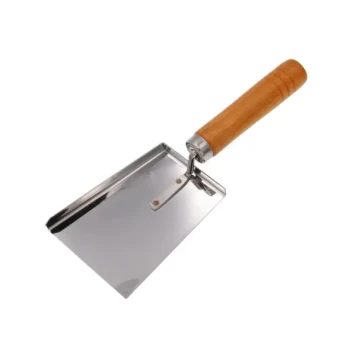
- Stainless Steel Pollen Shovel with Wooden Handle
People Also Ask
- For what reasons do beekeepers collect bee pollen? Boost Hive Health and Unlock New Revenue Streams
- What are the design principles and advantages of pollen traps in the collection of bee pollen? Boost Your Apiary Yield
- What are the ideal weather conditions for installing a bee pollen trap? Ensure Colony Safety with Expert Timing
- Why is frequent harvesting of bee pollen from traps necessary for quality control? Ensure Freshness and Prevent Mold.
- What is the primary function of bee pollen traps? Optimize Your Pollen Harvest with Advanced Extraction Efficiency