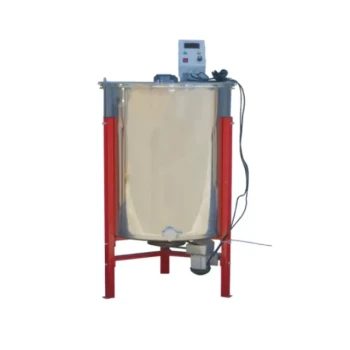
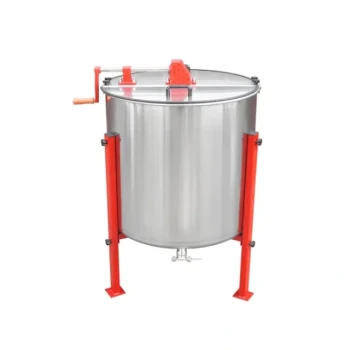
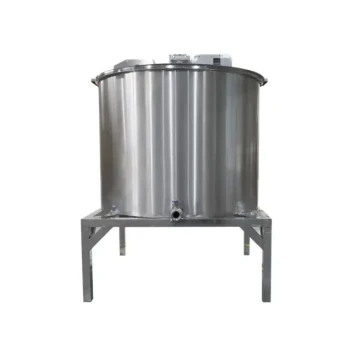
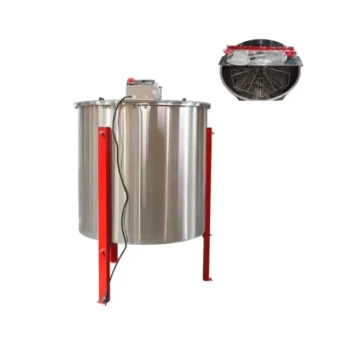
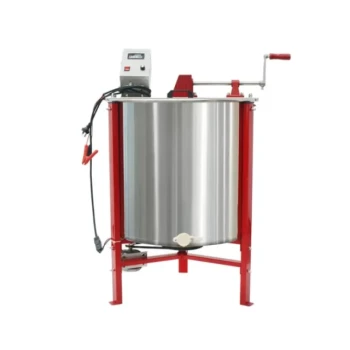
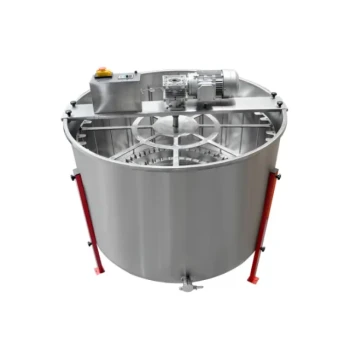
A centrifugal honey extractor is the cornerstone of efficient, modern beekeeping. Its primary function is to remove honey from honeycomb frames using the physics of centrifugal force, generated by high-speed rotation. The definitive advantage of this method is that it harvests honey without destroying the wax comb structure, allowing the frames to be immediately returned to the hive for reuse.
By eliminating the need for bees to rebuild wax after every harvest, the centrifugal extractor fundamentally shifts the colony's energy expenditure from construction to production, significantly increasing overall honey yields.
The Mechanics of Preservation
Leveraging Centrifugal Force
The extractor operates by spinning honeycomb frames at high speeds within a drum or basket. This rotation generates sufficient centrifugal force to pull liquid honey out of the cells and throw it against the extractor walls for collection.
Protecting Structural Integrity
Unlike traditional harvesting methods, such as squeezing or cutting the comb, the centrifugal approach is non-destructive. It leaves the delicate wax walls of the honeycomb cells intact.
Enabling Immediate Reuse
Because the physical structure of the comb is preserved, the empty frames can be returned to the hive immediately. This turns the honeycomb into a reusable asset rather than a disposable by-product.
The Economic Impact on the Colony
Reducing Biological Energy Costs
Bees consume a significant amount of energy and resources to secrete beeswax. When a centrifugal extractor preserves the comb, it drastically reduces the biological burden on the worker bees.
Shifting Focus to Production
With the infrastructure of the hive already intact, bees do not need to waste time rebuilding. They can immediately redirect their energy toward foraging and nectar storage.
Shortening the Production Cycle
The ability to reuse combs significantly shortens the interval between harvests. This rapid turnaround is essential for achieving industrial-scale production and maximizing the output of a short blooming season.
Operational Considerations and Trade-offs
Dependence on Movable Frames
To utilize a centrifugal extractor effectively, an apiary must use movable-frame hives. This technology does not work with fixed-comb systems, requiring a specific investment in hive infrastructure.
Maintenance and Power Requirements
As "core equipment" in industrialized production, these extractors introduce mechanical complexity. Whether powered by a motor or hand-cranked, they require regular maintenance and cleaning to ensure hygiene and mechanical reliability.
Making the Right Choice for Your Goal
To maximize the benefits of this technology, align your usage with your specific apiary objectives:
- If your primary focus is Maximum Yield: Prioritize immediate re-introduction of wet, extracted frames to the hive to stimulate rapid refilling.
- If your primary focus is Colony Health: Use the extractor to minimize the metabolic stress on bees, allowing them to conserve energy for winter survival or brood rearing rather than wax production.
The centrifugal honey extractor is not just a harvesting tool; it is an energy-saving device that aligns mechanical efficiency with the biological needs of the bee colony.
Summary Table:
| Feature | Centrifugal Extractor Impact | Benefit to Beekeeping |
|---|---|---|
| Mechanism | High-speed rotation (Centrifugal Force) | Efficiently pulls honey from cells |
| Comb Integrity | Non-destructive (Wax remains intact) | Allows for immediate frame reuse |
| Bee Energy | Reduces wax-building labor | Shifting focus to nectar collection |
| Production | Shortens harvest cycles | Maximizes yield during bloom seasons |
| Hive Type | Requires movable frames | Standardizes industrial apiary management |
Scale Your Honey Production with HONESTBEE
Maximize your apiary's efficiency and colony productivity with professional-grade harvesting solutions. HONESTBEE specializes in supporting commercial apiaries and distributors with a comprehensive wholesale range of high-performance honey extractors, hive-making machinery, and essential beekeeping tools.
Whether you are upgrading your extraction line or stocking a distribution network, our portfolio offers the reliability and scale you need to succeed. Contact us today to discuss your equipment requirements and discover how our expertise in beekeeping machinery can grow your business.
References
- Aditya Narang, Garima Gupta. Political, economical, social, technological and SWOT analysis of beekeeping as a successful enterprise in India: An overview. DOI: 10.31018/jans.v14i1.3312
This article is also based on technical information from HonestBee Knowledge Base .
Related Products
- electric honey extractor honey centrifuge 3 frame honey extractor stainless steel honey frame extractor
- Manual Hand Crank 4 Frame Honey Extractor Centrifuge for Beekeeping
- Professional 4 Frame Self Reversing Electric Honey Extractor for Beekeeping
- Electric 4 Frame Tangential Honey Extractor
- 24 Frame Honey Extractor Commercial Radial Honey Frame Extraction Machine
People Also Ask
- What are the characteristics of electric honey extractors? Boost Your Apiary Efficiency with Automated Technology
- What are the disadvantages of using an electric honey extractor? Weighing Cost, Power, and Comb Safety
- What are the advantages of an electric honey extractor? Boost Efficiency and Scale Your Honey Production
- What are the technical advantages of electric honey extractors? Maximize Yield and Protect Your Bee Colony
- How does an electric honey extractor affect the quality of honey? Preserve Flavor & Purity with Precision Extraction