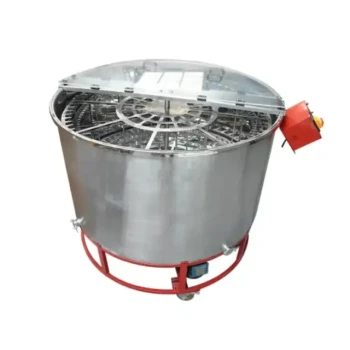
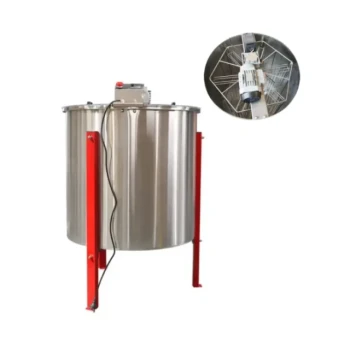
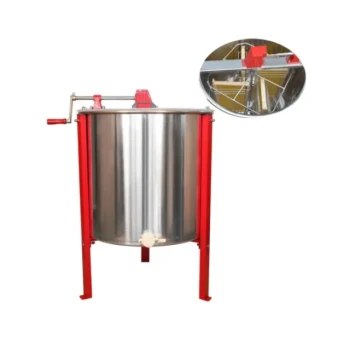
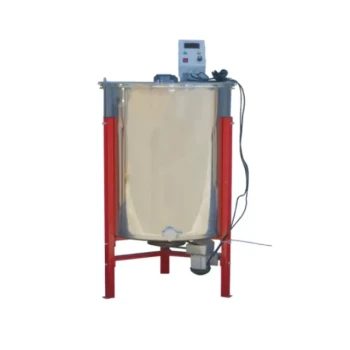
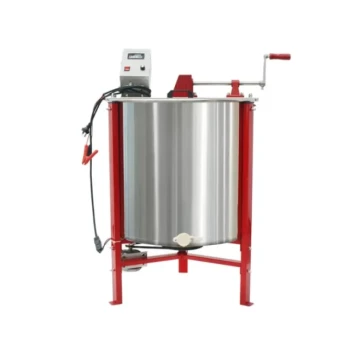
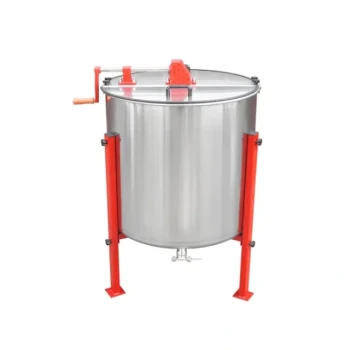
The process of extracting honey utilizes specific tools to remove honey while preserving the wax comb for future use. You must first use an uncapping knife to slice off the protective wax layer, then place the frames into a honey extractor to spin the liquid out via centrifugal force.
By utilizing an extractor rather than crushing the comb, you maintain the structural integrity of the wax frames. This is critical because it allows the bees to immediately refill the empty comb rather than expending significant energy and time rebuilding it.
The Uncapping Phase
Exposing the Honey
Before extraction can begin, the honey stored inside the cells must be exposed. Use an uncapping knife to carefully cut off the thin outer layer of wax, known as the cappings.
Choosing the Right Tool
While a standard "cold" knife works, many beekeepers prefer an electric heated knife. The heat melts through the wax more efficiently, increasing speed and ease of use.
Addressing Missed Cells
Comb surfaces are rarely perfectly flat, and a knife may miss "low spots" or uneven areas. Use an uncapping scratcher to manually open these remaining cells to ensure the extractor can empty them.
Using the Honey Extractor
Loading and Balancing
Once uncapped, place the frames into the wire or mesh baskets within the extractor's drum. It is vital to balance the load by placing frames of similar weight opposite each other to prevent violent vibrations during spinning.
Applying Centrifugal Force
Engage the mechanism—either a manual hand crank or an electric motor—to spin the baskets. This generates centrifugal force, which slings the honey out of the cells, against the inner walls of the drum, and down to the bottom collection area.
The Two-Step Spin
Most standard extractors require you to spin the frames in stages. Spin the frames for approximately 20 to 30 seconds to empty the first side.
Flipping the Frames
Once the first side is extracted, you must stop the device and flip the frames. Repeat the spinning process to force the honey out of the second side.
Common Pitfalls and Trade-offs
Temperature Sensitivity
Honey viscosity changes with temperature. Trying to extract cold honey is inefficient and leaves significant yield behind; ensures frames are warm, and consider using a heated knife to smooth the process.
Equipment Vibration
If the extractor is not properly balanced, it will wobble or "walk" across the floor. This not only makes the work difficult but can damage the honeycomb or the extractor itself.
Effort vs. Automation
Manual extractors are cost-effective but physically demanding, requiring continuous cranking for minutes per batch. Electric extractors save physical labor but represent a significantly higher financial investment.
Making the Right Choice for Your Goal
While the fundamental physics remain the same, your equipment choice depends on your scale.
- If your primary focus is keeping costs low: Stick to a manual hand-crank extractor and a cold knife, accepting that the process will be more physically labor-intensive.
- If your primary focus is efficiency and speed: Invest in an electric extractor and a heated uncapping knife to process larger volumes of frames with minimal physical fatigue.
The goal is to remove the harvest cleanly while returning intact frames to the hive, ensuring your bees get a head start on the next season.
Summary Table:
| Stage | Key Tools Used | Primary Objective | Expert Tip |
|---|---|---|---|
| Uncapping | Heated Knife / Scratcher | Remove wax cappings | Use heat to slice through wax smoothly. |
| Loading | Balanced Frames | Stabilize extractor | Match frame weights to prevent vibration. |
| Extraction | Centrifugal Extractor | Spin honey out of cells | Spin both sides to ensure complete harvest. |
| Maintenance | Warm Storage | Maintain viscosity | Extract while honey is warm for better flow. |
Scaling Your Apiary Operations with HONESTBEE
Maximize your honey production with professional-grade equipment from HONESTBEE. We specialize in supporting commercial apiaries and distributors with a full spectrum of high-efficiency honey-making machinery, including advanced honey-filling machines and specialized beekeeping tools.
Whether you are looking for high-volume wholesale supplies or innovative hardware to streamline your workflow, our comprehensive portfolio is designed to deliver reliability and value.
Ready to upgrade your extraction facility? Contact us today to explore our wholesale solutions!
Related Products
- HONESTBEE 72 Frame Industrial Electric Honey Extractor for Beekeeping
- Commercial Electric 12 Frame Honey Extractor Spinner Motorized Honey Extractor
- HONESTBEE 6 Frame Self Reversing Electric Honey Extractor for Beekeeping
- HONESTBEE 3-Frame Manual Acrylic Honey Extractor
- Stainless Steel Manual 8 Frame Radial Honey Extractor Machine for Beehives
People Also Ask
- What is the importance of balancing honeycomb frames within a honey extractor? Ensure Stability and Protect Machinery
- How is honey separated from the frames after they are uncapped? Efficient Extraction Methods for High Yields
- What are the main benefits of using a honey extractor? Maximize Yields and Protect Your Honeycomb
- What are the recommended methods for removing honey from the honeycomb? Top Extraction Techniques for Maximum Efficiency
- How do manual honey extractors compare to electric honey extractors? Choosing the Right Tool for Your Apiary Growth