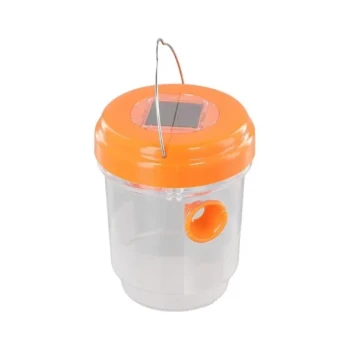
Integrating night lighting equipment serves to dramatically enhance capture rates by exploiting the natural biological behaviors of wax moths. By positioning light sources near trapping bottles, you create a dual-sensory lure that attracts nocturnal adults far more effectively than chemical baits alone.
The central purpose is to create a synergistic effect that combines visual attraction with olfactory signals. This utilizes the moth's natural phototaxis to draw them in from a distance, significantly increasing the total number of adults captured.
Leveraging Biological Behavior for Efficiency
Exploiting Phototaxis
Wax moths are nocturnal insects with a biological imperative to move toward light sources.
This behavior, known as phototaxis, is the primary mechanism leveraged by night lighting.
By integrating a light source, you actively pull adult moths from the surrounding environment rather than waiting for them to stumble upon a trap.
The Power of Synergy
While chemical baits rely on scent, adding light creates a synergistic effect.
The light acts as a visual beacon to attract moths from a distance, while the chemical bait signals confirm the presence of a food or breeding source.
This combination ensures that once the moths are drawn near the trap by the light, the bait effectively lures them into the trapping bottles.
Strategic Monitoring and Management
Automated Collection
High-power setups, such as Robinson-style light traps, automate the collection process from sunset to sunrise.
This allows for continuous operation during the specific hours when wax moths are most active.
Assessing Population Dynamics
Using light traps enables the non-chemical monitoring of both Greater Wax Moth (Galleria mellonella) and Lesser Wax Moth (Achroia grisella).
By analyzing the catch, apiarists can track population spikes and trends over time.
This data is critical for assessing potential damage to honeybee colonies and formulating timely pest management strategies.
Understanding the Trade-offs
Non-Selectivity
Light sources are indiscriminate; they attract a wide variety of nocturnal insects, not just wax moths.
You may inadvertently capture non-target species, including beneficial insects, which requires careful sorting of the catch.
Operational Requirements
Unlike passive chemical traps, light integration requires a power source.
High-power options like Robinson traps function best with consistent energy to run through the night, adding a layer of logistical complexity to the setup.
Making the Right Choice for Your Goal
To apply this to your pest management strategy, consider your specific objectives:
- If your primary focus is maximizing capture rates: Combine night lighting with chemical baits to create a high-efficiency trap that leverages both sight and smell.
- If your primary focus is population monitoring: Utilize standardized light traps (like Robinson-style) to gather consistent data on moth activity and inform your treatment schedules.
By effectively combining light with traditional trapping methods, you transform a passive defense into an active, high-performance system for protecting your apiary.
Summary Table:
| Feature | Night Lighting Integration | Standard Chemical Trapping |
|---|---|---|
| Primary Mechanism | Visual Phototaxis + Olfactory Signal | Olfactory Signal (Scent) |
| Attraction Range | Long-distance (Visual beacon) | Short-range (Scent plume) |
| Efficiency | High (Active capture) | Moderate (Passive capture) |
| Target Pests | Greater & Lesser Wax Moths | Specifically Baited Species |
| Operational Need | Power source required | No power required |
| Monitoring Value | Excellent for population trends | Basic population tracking |
Protect Your Hive with HONESTBEE Professional Solutions
Don't let wax moths compromise your honey production. HONESTBEE specializes in supporting commercial apiaries and distributors with premium, field-tested beekeeping equipment. From high-efficiency trapping tools to advanced honey-filling machinery, we provide everything your business needs to scale effectively.
Our Value to You:
- Comprehensive Wholesale Range: Access a full spectrum of beekeeping hardware and essential consumables.
- Industry Expertise: Benefit from machinery designed for high-volume commercial operations.
- Global Distribution: Reliable supply chains tailored for large-scale distributors.
Ready to upgrade your apiary’s pest management and production efficiency? Contact us today to explore our wholesale catalog!
References
- Alemu Tsegaye, Meresa Lemma. Evaluation of different non-chemical wax moth prevention methods in the backyards of rural beekeepers in the North West dry land areas of Ethiopia. DOI: 10.9790/2380-07312936
This article is also based on technical information from HonestBee Knowledge Base .
Related Products
- Professional Bucket Style Wasp and Moth Pheromone Trap
- Gourd Shaped Hanging Wasp Trap Professional Wasp Catcher
- Professional Multi-Component Bucket Wasp Trap
- Compact Multi-Funnel Hanging Wasp Trap
- Plastic Beetle Blaster Trap Beekeeping Tools and Supplies
People Also Ask
- What is the function of Pheromone Traps in the biosecurity monitoring of apiaries? Precision Tools for Pest Control
- What role do Pheromone Traps play in the IPM for Large African Hive Beetles? Essential Surveillance & Control Tips
- How do professional wasp traps function? Master Physical Control of Oriental Hornets to Protect Your Apiary
- What are the practical advantages of using professional wasp traps and protective equipment in apiary management? Scale Up
- Why replace sugar syrup bait in wasp traps every three days? Ensure Maximum Attraction and Catch Rates