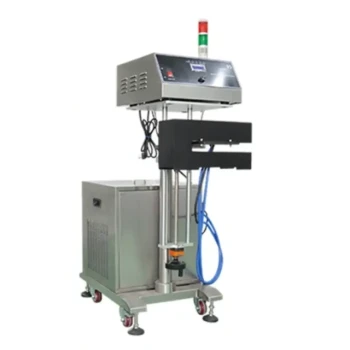
Industrial low-temperature freezing equipment serves as the primary defense against the chemical and physical degradation of propolis samples. Its fundamental role is to create an environment that drastically reduces molecular thermal motion, thereby inhibiting the oxidation, volatilization, and biological breakdown of sensitive active components like phenolic compounds. By maintaining samples at approximately -10 degrees Celsius, this equipment ensures that the material analyzed in the laboratory is chemically identical to the material collected in the field.
Core Takeaway Propolis is chemically unstable at room temperature due to its volatile and heat-sensitive nature. Industrial freezing is not merely about storage; it is a stabilization process that "locks in" the sample’s physicochemical profile, ensuring that subsequent analytical data reflects the true composition of the original source.
The Mechanism of Preservation
To understand the necessity of this equipment, one must understand the fragility of propolis. It is a complex mixture of resins, balsams, and bioactive compounds that react poorly to thermal energy.
Reducing Molecular Thermal Motion
The primary function of the equipment is to lower the kinetic energy within the sample. By reducing molecular thermal motion, the freezing process slows down the rate at which chemical reactions can occur.
Inhibiting Oxidation of Active Components
Propolis is rich in phenolic compounds, which are highly sensitive to heat and oxygen. Freezing effectively stalls the oxidative degradation of these components, preventing the loss of biological activity during long-term storage.
Preventing Volatilization
Propolis contains essential oils and aromatic compounds that easily evaporate at ambient temperatures. Industrial freezing physically inhibits the escape of these volatile components, preserving the sample's original odor and chemical signature.
Ensuring Analytical Integrity
The ultimate goal of using industrial freezing equipment is to guarantee the validity of scientific analysis. If the sample degrades before it is tested, the results are meaningless.
Preserving the "Time of Collection" State
The equipment ensures physicochemical consistency from the moment of collection to the moment of analysis. This allows researchers to generate data that accurately reflects the specific environmental and botanical characteristics present when the bees created the propolis.
Stabilizing Metallic Element Distribution
Biological degradation can alter how metallic elements are distributed within the resin matrix. By chemically slowing down these biological processes, the equipment prevents internal shifts that could skew spectrographic or chromatographic results.
Understanding the Operational Standards
While "freezing" is a general term, industrial applications require specific parameters to be effective.
The Standard Temperature Threshold
For preservation purposes, industrial equipment typically maintains samples at a constant minus 10 degrees Celsius. This temperature is sufficient to arrest most biological and chemical activity without inducing unnecessary stress on the material.
The Limitations of Freezing
It is critical to note that while freezing handles thermal degradation, it does not inherently stop light-induced damage. Freezing equipment must often be used in conjunction with light-shielding packaging and inert gas environments (like nitrogen) to fully protect against UV rays and direct oxygen contact.
Making the Right Choice for Your Goal
How you utilize this equipment depends on your specific objective for the propolis samples.
- If your primary focus is Analytical Research: Ensure your equipment maintains a strict -10°C floor to prevent the migration of metallic elements and the volatility of aromatic compounds.
- If your primary focus is Commercial Processing: While preservation happens at -10°C, note that lowering the temperature further (to -20°C) can induce brittleness, which aids in later crushing and extraction steps.
Reliable data begins with a stable sample; industrial freezing is the foundational step in securing that stability.
Summary Table:
| Preservation Aspect | Mechanism | Key Benefit |
|---|---|---|
| Thermal Motion | Reduces kinetic energy at -10°C | Stops chemical degradation |
| Active Compounds | Inhibits oxidation of phenolics | Maintains biological activity |
| Volatile Oils | Prevents evaporation | Preserves original aromatic profile |
| Analytical Integrity | Locks physicochemical state | Ensures accurate laboratory data |
| Biological Action | Stalls enzyme/bacterial activity | Prevents internal composition shifts |
Secure Your Propolis Quality with HONESTBEE Solutions
Precision preservation is the backbone of high-value propolis production and research. At HONESTBEE, we empower commercial apiaries and international distributors with the professional-grade equipment needed to maintain product integrity from hive to laboratory.
Our extensive portfolio includes:
- Advanced Processing Machinery: From specialized low-temperature storage solutions to honey-filling and hive-making machines.
- Wholesale Tools & Consumables: A complete spectrum of hardware and essential supplies for large-scale operations.
- Industry Expertise: Tailored equipment solutions designed to optimize your extraction and preservation workflows.
Ready to elevate your beekeeping operations and ensure the highest standards for your propolis samples? Contact us today to discuss your wholesale needs and let HONESTBEE be your partner in industrial excellence.
References
- Anneli Salonen, Riitta Julkunen‐Tiitto. Phenolic Compounds of Propolis from the Boreal Coniferous Zone. DOI: 10.2478/v10289-012-0002-1
This article is also based on technical information from HonestBee Knowledge Base .
Related Products
- Professional Water Cooled Induction Sealing Machine for Bottles and Containers
- Professional Plastic Honey Dipper for Easy Honey Drizzling
- Economy Small Scale Honey Dryer Dehumidifier Thickening Machine
- Heavy Duty Stainless Steel Honey Processing Machine Decrystallizing Tank
- 0.5T Capacity Honey Dehumidifier Dryer with Vacuum Heating and Thickening Filtering Machine
People Also Ask
- How does tamper-evident sealing equipment benefit the honey trade? Ensure Product Integrity and Market Trust
- What is the function of an induction sealing machine in packaging? Secure Your Brand with Tamper-Evident Seals
- How does an induction sealing machine work? Enhance Honey Packaging with Hermetic Seals & Tamper Evidence
- What is an induction sealing machine and how does it work? Achieve Airtight, Tamper-Evident Seals
- How does the induction sealing process work? Create Tamper-Evident, Airtight Seals for Your Products