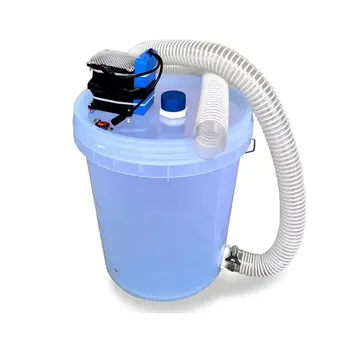
Modern filtration and purification systems act as the definitive firewall between raw natural variability and pharmaceutical-grade safety. Through the use of multi-stage high-precision filtration and vacuum dehydration, these technologies remove critical health hazards—including pesticides, heavy metals, radioactive contaminants, and bacteria—while strictly maintaining the bioactivity of enzymes and vitamins essential for medical applications.
The core function of this equipment is to execute a precise separation: eliminating both macroscopic debris and microscopic toxins without denaturing the delicate bioactive compounds that define medicinal honey.
The Dual Mandate: Decontamination and Preservation
The transition from raw honey to a medicinal product requires a sophisticated balance between aggressive cleaning and careful preservation.
Elimination of Chemical and Environmental Hazards
Raw honey is susceptible to environmental pollutants that are invisible to the naked eye. Multi-stage high-precision filtration systems are engineered to capture and remove specific chemical threats, including agricultural pesticides and heavy metals absorbed from the environment.
Mitigating Radioactive Contamination
Advanced purification setups address risks that traditional processing ignores. Specifically, these systems are capable of removing radioactive contaminants, a critical requirement for ensuring the safety of honey intended for compromised immune systems or open wound care.
Preserving Bioactive Integrity
The defining characteristic of medicinal honey is its enzyme and vitamin content. Unlike standard pasteurization, which can destroy these elements, modern vacuum dehydration and precision filtration are designed to purify the matrix while preserving the essential active ingredients responsible for the honey's therapeutic effects.
Controlling Biological and Physical Impurities
Beyond chemical safety, modern equipment standardizes the physical and biological state of the honey to meet international clinical standards.
Removal of Dangerous Microorganisms
For honey to be safe for clinical use, it must be free of dangerous pathogens. Precision filtration systems utilize varying pore sizes to physically remove micron-level threats, including fungal spores and, most critically, Clostridium botulinum spores. This significantly reduces the risks of allergic reactions and botulism, which are non-negotiable standards for pharmaceutical applications.
Clearing Mechanical Debris
During extraction, honey naturally accumulates organic matter. Industrial-grade fine-pore filtration effectively removes beeswax particles, bee remains, and larvae fragments, ensuring the final product possesses the transparency and purity required for consumer confidence.
Ensuring Consistency and Shelf Life
By removing physical impurities and stabilizing moisture content through vacuum dehydration, the equipment improves the product's physical and chemical consistency. This process extends shelf life and prevents the fermentation or crystallization issues often caused by residual debris or excess water.
Understanding the Trade-offs
While modern filtration is essential for safety, it requires precise calibration to avoid diminishing the product's value.
The Risk of Over-Processing
The line between purification and sterilization is thin. If filtration is too aggressive or relies on excessive heat to facilitate flow, there is a risk of stripping away beneficial markers or damaging heat-sensitive enzymes. The equipment must be operated to prioritize non-destructive methods, ensuring that while impurities are removed, the nutritional profile remains intact.
Making the Right Choice for Your Goal
Selecting the appropriate level of filtration depends entirely on the intended end-use of the honey.
- If your primary focus is Clinical Application: Prioritize precision filtration with varying pore sizes to ensure the absolute removal of Clostridium botulinum spores and allergens.
- If your primary focus is Commercial Retail: Focus on industrial fine-pore filtration to remove beeswax and particulate matter for superior visual clarity and shelf stability.
- If your primary focus is Chemical Safety: Ensure your process includes vacuum dehydration and multi-stage filtration to target invisible environmental toxins like pesticides and heavy metals.
True medicinal-grade honey is defined not just by its source, but by the technological rigor used to render it safe without compromising its healing power.
Summary Table:
| Feature | Function in Medicinal Processing | Key Benefit |
|---|---|---|
| Multi-stage Filtration | Removes pesticides, heavy metals, and debris | Ensures chemical and physical purity |
| Vacuum Dehydration | Reduces moisture at low temperatures | Prevents fermentation; preserves enzymes |
| Precision Pore Sizing | Filters out Clostridium botulinum and spores | Eliminates biological hazards for clinical use |
| Non-Destructive Processing | Balances purification with bioactivity | Maintains therapeutic vitamins and enzymes |
Elevate Your Honey Production to Pharmaceutical Standards
At HONESTBEE, we specialize in empowering commercial apiaries and global distributors with the high-precision technology required for medicinal-grade honey. Our comprehensive wholesale portfolio includes advanced honey-filling machines, specialized hive-making hardware, and high-performance filtration equipment designed to protect bioactive integrity while ensuring absolute safety.
Whether you are scaling a clinical-grade supply chain or seeking to enhance the shelf stability of your retail products, our team provides the tools, machinery, and essential consumables you need to succeed in a competitive market.
Ready to optimize your purification process? Contact us today to explore our wholesale solutions!
References
- Karsten Münstedt, Thomas Riepen. Survey of reasons why women utilize honey therapeutically, and reasons for not utilizing honey. DOI: 10.1016/j.heliyon.2020.e05231
This article is also based on technical information from HonestBee Knowledge Base .
Related Products
- 0.5T Capacity Honey Dehumidifier Dryer with Vacuum Heating and Thickening Filtering Machine
- Honey Concentrating Vacuum Heating Thickening Machine Dehumidifier for Honey
- Honey Concentrating and Filtering Dehumidifier Machine 2T Capacity for Honey
- Economy Small Scale Honey Dryer Dehumidifier Thickening Machine
- High Quality Honey Dehumidifier Dryer Thickening Machine for Beekeeping
People Also Ask
- What is the primary function of professional dehumidification equipment in honey processing? Stability & Quality
- How to dry up honey? The Safe Guide to Stabilizing Honey and Preventing Fermentation
- What is the process for using a dehumidifier to lower honey's moisture content? Expert Drying Techniques
- How to decrease moisture in honey? Prevent Fermentation and Ensure Long-Term Quality
- How to remove humidity from honey? Protect Your Harvest from Fermentation