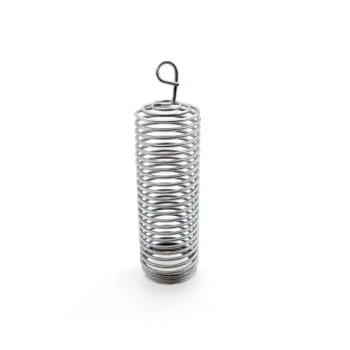
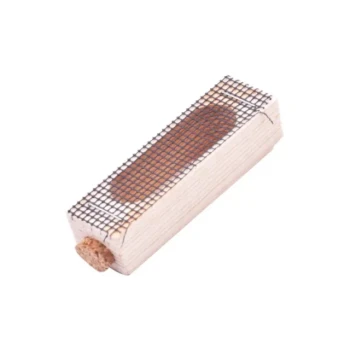
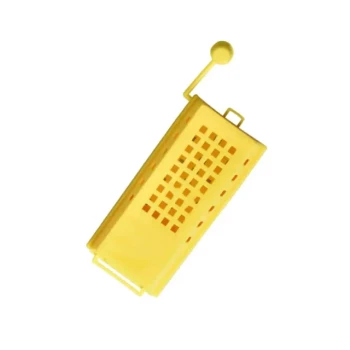
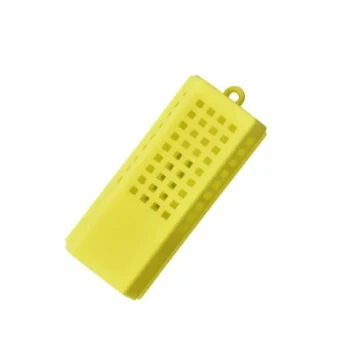
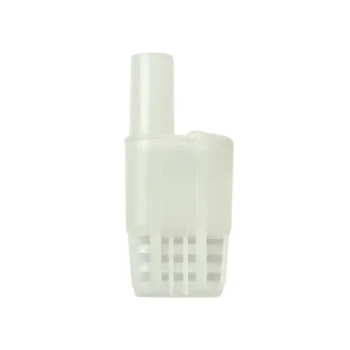
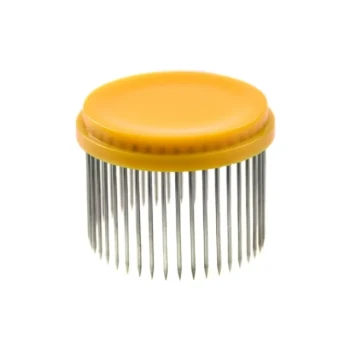
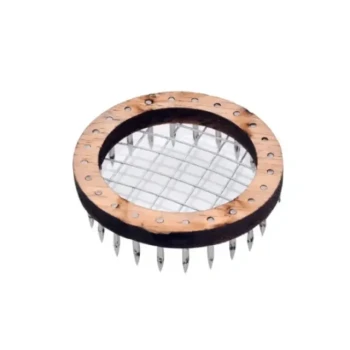
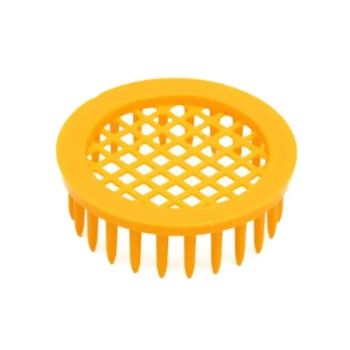
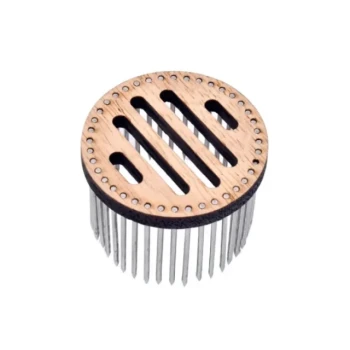
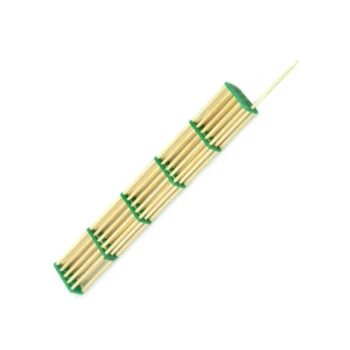
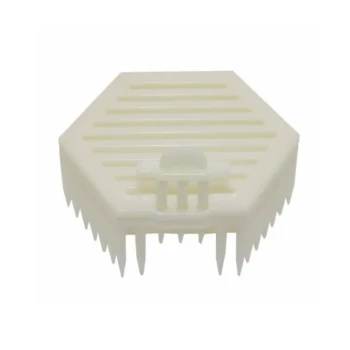
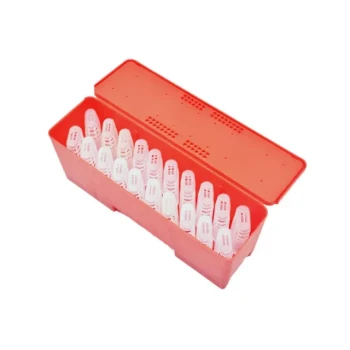
Queen cages function as the primary mechanism for inducing an artificial brood break, a physical control method designed to starve parasitic Tropilaelaps mites. By isolating the queen and preventing her from laying eggs, the cage eliminates the supply of developing larvae that these mites require for reproduction and survival.
Tropilaelaps species differ from other parasites in their inability to survive for long periods on adult bees alone. Queen cages exploit this biological weakness by temporarily halting the production of brood, effectively breaking the mite's life cycle.
The Mechanics of the Artificial Brood Break
Creating a Physical Barrier
The fundamental role of the queen cage is to restrict the queen to a specific, controlled space within the hive. While she remains inside the colony, the cage prevents her from accessing open comb cells to lay eggs.
Starving the Mite Population
Tropilaelaps mites are obligate parasites of honeybee brood. They must enter sealed cells to reproduce. By using a cage to stop egg-laying, you ensure that eventually, all existing brood will hatch, leaving the hive with zero sealed brood.
Exploiting the Phoretic Phase
Once the brood is gone, any remaining mites are forced into a "phoretic" phase, meaning they must attach to adult bees. Unlike Varroa mites, Tropilaelaps have an extremely short lifespan in this phase. Without brood to re-enter, the mites die relatively quickly from starvation or exposure.
Why This Method is Effective
Targeted Biological Control
This method works because it attacks the specific life history of the Tropilaelaps species. The mite depends entirely on a continuous supply of larvae. The queen cage acts as a precision tool to interrupt this supply chain without affecting the adult bee population directly.
Non-Chemical Management
Using a queen cage provides a physical alternative to chemical treatments (acaricides). It allows beekeepers to manage infestation levels physically, reducing the risk of chemical residues in wax and honey or the development of mite resistance.
Understanding the Trade-offs
Impact on Colony Strength
The most significant side effect of caging the queen is the cessation of colony growth. By stopping egg-laying, you create a gap in the workforce generation. This "brood break" must be timed carefully to ensure the colony has enough adult bees to maintain hive functions during the interruption.
Queen Re-acceptance Risks
While cages are standard tools for introducing queens or protecting them during genetic exchanges, confining a resident queen can sometimes cause stress. Upon release, the colony must seamlessly return to normal behavior. However, because the queen's pheromones continue to circulate during confinement, rejection is rare compared to introducing a totally new queen.
Making the Right Choice for Your Goal
- If your primary focus is Tropilaelaps eradication: Utilize the queen cage to enforce a brood break long enough to ensure all existing brood has hatched, forcing mites into their fatal phoretic phase.
- If your primary focus is maintaining colony population: Weigh the benefits of mite control against the temporary loss of new worker bees, and avoid caging during peak nectar flows when maximum workforce is required.
The queen cage transforms a biological vulnerability into a management strategy, offering a chemical-free path to colony health.
Summary Table:
| Feature | Role in Tropilaelaps Control | Impact on Hive |
|---|---|---|
| Mechanism | Induces an artificial brood break | Halts egg-laying & larvae production |
| Biological Target | Exploits short phoretic lifespan of mites | Forces mites onto adult bees where they starve |
| Physical Barrier | Restricts queen from open comb cells | Ensures all existing brood hatches |
| Outcome | Interrupts mite reproductive cycle | Zero sealed brood leads to mite mortality |
| Key Benefit | Non-chemical management | Reduces residue risk in honey and wax |
Maximize Your Colony Health with HONESTBEE
As a commercial apiary or distributor, maintaining high-performance honeybee colonies requires precision tools. HONESTBEE is your dedicated partner, providing a comprehensive wholesale range of professional beekeeping tools, specialized queen management hardware, and heavy-duty machinery—from hive-making to honey-filling systems.
Whether you are looking to implement large-scale physical mite control or seeking a reliable supply of essential industry consumables, our expert team is here to support your growth. Discover how our quality equipment can enhance your operational efficiency and ensure the vitality of your apiaries.
Ready to upgrade your beekeeping operations? Contact us today to explore our wholesale catalog!
References
- Michael A. Brown, Medwin H. Bew. Risks to UK beekeeping from the parasitic mite<i>Tropilaelaps clareae</i>and the small hive beetle,<i>Aethina tumida</i>. DOI: 10.1080/0005772x.2002.11099558
This article is also based on technical information from HonestBee Knowledge Base .
Related Products
- Durable Galvanized Steel Spring Queen Bee Cage
- Classic Wooden and Mesh California Queen Cage
- Professional Queen Bee Introduction and Transport Cage
- Professional Queen Cage with Sliding Gate and Feeder Plug
- Professional Multi-Compartment Queen Cage with Sliding Lid
People Also Ask
- Why are specialized queen bee cages used for the banking of mated queen bees? Maximize Commercial Apiary Storage Efficiency
- What is the mechanism of action for using temporary queen bee cages? Master Successful Queen Introduction
- What is the step-by-step process for installing a queen bee's cage onto a frame? Ensure Hive Acceptance Safely
- What is the optimal placement for a queen bee cage? Essential Strategies for Successful Re-queening
- What are the advantages and disadvantages of introducing a queen bee by embedding the cage? Boost Your Queen Acceptance