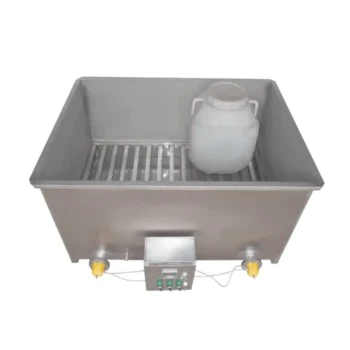
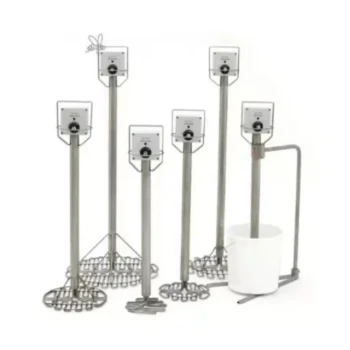
An integrated honey processing plant is the pivotal infrastructure that transforms traditional beekeeping into a scalable commercial enterprise. It provides a standardized environment that consolidates the entire production line—from extraction and filtration to final bottling. This facility enables deep processing and supports diverse packaging specifications, allowing cooperatives to deliver a consistent, market-ready product.
The transition to an integrated plant marks the shift from selling bulk raw materials to offering high-value branded commodities. It is the critical mechanism required to guarantee the quality consistency and volume capacity demanded by mainstream retail markets.
The Operational Transformation
Establishing Unified Quality Control
For a cooperative, the greatest challenge is often inconsistent quality across different members. An integrated plant solves this by channeling all raw product through a unified quality control system. This ensures that every unit leaving the facility meets the exact same standard, regardless of which member harvested the raw honey.
Enabling Deep Processing
Traditional methods often stop at extraction, limiting market reach. An integrated facility allows for deep processing, which includes sophisticated filtration and sterilization. This not only improves the shelf life and purity of the product but also aligns with strict modern food safety regulations.
From Agriculture to Industry
Automated machinery transforms labor-intensive manual tasks into high-efficiency industrial processes. By mechanizing the workflow, the plant ensures precise filling volumes and standardization that manual labor cannot match. This shift drastically increases packaging speed while reducing the reliance on variable human effort.
Commercial Implications
Unlocking Mainstream Retail Access
Large retailers and supermarkets require products that fit specific shelf requirements and packaging standards. The plant’s ability to handle various packaging specifications allows cooperatives to enter these lucrative markets. Without this capability, cooperatives are often restricted to informal local markets or lower-margin bulk sales.
Creating "Premium Value"
Processing capabilities allow the cooperative to transform bulk agricultural produce into branded commodities. By controlling the filtration and packaging aesthetics, the cooperative adds significant premium value to the honey. This moves the product out of commodity pricing and into higher-tier consumer pricing structures.
Strengthening Bargaining Power
Scalability directly influences negotiation leverage. With the capacity to handle large-scale orders reliably, cooperatives gain stronger bargaining power against large distributors. They are no longer price-takers selling raw ingredients but suppliers of finished goods capable of fulfilling international export contracts.
Understanding the Trade-offs
The Shift in Capital Allocation
While integrated plants reduce long-term labor costs per unit, they require substantial upfront capital investment. Cooperatives must balance the cost of infrastructure against immediate cash flow needs.
Technical Dependency
Automation introduces a requirement for specialized maintenance and technical skills. The cooperative must transition from a workforce skilled in manual handling to one capable of operating and maintaining complex machinery. Downtime in an integrated plant can halt the entire revenue stream, unlike decentralized manual processing.
Making the Right Choice for Your Goal
Deciding to invest in an integrated plant depends on your cooperative's immediate strategic focus.
- If your primary focus is Market Penetration: The plant is essential for meeting the strict standardization and hygiene requirements of supermarkets and export channels.
- If your primary focus is Profit Margin: The key advantage lies in "deep processing," allowing you to bypass middlemen and sell higher-priced, branded units directly to consumers.
An integrated processing plant is not just a building with machines; it is the engine that drives a cooperative's evolution from a gathering of farmers to a competitive commercial entity.
Summary Table:
| Feature | Traditional Beekeeping | Integrated Processing Plant |
|---|---|---|
| Production Level | Small-scale, Manual | Industrial, Automated |
| Quality Control | Variable/Inconsistent | Unified & Standardized |
| Product Type | Bulk Raw Material | Branded Retail Commodity |
| Market Reach | Local/Informal Markets | Mainstream Retail & Export |
| Processing | Basic Extraction | Deep Filtration & Sterilization |
| Value Added | Low Margin | High Premium Value |
Transform Your Apiary into a Commercial Powerhouse with HONESTBEE
Elevate your honey production from raw harvest to premium retail-ready brands. HONESTBEE specializes in empowering commercial apiaries and distributors with high-performance honey-filling machines, hive-making equipment, and a full spectrum of professional beekeeping tools.
Whether you are scaling a cooperative or expanding a distribution network, our comprehensive wholesale solutions and industrial-grade machinery ensure your operations meet the highest global standards. Let us help you unlock better margins and stronger bargaining power in the international market.
Contact HONESTBEE Today to Build Your Integrated Plant
References
- Shehu Folaranmi Gbolahan Yusuf, Nolitha L. Skenjana. Beekeeping and crop farming integration for sustaining beekeeping cooperative societies: a case study in Amathole District, South Africa. DOI: 10.1007/s10708-017-9814-7
This article is also based on technical information from HonestBee Knowledge Base .
Related Products
- Electric Double Wall Honey Filtering Machine Purifier Equipment for Honey Processing Plant
- Heavy Duty Stainless Steel Honey Processing Machine Decrystallizing Tank
- Economy Honey Homogenizer Mixer and Melting Machine for Beekeeping
- Honey Concentrating and Filtering Dehumidifier Machine 2T Capacity for Honey
- Double Wall Honey Heating Stirring Homogenizer Mixing Machine with Various Capacity
People Also Ask
- What types of equipment are used in honey filtering? Build an Efficient System for Pure, Marketable Honey
- What is the process of filtering honey? A Guide to Clean, Pure, and Market-Ready Honey
- What is the overall importance of using the right equipment in honey filtering? Boost Quality & Marketability
- What steps are involved in maintaining honey filtering equipment? A Guide to Protecting Your Honey Quality
- Why is filtering important in honey processing, and what equipment is used? A Guide to Quality & Efficiency