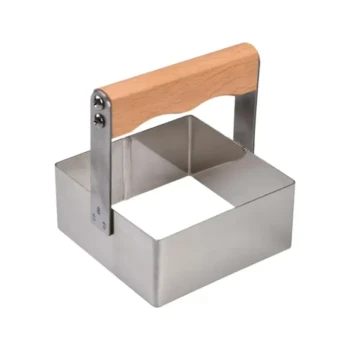
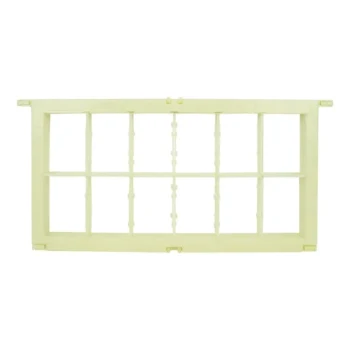
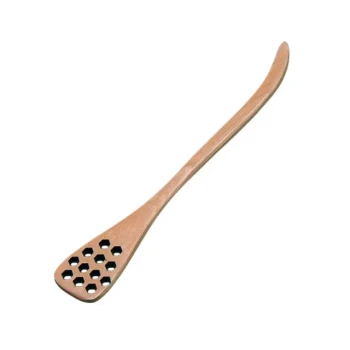
The use of standardized honeycomb measurement tools constitutes a critical shift from intuitive beekeeping to precision management. These tools allow for the accurate quantification of nectar-occupied area, enabling beekeepers to calculate specific yield metrics and objectively assess how environmental factors influence colony productivity.
Precision in honeycomb measurement bridges the gap between raw environmental data and actionable colony management. It moves beekeeping from estimation-based harvesting to data-driven strategies that optimize yield while minimizing physical interference with the hive.
Transforming Measurements into Yield Metrics
The Area-to-Volume Calculation
Standardized tools focus on calculating the precise area within a hive occupied by nectar. This is the foundational metric for modern yield assessment.
By combining this measured area with a standardized cell depth—typically averaging 1 cm—and a known honey density coefficient, beekeepers can mathematically derive the total volume of honey available.
Non-Destructive Estimation
A primary significance of this methodology is the ability to estimate yield without extraction.
This approach allows beekeepers to determine optimal harvest timing without physically disrupting the comb. It significantly reduces colony disturbance, preserving the hive structure and minimizing stress on the bees during critical production periods.
Data-Driven Climate Adaptation
Correlating Environment with Output
In comparative studies, standardized quantitative tools isolate variables to reveal how specific climates impact production.
Data derived from these tools highlights direct links between honey yield and environmental conditions, such as winter low temperatures or specific humidity levels. This creates a clear picture of how local geography aids or hinders production.
Strategic Operational Adjustments
Access to objective equipment feedback allows for proactive rather than reactive management.
Commercial operators use this data to adjust hive placement and feeding strategies. By understanding the specific climate constraints revealed by the data, beekeepers can modify their operations to maximize production efficiency regardless of regional challenges.
Understanding the Trade-offs
The Limitation of Averages
The accuracy of these calculations frequently relies on fixed parameters, such as the average 1 cm cell depth mentioned in standard assessments.
If a colony constructs comb with significant depth variation, the standardized formula may slightly deviate from the actual extracted weight. Users must treat these figures as highly accurate estimates rather than absolute values.
Process Complexity
Adopting standardized measurement tools introduces a layer of technical process to the apiary workflow.
While the data is valuable, it requires time to measure and calculate areas. This contrasts with traditional visual inspections, requiring a balance between the need for data precision and speed of operation.
Making the Right Choice for Your Goal
To apply these principles effectively, align your use of measurement tools with your specific operational objectives:
- If your primary focus is Commercial Efficiency: Use standardized metrics to correlate yield with hive location, adjusting placement to optimize for temperature and humidity.
- If your primary focus is Colony Health: Prioritize the non-destructive aspect of these tools to estimate yield and plan harvests without causing unnecessary stress to the hive.
By standardizing how you measure the hive, you turn passive environmental observation into an active tool for production stability.
Summary Table:
| Metric Type | Key Significance | Core Benefit |
|---|---|---|
| Yield Accuracy | Precise area-to-volume calculations | Enables non-destructive harvest estimation |
| Climate Data | Correlation with environmental variables | Facilitates strategic hive placement |
| Colony Management | Reduced physical hive interference | Minimizes bee stress and preserves comb |
| Operational Strategy | Shift to data-driven decision making | Maximizes commercial efficiency and output |
Scaling Your Commercial Apiary with Precision
At HONESTBEE, we understand that for commercial apiaries and distributors, precision equals profitability. As a leading global supplier, we provide more than just equipment; we deliver the tools necessary for modern, data-driven beekeeping. From hive-making and honey-filling machinery to a full spectrum of beekeeping tools and essential consumables, our portfolio is designed to enhance your operational efficiency.
Ready to upgrade your inventory or scale your production? Partner with HONESTBEE for comprehensive wholesale solutions tailored to your unique market needs.
Contact Our Expert Team Today to discuss how our specialized hardware and equipment can optimize your yield.
References
- Manoj Kumar Painkra, Yogesh Nag. Influence of Weather Parameters on Colonies Performance Parameters of Indian Bee, Apis cerena indica. DOI: 10.20546/ijcmas.2017.611.281
This article is also based on technical information from HonestBee Knowledge Base .
Related Products
- Heavy Duty Stainless Steel Honeycomb Cutter
- Professional Sectional Comb Honey Frame with 250g Cassette System for Beekeeping
- Heart-Shaped Comb Honey Frame and Honeycomb Cassette
- Professional Wide Blade Honey Scraper for Beekeeping and Honey Processing
- Digital Honey Refractometer for Precision Measurement of Optimal Honey Quality
People Also Ask
- How is a comb cutter used to produce cut comb honey? Master the Art of Precision Harvesting
- Why is the comb-cutting technique preferred for Apis cerana queen rearing? Boost Success with Natural Bee Biology
- What is the cut comb honey method? A Guide to Pure, Artisanal Honey Production
- How is the cut comb method used to harvest honey? Master the Art of Premium Unprocessed Honey Production
- What is cut comb honey, and how is it prepared? Experience Honey in Its Purest Form