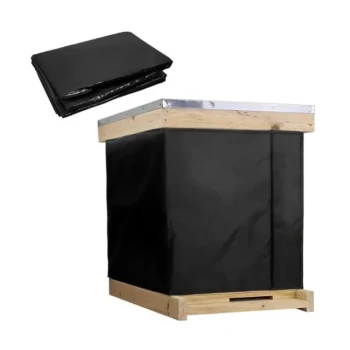
The primary technical necessity of these modifications is environmental stabilization. Equipping commercial bumblebee colonies with heat-reflective covers and insulated shells is critical to shield the hive from rain erosion, pest interference, and extreme high-temperature stress. Without these additions, the standard plastic or wooden shipping containers offer insufficient protection against the variability of field environments.
By neutralizing harsh local microclimates, these protective measures ensure that colony growth is driven by the quality of surrounding food resources rather than being limited by environmental stress.
Mitigating Environmental Stressors
To understand the necessity of these covers, one must first recognize the vulnerability of standard commercial hive materials.
Overcoming Thermal Vulnerability
Standard commercial hives are typically constructed from simple plastic or wood. These materials have limited thermal mass and insulation properties.
The Function of Heat-Reflective Covers
In field environments, direct solar radiation can cause rapid internal overheating. Heat-reflective covers deflect this radiation, preventing the hive from reaching lethal temperatures during extreme heat events.
The Role of Insulated Shells
Insulated shells provide a buffer against temperature fluctuations. This insulation helps maintain a stable internal temperature, reducing the metabolic energy bees must spend on thermoregulation.
Preventing Physical Degradation
Field environments expose hives to precipitation and weathering. Protective shells prevent rain erosion, which can compromise the structural integrity of the container and lead to water ingress.
Blocking Biological Interference
Standard containers may have gaps or weaknesses that allow entry to predators or competitors. Robust outer shells serve as a physical barrier against pest interference, securing the colony’s safety.
Isolating Growth Dynamics
The ultimate goal of using modified housing is to ensure data integrity and colony success.
Eliminating Confounding Variables
In many field scenarios, the objective is to determine how well a landscape supports bees based on available nectar and pollen.
Ensuring Resource-Dependent Growth
If a colony is battling heat stress or fighting off pests, its growth will stunt regardless of how much food is nearby.
By using protective covers, you remove the weather as a limiting factor. This ensures that the growth dynamics of the bee colony are primarily dictated by the food resource quality of the surrounding landscape.
The Risks of Unmodified Housing
While adding covers and shells increases the initial setup complexity, relying on standard housing creates significant operational risks.
The "False Negative" Problem
If you are assessing a landscape for pollinator suitability, an unmodified hive might fail due to a heatwave, not a lack of flowers. This leads to incorrect conclusions about the habitat's value.
Inconsistent Colony Performance
Without protection, colonies in the same field may perform drastically differently based on slight differences in shade or exposure. This lack of uniformity makes it nearly impossible to standardize results or guarantee pollination rates.
Making the Right Choice for Your Goal
Whether for scientific research or agricultural pollination, stabilizing the hive environment is a prerequisite for success.
- If your primary focus is Ecological Research: Use these covers to ensure your data reflects landscape quality rather than weather artifacts.
- If your primary focus is Commercial Pollination: Invest in insulation to maximize colony lifespan and worker activity levels during variable weather.
Protective housing turns a fragile biological unit into a robust, reliable data point.
Summary Table:
| Feature | Technical Function | Primary Benefit |
|---|---|---|
| Heat-Reflective Covers | Deflects direct solar radiation | Prevents internal overheating and lethal heat stress |
| Insulated Shells | Thermal buffering & stabilization | Reduces metabolic energy spent on thermoregulation |
| Structural Reinforcement | Weather-resistant barrier | Prevents rain erosion and structural container failure |
| Pest Barrier | Physical exclusion | Blocks biological interference from predators and pests |
| Growth Stabilization | Neutralizes microclimate variables | Ensures growth depends on food quality, not weather |
Maximize Your Pollination Success with HONESTBEE
At HONESTBEE, we understand that commercial apiaries and distributors require more than just bees—they need robust, field-tested solutions. From specialized hive-making and honey-filling machinery to a complete range of beekeeping tools and industry consumables, we provide the hardware necessary to protect your investment.
Whether you are managing large-scale agricultural pollination or looking to supply premium equipment to the beekeeping market, our comprehensive wholesale offering is designed to mitigate environmental risks and ensure consistent colony performance.
Ready to elevate your beekeeping operations? Contact us today for wholesale inquiries and expert equipment solutions
References
- Gabriela M. Quinlan, Rufus Isaacs. Honey bee (Apis mellifera) colonies benefit from grassland/ pasture while bumble bee (Bombus impatiens) colonies in the same landscapes benefit from non-corn/soybean cropland. DOI: 10.1371/journal.pone.0257701
This article is also based on technical information from HonestBee Knowledge Base .
Related Products
- Inner Beehive Cover for Beekeeping Bee Hive Inner Cover
- Professional Insulated Winter Hive Wrap for Beekeeping
- Professional Insulated Plastic Bee Hives
- Premium Three Layer Ventilated Bee Suit with Round Veil
- Vented Beekeeping Jacket with Hood and Veil for Beekeepers
People Also Ask
- What is the purpose of the inner cover in a beehive? A Key to Hive Health & Easy Management
- What is the function and placement of an inner cover in a beehive? Essential Hive Management Guide
- What is the purpose of the inner and outer covers in a beehive? Essential for Hive Health & Management
- What is a beehive's inner cover and how is it used? Essential Guide for Hive Insulation and Ventilation
- What are the functions of the inner and outer covers on a beehive? Essential Guide for Hive Protection and Management