The technical objective of incorporating raw bee pollen into multifloral honey is to execute a precise enrichment process that significantly elevates the product's bioactive density. By introducing pollen, producers actively increase the concentration of total phenols, flavonoids, and antioxidants, transforming the honey from a simple sweetener into a functional food optimized for apitherapy and modern nutritional requirements.
Core Insight: The addition of pollen is not merely a flavoring technique; it is a calculated modification of the honey's physico-chemical properties designed to maximize its antioxidant stress-resistance capacity and therapeutic value.
The Science of Bioactive Enrichment
Boosting Chemical Potency
The fundamental goal of this process is to increase the levels of specific bioactive components. Multiforal honey serves as a carrier, while the raw bee pollen acts as a dense source of phenols and flavonoids.
Enhancing Stress-Resistance
Beyond simple nutrition, the technical aim is to enhance the product's functional capacity. The mixture creates a final product with a superior ability to resist oxidative stress, which is a primary requirement for high-value apitherapy applications.
Modifying the Product Matrix
Altering Physico-Chemical Properties
Integrating pollen does not just add nutrients; it fundamentally modifies the physical and chemical structure of the honey. This alteration is necessary to create a stable, high-value product that meets specific standards for modern nutrition.
Ensuring Homogeneity
To achieve a technically sound mixture, the physical state of the pollen must be altered before mixing. Grinding dried pollen pellets is a critical step to increase surface area.
Preventing Concentration Spikes
Proper processing ensures that nutrients are uniformly distributed throughout the honey matrix. This prevents localized concentration spikes, ensuring the final product delivers a consistent dosage of bioactives in every serving.
Technical Considerations and Trade-offs
Processing Complexity
Achieving the correct bioactive profile requires more than simple mixing. The necessity of grinding pollen adds a mechanical step to production, requiring equipment capable of pulverizing pellets without degrading their nutritional quality through excess heat.
Texture vs. Potency
While increasing pollen content boosts antioxidant levels, it inevitably alters the texture and flow of the honey. Producers must balance the desire for maximum bioactive load with the need to maintain a palatable, manageable consistency for the consumer.
Making the Right Choice for Your Goal
When developing high-value bee products, your processing decisions should align with your specific technical targets:
- If your primary focus is Therapeutic Potency: Prioritize the selection of raw pollen with high phenolic content to maximize the antioxidant stress-resistance capacity of the final mixture.
- If your primary focus is Product Consistency: Ensure you implement a rigorous grinding phase to maximize particle surface area, guaranteeing a homogeneous matrix without nutritional hot spots.
The ultimate value of this process lies in its ability to convert standard honey into a complex, stress-resistant nutritional tool.
Summary Table:
| Key Technical Factor | Objective & Outcome |
|---|---|
| Bioactive Enrichment | Increases concentration of total phenols, flavonoids, and antioxidants |
| Functional Enhancement | Maximizes antioxidant stress-resistance capacity for apitherapy |
| Matrix Modification | Improves physico-chemical stability and nutritional density |
| Homogeneity Control | Grinding pollen ensures uniform nutrient distribution without hot spots |
| Product Transformation | Converts standard honey into a high-value, functional superfood |
Elevate Your Beekeeping Production with HONESTBEE
Are you looking to scale the production of high-value, pollen-enriched honey products? HONESTBEE specializes in supporting commercial apiaries and distributors with the professional tools and machinery needed for advanced bee product manufacturing.
From industrial-grade grinding and mixing equipment to ensure a homogeneous matrix, to honey-filling machines designed for dense, bioactive-rich formulas, we provide the full spectrum of hardware and consumables. Partner with us to enhance your product's therapeutic value and operational efficiency.
Ready to upgrade your apiary’s capabilities? Contact us today to explore our wholesale solutions!
References
- Mirela Drăgan, Silvana Mihaela Dănăilă-Guidea. RESEARCH ON CULTURES OF HONEY PLANTS AT THE LEVEL OF CORNETU COMMUNE, IN ILFOV COUNTY - MINIREVIEW. DOI: 10.56082/annalsarsciagr.2022.2.77
This article is also based on technical information from HonestBee Knowledge Base .
Related Products
- Plastic Bee Pollen Trap Strips Comb Catcher Collector
- 30 cm Plastic Entrance Hole Bee Pollen Trap and Collector
- Removable Plastic Pollen Trap With Ventilated Tray for Bees Pollen Collector
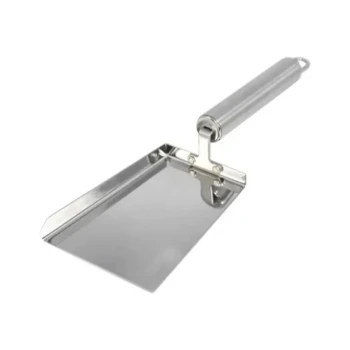
- Heavy-Duty Ergonomic Grip Galvanized Pollen Shovel
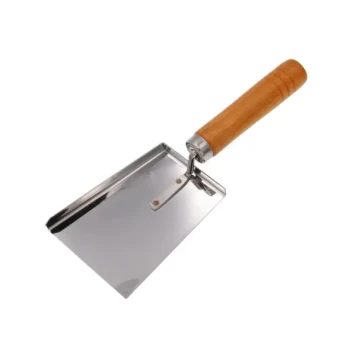
- Stainless Steel Pollen Shovel with Wooden Handle
People Also Ask
- For what reasons do beekeepers collect bee pollen? Boost Hive Health and Unlock New Revenue Streams
- What are the design principles and advantages of pollen traps in the collection of bee pollen? Boost Your Apiary Yield
- What are the ideal weather conditions for installing a bee pollen trap? Ensure Colony Safety with Expert Timing
- Why is frequent harvesting of bee pollen from traps necessary for quality control? Ensure Freshness and Prevent Mold.
- How often should bee pollen be harvested from a trap and why? Master Freshness and Prevent Spoilage