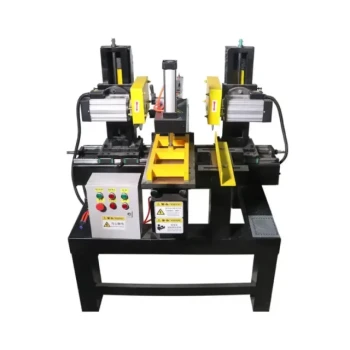
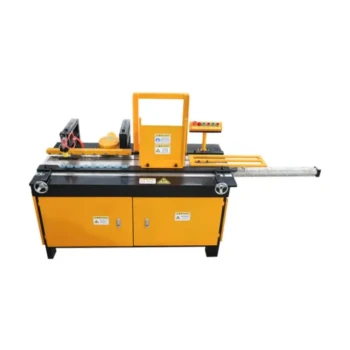
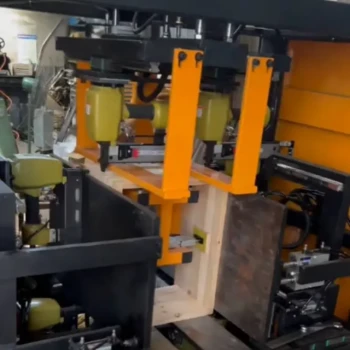
The technical value of industrial-grade hive manufacturing lies in its ability to produce hardware with extreme dimensional precision, facilitating thermodynamic conditions that closely mimic wild nests. By utilizing CNC milling and standardized processing, these machines create tightly sealed, biologically optimized structures that reduce physiological stress on the colony, allowing bees to direct their energy toward immune defense and adaptation rather than maintenance.
The core value of this technology is that it stabilizes the physical environment of the hive. By eliminating structural inconsistencies through precision manufacturing, you remove "poor housing" as a variable, enabling feralisation strategies where natural selection can effectively breed for genetic resistance against pests like Varroa mites.
Engineering for Biological Resilience
Precision Thermodynamics and Biomimicry
Industrial machinery enables the fabrication of hives that strictly adhere to specific biological parameters.
Unlike manually constructed boxes which may suffer from irregularities, machine-milled hives achieve tight dimensional tolerances.
This precision allows for structures that replicate the thermodynamic efficiency of wild nests, helping colonies regulate internal temperature and humidity with minimal energy expenditure.
Enhancing Colony Defense Mechanisms
A critical aspect of resistance is the physical security of the nest.
Industrial manufacturing ensures optimized entrance dimensions and seamless component mating, which minimizes gaps in the hive body.
This structural integrity reduces the risk of invasion by external pests and drafts, allowing the colony to defend its resources effectively without over-committing guard bees.
Energy Allocation for Immune Response
When a hive is poorly constructed, bees must expend significant metabolic energy sealing cracks with propolis or generating heat to combat drafts.
By providing tightly sealed, uniform environments, industrial hives relieve this burden.
This energy conservation allows the superorganism to reallocate resources toward hygienic behavior and immune responses, which are essential for surviving pathogens and mites.
Supporting Feralisation and Natural Selection
Standardization as a Scientific Control
To breed for natural resistance, beekeepers must distinguish between colony failure caused by bad genetics and failure caused by bad equipment.
Industrial-grade machinery produces standardized hardware that acts as a control variable in this biological equation.
When every colony lives in an identical, high-quality environment, survival becomes a true test of genetic adaptability rather than a matter of luck regarding hive quality.
Facilitating Feralisation Strategies
The primary reference highlights the role of these machines in supporting feralisation strategies.
This involves using standardized equipment to expose bees to natural selection pressures under controlled physical conditions.
Because the hardware is optimized for survival (proper insulation, correct bee space), the bees are given the best physical chance to develop natural tolerance to threats like Varroa mites without chemical intervention.
Quarantine and Disease Management
Precision manufacturing maintains critical bee space and ensures total interchangeability of frames and bodies.
This mechanical consistency improves quarantine efficiency by reducing the physical transmission vectors associated with ill-fitting or decaying equipment.
It allows for the seamless rotation of old comb—a reservoir for disease—out of the operation without disrupting the colony's structural integrity.
Understanding the Trade-offs
The Risk of Monoculture
While standardization is technically superior for hardware, it must not lead to a standardization of management that ignores local biological nuances.
Industrial efficiency should never override the observation of individual colony needs; a perfect box cannot save a starving colony in a forage dearth.
Capital vs. Craft
The shift to industrial-grade machinery requires significant capital investment compared to traditional hand-building methods.
For smaller operations, this cost must be weighed against the biological benefits of precision; however, for resistance breeding programs, the data integrity provided by standardized equipment often justifies the cost.
Making the Right Choice for Your Goal
This technology bridges the gap between mass production and biological stewardship. To apply this to your operation:
- If your primary focus is Resistance Breeding: Utilize industrial-grade hives to eliminate environmental variables, ensuring that colony survival is determined exclusively by superior genetics.
- If your primary focus is Natural Beekeeping: Select machine-milled components that specifically prioritize wall thickness and thermodynamic retention to mimic the insulation properties of a hollow tree.
- If your primary focus is Disease Management: Leverage the high interchangeability of precision frames to implement aggressive comb rotation and quarantine protocols without disturbing colony architecture.
Ultimately, precision hardware is not a replacement for biology, but a platform that stabilizes the environment so natural selection can do its best work.
Summary Table:
| Feature | Technical Value | Biological Impact |
|---|---|---|
| Dimensional Precision | CNC-milled tight tolerances | Mimics wild nest thermodynamics & reduces drafts |
| Structural Integrity | Seamless component mating | Minimizes pest invasion & optimizes entrance defense |
| Hardware Standardization | Consistent environmental control | Acts as a control variable for resistance breeding |
| Mechanical Consistency | Perfect bee space & interchangeability | Facilitates disease management & comb rotation |
Elevate Your Apiary with Precision Engineering
At HONESTBEE, we understand that the foundation of a resilient colony starts with a superior environment. As a premier provider for commercial apiaries and distributors, we offer a comprehensive wholesale range of industrial-grade hive-making machinery, honey-filling equipment, and essential beekeeping tools designed to promote natural colony health.
Whether you are scaling a professional operation or supplying the industry, our high-precision hardware eliminates environmental variables, allowing your bees to focus on what matters: natural immunity and productivity. From specialized machinery to honey-themed cultural merchandise, we provide the full spectrum of tools needed for modern, sustainable beekeeping.
Ready to optimize your production and support bee health?
References
- T. Blacquière, Delphine Panziera. A Plea for Use of Honey Bees’ Natural Resilience in Beekeeping. DOI: 10.1080/0005772x.2018.1430999
This article is also based on technical information from HonestBee Knowledge Base .
Related Products
- High-Efficiency Pneumatic Bee Hive Making Machine for Rapid Box Assembly
- Beehive Machine Double End Saw for Precision Hive Component Manufacturing
- Beehive Handle and Frame Rest Cutting Machine: Your Specialized Hive Machine
- Automatic High-Speed Bee Hive Box Stapling Machine
- Mini Desktop Bee Hive Frame Forming Making Machine
People Also Ask
- How does the introduction of professional beehive-making machinery benefit sustainable beekeeping? Scale Your Apiary
- Why is specialized beehive-making machinery critical for low-defense breeding? Enhance Selection with Precision Tools
- How does the introduction of specialized beehive making machinery contribute to increasing the scale of regional beekeeping industries?
- What is the importance of specialized beehive making machinery in a circular bio-economy? Build Local Sustainability
- Why is specialized beehive-making machinery essential? Scale Your Apiary with Precision Industrial Standards