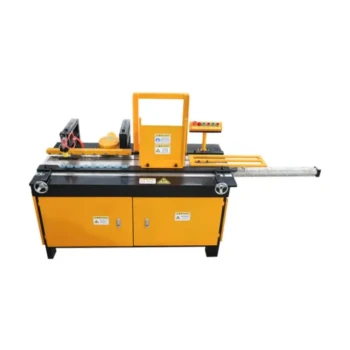
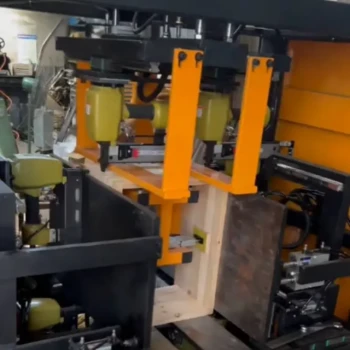
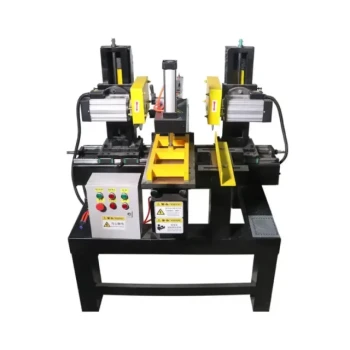
Specialized hive-making machinery acts as the foundational hardware for scalable, industrial-grade beekeeping. It enables the conversion of local raw materials into standardized, interchangeable components, effectively lowering the manufacturing cost per unit while ensuring the structural precision and airtightness required for large-scale commercial apiaries.
The core value of this machinery lies in its ability to enforce strict dimensional standardization across thousands of units. By eliminating hardware variability, it creates a stable infrastructure that supports mechanized harvesting, biological optimization, and long-term economic self-sufficiency.
The Foundation of Standardization and Scalability
Ensuring Component Interchangeability
The primary technical advantage of specialized machinery is the guarantee of uniformity. In a manual setup, minor variations make swapping parts impossible.
Machinery ensures that every frame and box produced fits perfectly with any other. This seamless interchangeability drastically reduces maintenance complexity and replacement costs, as operators can rotate equipment without compatibility issues.
Enabling Mechanized Operations
Standardization is the prerequisite for advanced apiary management. Industrial honey harvesting relies on extractors and automated lines that require exact physical dimensions.
By producing high-precision components, these machines provide the necessary hardware infrastructure for downstream mechanization. This allows for efficient colony rotation, stacking during transport, and automated processing that would be impossible with artisanal, irregular equipment.
Optimization of "Bee Space"
Beyond physical fit, machinery allows for strict adherence to biological parameters known as "bee space."
Professional equipment creates frames and boxes that respect the precise gap bees need to move freely. This prevents the bees from sealing gaps with propolis or building burr comb, thereby reducing waste and facilitating the use of honey extractors.
Economic and Environmental Efficiency
Utilizing Local Resources
Specialized machinery allows operations to process local raw materials rather than relying on imported, pre-made hives.
This capability lowers procurement costs and fosters a circular economy model. Operators achieve independence from external supply chains, tailoring the equipment to specific local climates and bee species using available timber or materials.
Enhancing Colony Survival
The precision of machine-cut joints ensures superior airtightness and sealing properties.
High-precision hives are critical for thermal insulation, helping colonies survive harsh winters and resist extreme weather. By eliminating drafts and leaks common in hand-made hives, the machinery directly contributes to lower colony mortality rates.
Understanding the Trade-offs
High Initial Capital Intensity
While the cost per hive drops significantly over time, the upfront investment in specialized machinery is substantial.
Small-scale operations may find the return on investment too slow compared to purchasing finished equipment. This infrastructure is technically valuable primarily when the goal is mass production or rapid scaling.
Rigidity of Design Specs
Once a production line is tooled for a specific standard, altering dimensions becomes difficult and costly.
If the local beekeeping industry shifts to a different hive standard or a new biological research finding suggests a design change, the machinery may require expensive retooling. Commitment to a specific standard is a long-term technical constraint.
Making the Right Choice for Your Goal
To determine if specialized hive-making machinery aligns with your infrastructure needs, evaluate your primary operational objectives:
- If your primary focus is Commercial Scalability: Prioritize machinery that guarantees 100% component interchangeability to support automated harvesting and logistics.
- If your primary focus is Research and Science: Utilize machinery to eliminate hardware variables, ensuring that data regarding colony density and health is scientifically comparable.
- If your primary focus is Regional Self-Sufficiency: leverage machinery to process local timber, reducing external dependencies and insulating your operation from supply chain volatility.
Ultimately, this technology shifts beekeeping from a craft-based activity to a standardized industrial process, providing the consistency required for sustainable growth.
Summary Table:
| Technical Feature | Operational Impact | Strategic Value |
|---|---|---|
| Dimensional Precision | Ensures component interchangeability | Reduces maintenance and replacement costs |
| Bee Space Optimization | Prevents burr comb and propolis buildup | Enhances honey yields and colony management |
| High-Precision Joints | Improves hive airtightness and insulation | Lowers winter mortality and weather stress |
| Industrial Standardization | Enables use of automated extractors | Foundation for mechanized, large-scale harvesting |
| Local Material Processing | Reduces reliance on imported pre-made hives | Increases supply chain independence and ROI |
Scale Your Commercial Apiary with HONESTBEE Expertise
Transitioning from manual assembly to industrial-grade infrastructure requires more than just tools—it requires the right technical partner. HONESTBEE specializes in empowering commercial apiaries and distributors with high-performance hive-making machinery, honey-filling lines, and professional-grade beekeeping equipment.
By partnering with us, you gain access to a comprehensive wholesale catalog including:
- Advanced Machinery: Precise hardware for hive manufacturing and honey processing.
- Essential Tools: A full spectrum of beekeeping hardware and machinery.
- Industry Consumables: Every essential needed to keep large-scale operations running smoothly.
- Cultural Merchandise: Honey-themed goods to diversify your brand's reach.
Ready to achieve 100% component interchangeability and maximize your operational efficiency?
Contact HONESTBEE Today to discuss how our specialized equipment can transform your production capacity.
References
- Pynshongdor L. Nongbri. BEE KEEPING AND RURAL LIVELIHOOD: CONSTRUCT OF A RESEARCH MODEL THROUGH LITERATURE REVIEW. DOI: 10.5281/zenodo.7124350
This article is also based on technical information from HonestBee Knowledge Base .
Related Products
- High-Efficiency Pneumatic Bee Hive Making Machine for Rapid Box Assembly
- Beehive Handle and Frame Rest Cutting Machine: Your Specialized Hive Machine
- Mini Desktop Bee Hive Frame Forming Making Machine
- Automatic High-Speed Bee Hive Box Stapling Machine
- Beehive Machine Double End Saw for Precision Hive Component Manufacturing
People Also Ask
- How does the introduction of professional beehive-making machinery benefit sustainable beekeeping? Scale Your Apiary
- Why is specialized beehive-making machinery critical for low-defense breeding? Enhance Selection with Precision Tools
- How does the introduction of specialized beehive making machinery contribute to increasing the scale of regional beekeeping industries?
- What is the importance of specialized beehive making machinery in a circular bio-economy? Build Local Sustainability
- Why is specialized beehive-making machinery essential? Scale Your Apiary with Precision Industrial Standards