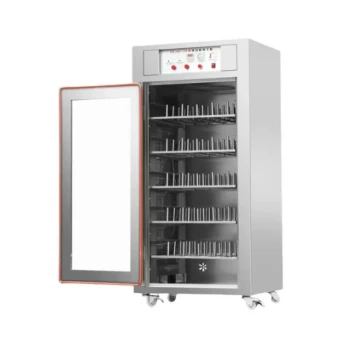
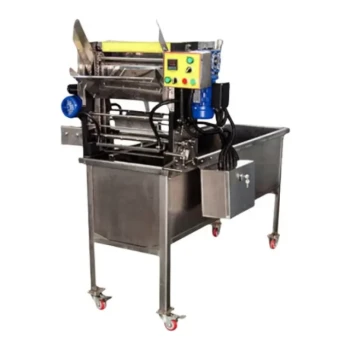
A condensation honey dryer operates as a specialized, closed-loop dehumidification system. Rather than venting heated air outside, it continuously recycles internal air through a heat pump cycle to gently extract moisture from the honey without overheating it.
Core Takeaway By utilizing a condensation principle within a sealed vessel, this technology separates water from honey at low temperatures (approx. 35°C). This method maximizes energy efficiency and preserves the honey's delicate enzymatic and nutrient profile, which high-heat methods often destroy.
The Closed-Loop Air Cycle
The Moisture Extraction Phase
The process begins with dry, warm air circulating within the stainless steel vessel.
This dry air passes over the honey, binding with and absorbing the evaporating moisture from the honey's surface.
The Condensation Phase
Instead of venting this now-moist air into the external environment, the system directs it toward a cold heat pump evaporator.
Upon contact with the cold surface, the moisture in the air condenses into liquid water, effectively stripping the air of its humidity.
Reheating and Recirculation
The air, now dry again, is immediately reheated by the fan and heat pump system.
It is then recirculated back into the drying chamber to absorb more moisture, creating a continuous cycle with minimal thermal energy loss.
Mechanical Agitation and Surface Area
Increasing Exposure
To ensure efficient drying, the honey must be moved to expose its moisture to the dry air.
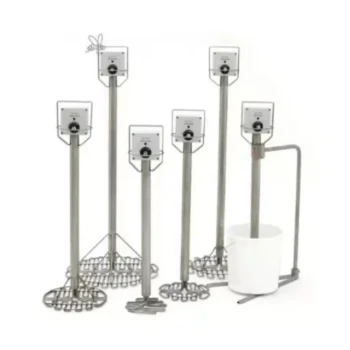
The dryer utilizes a specially shaped stirrer—often a disc, spiral, or multi-plate design—inside the working vessel.
Gentle Rotation Speed
Crucially, these internal discs move at a very slow, fixed speed of 1 revolution per minute (RPM).
This slow pace prevents air from being whipped into the product and ensures the honey is dried without spoiling its texture or structure.
Eliminating Dead Zones
The agitation system is designed to prevent "dead zones" within the tank.
This ensures every portion of the honey is processed evenly, resulting in a consistent moisture content throughout the batch.
Temperature Control and Quality Preservation
Low-Temperature Drying
The system creates an environment that mimics natural hive conditions, processing the honey at approximately 35°C.
This low operating temperature is critical for maintaining the honey's raw status and biological value.
Preventing Chemical Changes
High heat can spike Hydroxymethylfurfural (HMF) content, a marker of thermal degradation in honey.
Because this system relies on dry air rather than high heat, it shortens drying time without increasing HMF or destroying heat-sensitive nutrients.
Operational Considerations and Efficiency
Maximizing Energy Use
The primary operational advantage of this design is the closed air circulation system.
By recovering heat within the unit rather than venting hot air, the system significantly lowers operating costs and reduces total energy consumption.
Hygiene and Maintenance
The unit operates as an "air-lock tank," isolating the honey from external contaminants during the process.
Constructed from high-quality AISI 304 stainless steel, the vessel allows for easy cleaning and maintenance, ensuring high sanitary standards.
Making the Right Choice for Your Goal
The condensation dryer is an advanced solution for producers prioritizing quality over speed or simplicity.
- If your primary focus is Nutrient Preservation: This method is ideal because the 35°C operating limit protects enzymes and prevents HMF spikes.
- If your primary focus is Energy Efficiency: The closed-loop heat pump system offers a sustainable, low-cost operation by recycling thermal energy.
This technology creates the optimal balance between industrial efficiency and the biological integrity of the honey.
Summary Table:
| Feature | Condensation Drying Specification |
|---|---|
| Core Technology | Closed-loop heat pump dehumidification |
| Operating Temperature | Approximately 35°C (Low-temperature) |
| Agitation Speed | 1 RPM (Slow rotation to prevent aeration) |
| Energy Efficiency | High (Heat recovery through air recycling) |
| Material Quality | Food-grade AISI 304 Stainless Steel |
| Key Benefit | Preserves enzymes and prevents HMF spikes |
Elevate Your Honey Quality with HONESTBEE Professional Equipment
Maximize the value of your harvest with HONESTBEE, the leading partner for commercial apiaries and distributors worldwide. Whether you need advanced honey-filling machines, precision condensation dryers, or high-performance hive-making machinery, we provide the full spectrum of beekeeping tools and industrial consumables.
Why choose HONESTBEE?
- Preserve Integrity: Our technology ensures low-temperature processing to maintain the biological value of your honey.
- Global Wholesale Supply: From specialized hardware to honey-themed cultural merchandise, we are your one-stop shop.
- Industrial Scalability: Designed for high-efficiency commercial operations and distributors.
Ready to optimize your production and reduce energy costs? Contact us today to explore our wholesale solutions!
Related Products
- 0.5T Capacity Honey Dehumidifier Dryer with Vacuum Heating and Thickening Filtering Machine
- High Quality Honey Dehumidifier Dryer Thickening Machine for Beekeeping
- Economy Small Scale Honey Dryer Dehumidifier Thickening Machine
- Honey Concentrating and Filtering Dehumidifier Machine 2T Capacity for Honey
- Honey Concentrating Vacuum Heating Thickening Machine Dehumidifier for Honey
People Also Ask
- What is the primary function of professional dehumidification equipment in honey processing? Stability & Quality
- How to dry up honey? The Safe Guide to Stabilizing Honey and Preventing Fermentation
- What is the process for using a dehumidifier to lower honey's moisture content? Expert Drying Techniques
- How to decrease moisture in honey? Prevent Fermentation and Ensure Long-Term Quality
- How to remove humidity from honey? Protect Your Harvest from Fermentation