Honey tanks and jacket-equipped tubs are the primary instruments utilized for heating and processing honey in professional settings. While these large-scale vessels are the most common standard, producers also employ water bath heaters and electric heat blankets to manage viscosity and liquefy honey through gentle, indirect thermal transfer.
The goal of heating honey is to liquefy crystals and lower viscosity without destroying heat-sensitive enzymes. The most effective instruments utilize indirect heat sources, such as circulating hot water or external wraps, to warm the product evenly without scorching it.
Industrial and Batch Processing Instruments
The primary reference for honey heating equipment is processing capability. For significant volumes, specialized vessels are required to ensure the heat penetrates the honey mass evenly.
Honey Tanks
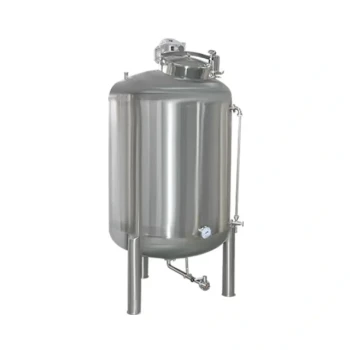
Honey tanks serve as the foundational instrument for most honey production operations. These vessels are designed to hold large quantities of honey for settling, straining, and heating.
They act as the central hub for processing, allowing producers to handle bulk amounts of honey in a sanitary, controlled environment.
Jacket-Equipped Tubs
A variation of the standard tank, jacket-equipped tubs utilize a double-walled construction. Hot water circulates continuously between the walls, creating a "jacket" of warmth that surrounds the inner chamber.
This method ensures that the honey is heated by the warm walls rather than a direct heating element, significantly reducing the risk of overheating.
Central Stirring Systems
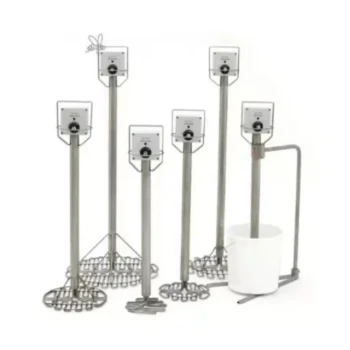
To maximize efficiency, jacketed tubs are often equipped with a central stirrer. Honey acts as an insulator, meaning heat travels through it slowly.
A stirrer agitates the honey gently, moving the warm honey away from the walls and mixing it with the cooler center. This ensures a uniform temperature throughout the batch.
Supplemental and Maintenance Heating
For smaller operations, specific localized heating, or storage maintenance, supplementary instruments are often employed.
Water Bath Heaters
Water bath heaters apply the same principle as jacketed tanks but often on a smaller or more manual scale. The honey container is placed inside a larger vessel filled with water.
The water is heated to a precise temperature, warming the honey gently. This method preserves the honey's quality by strictly avoiding direct contact with high-heat surfaces.
Electric Heat Blankets
Electric heat blankets are flexible, insulated bands designed to wrap around honey containers, such as buckets or drums.
These are particularly useful during colder months when honey naturally thickens or crystallizes. They provide consistent, low-level maintenance heat to keep the honey flowable for bottling or transfer.
Understanding the Trade-offs
Choosing the right heating instrument involves balancing efficiency with quality preservation.
The Risk of Direct Heat
Honey is extremely sensitive to temperature. Direct heating elements can create "hot spots" that caramelize sugars and destroy beneficial enzymes.
Instruments that lack water circulation or agitation mechanisms run a higher risk of degrading the honey's nutritional profile.
Speed vs. Uniformity
Electric blankets are excellent for maintaining temperature, but they are slow to liquefy a fully crystallized drum because they only heat the exterior surface.
Conversely, stirred jacketed tanks heat the entire mass quickly and evenly, but they require a significantly higher initial financial investment and more floor space.
Making the Right Choice for Your Goal
To select the correct instrument, you must assess your production volume and specific processing needs.
- If your primary focus is large-scale production: Invest in jacket-equipped tubs with central stirrers to ensure efficiency and uniform quality across large batches.
- If your primary focus is seasonal maintenance: Utilize electric heat blankets to keep stored honey liquid and manageable during winter months.
- If your primary focus is maximum quality preservation: Prioritize water bath heaters or jacketed systems that rely exclusively on indirect, temperature-controlled water circulation.
The best heating solution is one that liquefies your honey efficiently while strictly adhering to the principle of low-temperature, indirect heating.
Summary Table:
| Heating Instrument | Heat Method | Ideal Use Case | Primary Advantage |
|---|---|---|---|
| Honey Tanks | Direct/Indirect | General Processing | High-volume storage and settling |
| Jacketed Tubs | Water Circulation | Industrial Batching | Precise control with no scorching |
| Central Stirrers | Mechanical Agitation | Rapid Processing | Uniform heat distribution in large tanks |
| Water Baths | Indirect Water | Small-scale Quality | Maximum enzyme and flavor preservation |
| Heat Blankets | External Wrap | Maintenance/Storage | Portable and cost-effective liquefaction |
Elevate Your Honey Production with HONESTBEE Solutions
At HONESTBEE, we specialize in empowering commercial apiaries and distributors with professional-grade beekeeping infrastructure. Whether you need advanced honey-filling machines, jacketed tanks, or a complete suite of beekeeping tools, our wholesale offerings are designed to maximize your efficiency and preserve your honey's quality.
Ready to scale your operations? Contact us today to discover how our industry-leading machinery and consumables can transform your production line.
Related Products
- Stainless Steel Heated Honey Tank Warming Heating Tank
- Honey Tank Heater Drum Heating Blanket for Honey Barrel
- 0.5T Capacity Honey Dehumidifier Dryer with Vacuum Heating and Thickening Filtering Machine
- Silicone Rubber Honey Drum Heating Belt
- HONESTBEE Commercial Upright Honey Melter
People Also Ask
- What are the benefits of precise temperature control in honey heating tanks? Preserve Quality and Efficiency
- How do honey heating tanks offer scalability for growing beekeeping operations? Strategic Equipment Growth Solutions
- What features of a honey heating tank contribute to hygiene? Ensure Purity with Stainless Steel & Sanitary Design
- What is the primary role of a honey heating tank? Enhance Your Honey Processing Flow and Quality
- What is the purpose of using heating tanks or constant temperature water baths in honey dehydration? Optimize Purity & Flow