Bee population decline is driven primarily by climate change, habitat loss, and limited forage diversity. Climate disruption can shift flowering periods and create early-season pollen shortages; urban development removes nesting and feeding habitat; and monoculture farming leaves colonies dependent on narrow, sometimes unreliable food sources. Professional apiary equipment cannot reverse these environmental pressures, but it can help beekeepers monitor risk, supplement nutrition, protect colonies, and relocate hives when conditions deteriorate.
The most effective response combines environmental awareness with operational control: provide nutrition during forage gaps, stabilize hive conditions, monitor colony health, and move colonies to more diverse forage areas when necessary.
The Environmental Pressures Behind Bee Decline
Climate change disrupts forage timing
Changing temperatures and extreme weather can alter growing seasons and flowering schedules. When early flowers bloom later, finish earlier, or fail because of drought or cold, colonies may face a critical shortage of pollen when brood production is increasing.
Climate fluctuations can also affect hive temperatures, foraging activity, and the timing of colony management operations.
Habitat loss reduces feeding and nesting areas
Urban development, deforestation, and land conversion remove flowering plants and suitable nesting environments. Even when colonies remain near managed farmland, the surrounding landscape may not provide enough continuous forage.
This reduces the availability of nectar and pollen and increases competition among colonies and other pollinators.
Monoculture limits nutritional diversity
Large areas planted with a single crop can produce abundant forage for a short period, followed by a severe food gap. A single dominant crop may also provide less nutritional variety than a landscape containing multiple flowering species.
Colonies need sustained access to diverse pollen and nectar sources to support brood development and maintain resilience.
Pesticides, parasites, and disease intensify environmental stress
Pesticide exposure, mites, pathogens, and other biological threats can weaken colonies that are already under nutritional or climatic pressure. These factors may not be the original environmental driver, but they can accelerate colony losses when bees are already stressed.
Professional equipment is therefore most effective when used alongside appropriate health monitoring, integrated pest management, and responsible chemical practices.
How Professional Apiary Equipment Helps
Early-season feeders address forage gaps
Feeders allow beekeepers to provide supplemental nutrition when natural pollen or nectar is unavailable. This is especially important during delayed flowering, poor weather, or the transition between major flowering periods.
Supplemental feeding should support—not replace—access to natural forage. Beekeepers must select suitable feed, manage quantities carefully, and avoid creating unnecessary robbing or disease risks.
Hive insulation stabilizes colony conditions
Hive insulation accessories can help reduce the impact of temperature fluctuations. By supporting a more stable internal environment, they may reduce the energy colonies spend responding to cold or rapidly changing weather.
Insulation is not a substitute for ventilation, moisture control, or correct hive placement. It should be matched to the local climate and seasonal conditions.
Mobile equipment enables strategic relocation
Hive-transport equipment, lifting systems, and electric forklifts make it more practical to move colonies to areas with stronger or more diverse forage. This can help apiaries respond to drought, delayed flowering, crop rotation, or forage depletion.
Efficient transport also reduces handling time and physical strain, helping teams relocate colonies with less disruption when conditions require a rapid response.
Monitoring systems improve decision-making
Hive scales, inspection devices, environmental sensors, and management software can help track colony weight, activity, population changes, and forage performance. These measurements provide earlier warning of declining food availability or abnormal colony conditions.
Data does not replace field inspections, but it helps commercial operators prioritize visits and identify colonies that need intervention.
Health tools support earlier intervention
Protective clothing, inspection tools, pest-monitoring devices, and veterinary consumables enable safer and more consistent colony assessments. Early detection of mites, disease symptoms, or abnormal population changes gives beekeepers more time to respond.
The objective is targeted intervention rather than routine disruption. Frequent, well-planned monitoring is more useful than unnecessary handling.
Building a Resilient Commercial Apiary
Match equipment to environmental risk
Equipment selection should begin with the dominant local challenge. A region with short spring forage may need feeding and insulation solutions, while a migratory operation may prioritize transport capacity, lifting equipment, and rapid hive handling.
A complete product portfolio is valuable because colony resilience depends on several connected activities: feeding, inspection, transport, protection, and recordkeeping.
Standardize equipment across the operation
Consistent hive hardware and compatible tools simplify training, maintenance, and replacement. Standardization also allows workers to move between apiary sites without adapting to different operating methods.
For distributors and wholesalers, compatibility and dependable replenishment can be as important as individual product specifications.
Use logistics as part of risk management
Environmental conditions can change faster than seasonal procurement cycles. Reliable inventory, rapid response times, and efficient order fulfillment help apiaries obtain feeders, protective equipment, monitoring tools, or transport accessories when they are actually needed.
For commercial buyers, supplier performance should therefore include product quality, technical support, availability, and delivery reliability.
Understanding the Trade-offs
Equipment reduces exposure but does not remove environmental causes
Feeders, insulation, and monitoring systems help colonies cope with stress, but they do not restore lost habitat or reverse climate change. Long-term improvement still depends on forage restoration, responsible land management, and coordination with farmers and landowners.
Equipment should be viewed as a resilience tool, not a complete conservation strategy.
Supplemental feeding requires disciplined management
Feeding can bridge a temporary shortage, but poorly managed feeding may encourage robbing, increase operational costs, or mask deeper forage problems. It should be based on colony condition, weather, forage availability, and seasonal objectives.
Relocation adds cost and operational complexity
Moving colonies can improve access to forage, but transportation requires suitable vehicles, lifting equipment, labor, route planning, and compliance with applicable regulations. Poor handling or unsuitable timing can create additional colony stress.
Monitoring technology still requires expertise
Sensors and software can generate useful data, but inaccurate installation, poor calibration, or weak interpretation can lead to incorrect decisions. Technology works best when combined with trained personnel and established inspection procedures.
Efficiency should not compromise bee welfare
Automated extraction, mechanized handling, and rapid transport can reduce labor intensity and shorten intervention time. However, productivity gains must remain subordinate to safe handling, appropriate hive conditions, and responsible colony management.
How to Apply This to Your Apiary or Product Portfolio
The right approach depends on whether the priority is colony survival, operational scale, or supply reliability.
- If your primary focus is nutrition resilience: Prioritize early-season feeders, suitable nutritional supplements, and forage monitoring to manage pollen and nectar shortages.
- If your primary focus is climate protection: Combine hive insulation accessories with ventilation, moisture management, and weather-informed inspection routines.
- If your primary focus is forage access: Invest in mobile hive-transport equipment, lifting systems, and operational planning for relocation to diverse forage areas.
- If your primary focus is colony health: Build a complete toolkit around inspection devices, protective gear, pest and disease monitoring, and appropriate veterinary consumables.
- If your primary focus is commercial efficiency: Standardize compatible equipment and work with suppliers that provide broad product coverage, responsive service, technical expertise, and dependable delivery.
- If your primary focus is distribution growth: Stock complementary categories—hive hardware, feeding equipment, monitoring tools, transport systems, and health-management products—so customers can source complete solutions from one channel.
Resilient apiary management combines professional equipment, timely data, skilled intervention, and healthier surrounding landscapes.
Summary Table:
| Environmental Factor | Impact on Bees | Mitigation Strategy |
|---|---|---|
| Climate change | Disrupted forage timing, temperature stress | Supplemental feeding, hive insulation |
| Habitat loss | Reduced forage and nesting areas | Strategic hive relocation |
| Monoculture | Nutritional diversity loss | Pollen substitutes, varied forage access |
| Pesticides/Parasites | Weakened colonies | Monitoring, integrated pest management |
Enhance your apiary's resilience with HONESTBEE's comprehensive range of beekeeping equipment, from feeders and insulation to transport and monitoring tools. As a one-stop partner for commercial apiaries and distributors, we offer premium products, rapid response, and expert support. Contact us today to secure your supply chain and grow your business. Get in touch.
Related Products
- Professional Stainless Steel Pry-Bar Hive Tool
- Professional 600D Oxford Cloth Beekeeping Tool Bag with 8 Pockets and Elastic Loops
- HONESTBEE Professional Long Handled Hive Tool with Precision Cutting Blade
- Professional Grade Foldable Beehive Handles
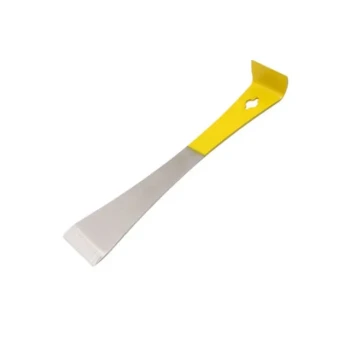
- HONESTBEE Classic Pry Bar Hive Tool with High Visibility Finish for Beekeeping
People Also Ask
- Which technical challenges in hive maintenance are addressed by using a professional stainless steel hive tool?
- What is the function of a professional stainless steel hive tool in IFB? Optimize Your Colony Strength Assessment
- What are the primary functions of a stainless steel hive tool? Essential Equipment for Professional Beekeeping
- What are the primary functions of a stainless steel hive tool? Essential Tips for Efficient Apiary Maintenance
- What is the role of professional hive tools in routine apiary maintenance? Expert Tips for Hive Health and Longevity