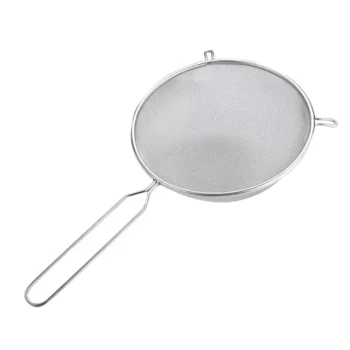
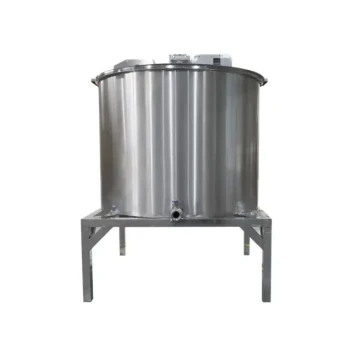
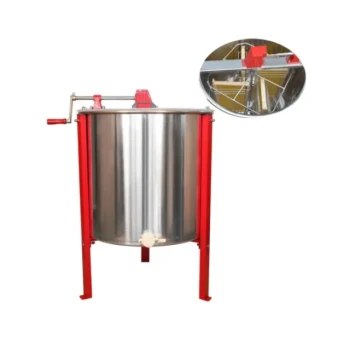
The sump with a vertical sieve acts as the critical "first line of defense" in a honey extraction system. Positioned immediately after the honey leaves the extractor, it serves as a high-capacity primary filter designed to separate large wax particles and debris from the honey flow before it reaches the pumping or final filtration stages.
Core Takeaway: This component is essential for maintaining production speed; it prevents system-wide bottlenecks by capturing coarse debris early. By handling bulk wax removal immediately, it ensures that downstream pumps and fine filters remain unclogged and efficient.
Optimizing the Extraction Workflow
The Role of Primary Filtration
When honey is spun out of frames using centrifugal force, it brings a significant amount of debris with it. This includes wax cappings, bits of comb, and propolis.
The vertical sieve intercepts this "dirty" honey immediately. Its mesh is sized to catch these large solids while allowing liquid honey to pass through rapidly. This effectively cleans the product enough for it to move safely to the next stage of processing.
Preventing Mechanical Blockages
The most immediate risk in an extraction line is a clogged outlet.
As noted in the primary reference, the sump prevents the honey outlet from becoming blocked by accumulating wax. Without this intermediate vessel, the sheer volume of debris from the extractor could stall pumps or completely block gravity-fed pipes.
Protecting Downstream Equipment
Fine filters are designed to polish honey, not to handle bulk solids.
By removing the heavy sediment load first, the sump ensures that subsequent, finer filters do not blind (clog) instantly. This extends the lifespan of your final filtration media and reduces the frequency of filter changes.
Enhancing Speed and Efficiency
Acceleration of the Process
A sump with a vertical sieve is explicitly used to speed up the extraction process. It allows the extractor to run at full capacity without the operator needing to constantly pause to clear debris from the outlet.
Continuous Flow Management
The "sump" portion of the device acts as a buffer tank.
It holds a volume of honey, smoothing out the surges that occur when an extractor finishes a cycle. This ensures a steady, constant feed to your pumps or settling tanks, rather than an erratic, surging flow.
Operational Considerations and Trade-offs
Requirement for Monitoring
While the sieve prevents downstream clogs, the sieve itself will eventually fill with wax cappings.
Operators must monitor the sieve levels. If the vertical sieve becomes completely impacted with wax, the honey may overflow the sump or back up into the extractor outlet.
Limitation of Clarity
It is important to recognize that this is a primary filter only.
The honey leaving the sump is cleaner, but it is not yet ready for bottling. It will still contain fine particulate matter and air bubbles that require further settling or fine straining.
Making the Right Choice for Your Goal
To determine how to best integrate this component into your line, consider your specific production targets:
- If your primary focus is Production Speed: Prioritize a large-capacity sump to maximize the buffer time between sieve cleanings, minimizing downtime.
- If your primary focus is Equipment Longevity: Ensure the sieve mesh is fine enough to protect your specific pump type (e.g., gear pumps) from abrasive debris.
By effectively separating bulk solids at the source, the sump with a vertical sieve converts a chaotic mixture of honey and wax into a streamlined, manageable workflow.
Summary Table:
| Feature | Function in Extraction Line | Key Benefit |
|---|---|---|
| Vertical Sieve | Primary filtration of wax and large debris | Prevents downstream equipment clogs |
| Sump Tank | Acts as a buffer for surges in honey flow | Ensures steady feed to pumps/tanks |
| Primary Filtration | Captures coarse solids immediately | Extends life of fine filters |
| Process Flow | Streamlines movement from extractor to pump | Increases overall processing speed |
Streamline Your Honey Production with HONESTBEE
Maximize your apiary's throughput and protect your investment with high-performance filtration solutions. HONESTBEE specializes in supporting commercial apiaries and distributors with a robust selection of professional beekeeping machinery, including hive-making equipment, honey-filling systems, and essential industry consumables.
Whether you are scaling your extraction line or stocking a distribution network, our comprehensive wholesale offerings are designed to meet the rigorous demands of modern beekeeping. Let us help you eliminate bottlenecks and improve honey clarity with our specialized hardware.
Ready to upgrade your extraction efficiency?
Contact HONESTBEE today to discuss your equipment needs!
Related Products
- Professional Stainless Steel Honey Filter with Support Handle
- Stainless Steel Triangle Support Honey Strainer and Filters
- Manual Hand Crank 4 Frame Honey Extractor Centrifuge for Beekeeping
- electric honey extractor honey centrifuge 3 frame honey extractor stainless steel honey frame extractor
- Stainless Steel Manual 8 Frame Radial Honey Extractor Machine for Beehives
People Also Ask
- Why are stainless steel filters essential during the initial purification phase of honey processing? Ensure Purity
- What are the benefits of using a high-quality honey filter? Elevate Purity and Preserve Natural Flavor
- What is the primary purpose of honey filters? Achieve Professional Clarity & Pure Honey Quality
- What micron filter should I use for honey? Choose the Right Filter for Sales or Competitions
- Why do people filter honey? For Clarity, Stability, and Consumer Appeal