Refining equipment acts as the critical mechanism for transforming raw apiary by-products into commercially viable materials. Through processes like multi-stage filtration, adsorption, and precise thermal control, this machinery removes mechanical impurities and biological residues to produce refined yellow beeswax (Cera Flava), while incorporating additional bleaching stages to create white beeswax (Cera Alba).
Core Takeaway Refining equipment bridges the gap between raw hive outputs and high-value industrial ingredients. While yellow beeswax requires physical purification to remove debris and odors, white beeswax necessitates a secondary chemical or physical bleaching process to achieve the high-purity, colorless standards required for pharmaceutical and cosmetic applications.
The Mechanics of Purification
To understand the role of the equipment, one must look at how it manipulates the raw material physically and chemically.
Precision Heating and Melting
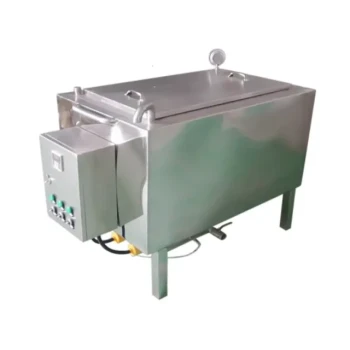
Refining begins with constant-temperature wax melting kettles.
Unlike traditional heating methods which risk burning the wax, specialized industrial melters use precise heat control. This prevents overheating, which protects the wax's inherent physical and chemical properties from degradation.
Multi-Stage Filtration
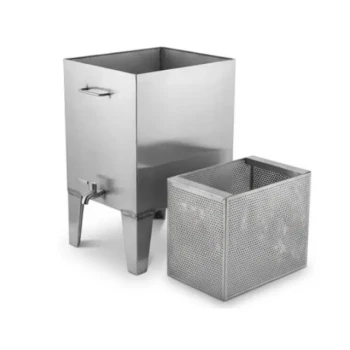
Once melted, the wax passes through high-density filtration systems.
This equipment is designed to mechanically separate small impurities, such as pollen, propolis, and colony residues. Effective filtration creates a clean, uniform block free from the "burnt" impurities often associated with crude processing methods.
Adsorption Decolorization
For higher grades of wax, equipment employs adsorption technologies.
This process removes specific odorous substances and pigments without necessarily stripping the wax of all its natural characteristics. It effectively deodorizes the wax, preparing it for sensitive applications in food or cosmetics.
Differentiating Cera Flava and Cera Alba
The specific role of the equipment changes depending on whether the target output is yellow or white beeswax.
Producing Yellow Beeswax (Cera Flava)
For yellow beeswax, the equipment focuses on purification and retention.
The primary goal is to remove physical contaminants and unpleasant odors while preserving the natural antibacterial activity and film-forming properties of the wax. The equipment filters the material but avoids aggressive bleaching, ensuring the final product retains its characteristic yellow hue and natural benefits.
Producing White Beeswax (Cera Alba)
For white beeswax, the equipment integrates bleaching processes.
In addition to filtration and adsorption, the machinery must strip the yellow pigment entirely. This creates a high-purity, colorless product necessary for pharmaceuticals, medical polishes, and cosmetics where color neutrality is essential.
Understanding the Trade-offs
While modern refining equipment is efficient, operators must balance purity against biological integrity.
The Risk of Over-Processing
Aggressive refining, particularly high-heat bleaching used for white beeswax, can diminish the wax's biological activity.
While you gain a visually pure product, you may lose some of the natural antibacterial benefits found in raw or gently refined yellow wax.
Temperature Sensitivity
Even with advanced equipment, thermal degradation is a constant risk.
If the temperature control mechanisms fail or are set too high, the chemical structure of the esters in the wax can break down. This reduces the economic value and structural integrity of the final product.
Making the Right Choice for Your Goal
Selecting the right refining process depends entirely on the end-use application of the beeswax.
- If your primary focus is Pharmaceutical or High-End Cosmetic Formulation: Prioritize equipment with advanced bleaching and adsorption capabilities to produce Cera Alba, ensuring maximum purity and color neutrality.
- If your primary focus is Natural Skincare or Industrial Polishes: Utilize precision filtration and controlled heating to produce Cera Flava, preserving the wax's natural color and antibacterial properties.
- If your primary focus is Resource Recovery: Focus on high-throughput melters and presses to efficiently separate wax from old combs, maximizing the volume of saleable raw material.
Ultimately, the role of refining equipment is to deliver a consistent, compliant material that aligns with the strict purity standards of the target industry.
Summary Table:
| Process Step | Equipment Function | Targeted Output |
|---|---|---|
| Melting | Precision thermal control to prevent wax degradation | All Refined Wax |
| Filtration | Multi-stage mechanical removal of pollen and propolis | Cera Flava & Alba |
| Adsorption | Deodorization and removal of specific organic pigments | High-Grade Wax |
| Bleaching | Chemical or physical stripping of yellow pigments | Cera Alba |
| Cooling | Controlled solidification for uniform block structure | Finished Product |
Scale Your Beeswax Production with HONESTBEE
At HONESTBEE, we empower commercial apiaries and global distributors with the professional tools needed to master beeswax refining. Whether you are producing high-purity Cera Alba for pharmaceutical clients or natural Cera Flava for industrial applications, our comprehensive range of beekeeping machinery—from advanced melting kettles to precision honey-filling systems—ensures your products meet the highest market standards.
Our value to your business includes:
- Industrial-Grade Equipment: Durable machinery designed for high-throughput commercial processing.
- Wholesale Efficiency: A full spectrum of beekeeping tools and essential consumables at competitive prices.
- Expert Support: Solutions tailored to maximize your resource recovery and product quality.
Ready to elevate your apiary's output? Contact us today to explore our wholesale equipment catalog and cultural merchandise.
References
- M.V. Kostiuk, O.E. Galatiuk. Analysis of bee wax quality indicators in 2016-2018. DOI: 10.31073/vet_biotech37-05
This article is also based on technical information from HonestBee Knowledge Base .
Related Products
- Beeswax Machine Press Embosser Wax Foundation Mold Printer Bee Hive Equipment Making Sheet
- Electric Flatting and Embossing Machine with Tray for Beekeeping
- Manual Beeswax Flat Sheet Machine for Beeswax Processing
- Fully Automatic Beeswax Embossing Machine Foundation Mill
- Electric Beeswax Flat Sheet Machine with Operating Tray for Wax Processing
People Also Ask
- What equipment is needed to make beeswax foundation? A Guide to DIY Wax Sheet Production
- What miscellaneous equipment is needed for making foundation? A Guide to the Essential Tools
- What miscellaneous equipment is useful when making beeswax foundation? Essential Support Tools for Beekeepers
- What specific equipment is required for making beeswax foundation? Essential Tools for High-Quality Production
- What is the recommended temperature for melting beeswax to make foundation sheets? Master the 70°C-80°C Ideal Range