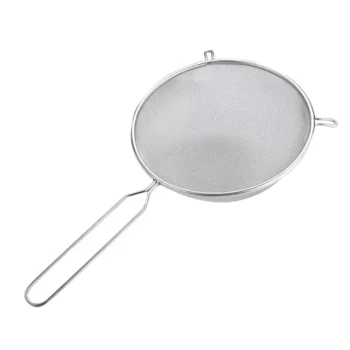
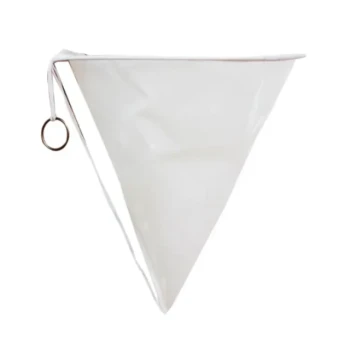
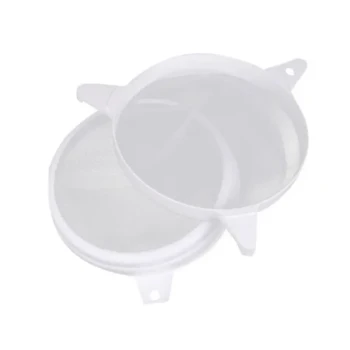
The Chalna functions as a primary mechanical filtration device used to purify raw honey immediately after it is collected. It serves strictly to remove macroscopic contaminants, such as wax debris and larvae, improving the honey's clarity without resorting to heat or chemical processing.
By relying on simple physical interception, the Chalna iron sieve ensures the removal of visible impurities while maximizing the retention of the honey's natural active ingredients and nutritional value.
The Mechanics of Purification
Physical Interception of Debris
The core function of the Chalna is mechanical interception. It acts as a physical barrier that allows liquid honey to pass through while trapping solid contaminants.
This process specifically targets larger impurities introduced during the collection process. Common contaminants removed at this stage include wax debris from the honeycomb and larvae.
Enhancing Sensory Quality
Raw honey often appears cloudy or "dirty" due to suspended solids. The Chalna improves the sensory purity of the final product.
By filtering out these solids, the sieve enhances the clarity and visual appeal of the honey. This step is essential for making the product visually acceptable for consumption while maintaining its raw status.
Preservation of Bio-Activity
Retaining Natural Ingredients
Unlike industrial ultra-filtration which strips honey of its character, the Chalna uses a relatively simple filtration method. This ensures the retention of natural active ingredients.
Because the process is purely physical and does not require heating, delicate enzymes and nutritional components remain intact. The honey retains the health benefits associated with raw products.
Minimizing Processing Stress
The Chalna represents a low-impact processing step. It avoids the structural damage to the honey that can occur with high-pressure systems.
This aligns with the goal of preserving the sensory characteristics unique to the specific harvest, such as flavor profile and aroma.
Understanding the Trade-offs
Material Limitations
The primary definition of a Chalna identifies it specifically as an iron sieve. While effective for physical separation, iron is susceptible to rust and oxidation compared to modern materials.
In contrast, modern industrial standards usually favor stainless steel (as noted in broader processing contexts) to prevent chemical contamination and ensure easier sterilization.
Filtration Precision
The Chalna is designed for macroscopic impurities. It is likely not fine enough to remove microscopic particulates or prevent crystallization over the long term.
If the goal is a perfectly clear, shelf-stable commercial product, a Chalna alone may be insufficient compared to high-mesh stainless steel sieves used in automated industrial workflows.
Making the Right Choice for Your Goal
To determine if the Chalna is the right tool for your processing needs, consider your final market requirements:
- If your primary focus is Artisanal/Raw Honey: The Chalna is ideal as it removes visible "yuck factor" elements (wax/larvae) while preserving the maximum amount of pollen and enzymes.
- If your primary focus is High-Volume Commercial Retail: You may need to upgrade from the traditional iron Chalna to food-grade stainless steel filtration systems to ensure strict hygiene compliance and shelf stability.
Ultimately, the Chalna serves as the critical first line of defense in quality control, bridging the gap between the beehive and the jar.
Summary Table:
| Feature | Role of Chalna Iron Sieve |
|---|---|
| Primary Function | Mechanical filtration and physical interception of debris |
| Key Contaminants Removed | Wax particles, larvae, and macroscopic honey debris |
| Impact on Quality | Enhances clarity and visual purity without heat |
| Nutrient Preservation | High retention of natural enzymes and pollen |
| Ideal For | Artisanal raw honey production and first-stage purification |
Elevate Your Honey Production with HONESTBEE
Are you looking to scale your apiary or upgrade your honey processing capabilities? HONESTBEE is your dedicated partner in professional beekeeping success. We specialize in supporting commercial apiaries and global distributors with a comprehensive range of premium wholesale solutions.
From high-efficiency honey-filling machines and specialized hive-making equipment to food-grade stainless steel filtration systems and essential industry consumables, our portfolio is designed to maximize your efficiency and product quality. Beyond hardware, we also offer a unique selection of honey-themed cultural merchandise to help you stand out in the retail market.
Take your beekeeping business to the next level. Contact our expert team today to discover how our tailored equipment and wholesale offerings can optimize your operation!
References
- Neha Negi, Jagmohan Jagmohan. Traditional beekeeping in the Hilly districts of Himachal Pradesh in North Western Himalayas with Apiscerana. DOI: 10.33545/26180723.2025.v8.i4a.1725
This article is also based on technical information from HonestBee Knowledge Base .
Related Products
- Heavy-Duty Ergonomic Grip Galvanized Pollen Shovel
- Professional Stainless Steel Honey Filter with Support Handle
- 5 Gallon Pail Opener Bucket Opener Tool for Honey Bucket
- Nylon Honey Strainer Square Filter Cloth for Honey Filters
- Precision Stainless Steel Frame Cleaner for Hive Grooves and Corners
People Also Ask
- For what reasons do beekeepers collect bee pollen? Boost Hive Health and Unlock New Revenue Streams
- Why should commercial apiaries focus on the collection of diversified bee products? Maximize Your Hive’s Profit Potential
- How do bee pollen collection tools affect the quality of bee pollen used in functional dairy ice cream production?
- How does a specialized pollen collector facilitate the harvesting of diverse bee products? Automate High-Value Yields
- What is the impact of pollen collectors and associated equipment on the cost structure of pollen production? Maximize ROI