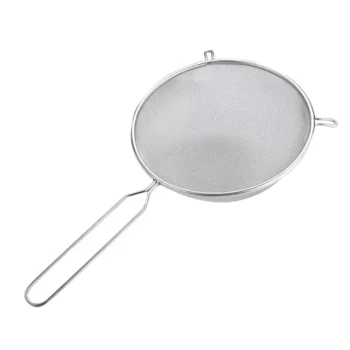
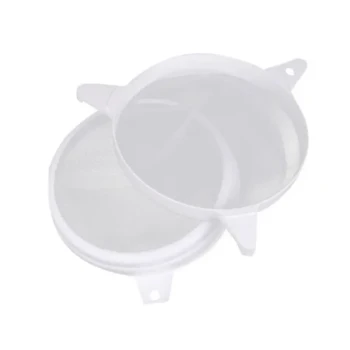
Iron sieve basins function as a versatile, dual-purpose instrument in apiary processing, serving distinct mechanical roles depending on the substance being treated.
In the context of honey processing, the basin acts as a physical filtration barrier to strip crude honey of honeycomb residue and debris, yielding a high-purity liquid. Conversely, during beeswax refining, the basin transforms into a thermal processing vessel; it is heated to melt the wax, allowing the refined liquid to drip into a collection container while retaining solid waste.
Core Takeaway The iron sieve basin consolidates two critical processing steps: it is a cold filtration tool for clarifying honey and a heated separation vessel for refining beeswax. This dual utility makes it a fundamental tool for separating raw hive products into usable industrial materials.
The Role in Honey Filtration (Cold Processing)
Physical Debris Removal
The primary function of the iron sieve basin when handling honey is mechanical separation.
Raw honey often contains beeswax particles, bee fragments, and other hive debris. The basin serves as a coarse filter, trapping these larger solids while allowing the liquid honey to pass through.
Ensuring Product Purity
By effectively removing these honeycomb residues, the basin facilitates the production of high-purity liquid honey.
While gravity settling tanks can remove some impurities via density separation, the iron sieve provides an immediate physical barrier. This ensures the final product meets the visual and textural standards required for consumption or sale.
The Role in Beeswax Refining (Thermal Processing)
Acting as a Heating Vessel
Unlike its passive role in honey filtration, the iron sieve basin plays an active thermal role in wax refining.
The basin is designed to be exposed to a heat source. It functions as a melting chamber, holding the raw wax material while it undergoes a phase change from solid to liquid.
Separation via Melting
As the wax melts within the heated basin, it drips through the sieve’s mesh into a secondary collection container.
This process separates the valuable wax from the "slumgum" (old cocoons and refuse) which remains trapped in the basin. This method effectively recovers wax from crushed honeycomb material.
Industrial Grade Output
The refining achieved by the iron sieve basin produces beeswax suitable for specific industrial applications.
According to standard processing guidelines, wax refined through this method is deemed appropriate for trades such as shoemaking and bookbinding.
Understanding the Trade-offs
Application Grade vs. Purity
While iron sieve basins are effective for creating industrial-grade wax (e.g., for bookbinding), they may lack the precision of specialized systems.
Supplementary data suggests that high-tech wax melters with precise temperature controls are better suited for producing pharmaceutical or cosmetic-grade wax. The iron basin is a robust tool, but perhaps less refined than modern filtration consumables.
Material Considerations
The use of an iron basin specifically implies a robust, conductive material, but it requires maintenance.
Iron is excellent for heat transfer during wax melting, but operators must ensure the equipment remains clean to prevent oxidation or contamination, which could affect the sensory quality of delicate honey varieties.
Making the Right Choice for Your Goal
Whether you should rely on a traditional iron sieve basin or upgrade to specialized machinery depends on your end-product requirements.
- If your primary focus is producing industrial-grade wax: The iron sieve basin is an efficient choice, producing wax suitable for applications like shoemaking and bookbinding without the need for complex machinery.
- If your primary focus is cosmetic or pharmaceutical applications: You should likely opt for specialized wax melters with high-density filtration to ensure the removal of all burnt impurities and achieve the highest purity grade.
The iron sieve basin remains a foundational tool for producers who need a single, durable solution to manage both honey clarity and basic wax recovery.
Summary Table:
| Process Phase | Primary Function | Temperature State | Key Benefit |
|---|---|---|---|
| Honey Filtration | Mechanical separation of debris | Cold / Ambient | High-purity liquid honey extraction |
| Beeswax Refining | Thermal melting and separation | Heated / Active | Efficient recovery for industrial applications |
| Material Utility | Heat-conductive iron construction | Durable | Cost-effective, dual-purpose apiary tool |
Maximize Your Apiary Productivity with HONESTBEE
Whether you are scaling a commercial apiary or supplying a regional distribution network, the right equipment is the foundation of your success. HONESTBEE specializes in providing a comprehensive wholesale portfolio—from robust iron sieve basins and honey-filling machines to specialized hive-making hardware and essential consumables.
Our equipment is designed to meet the rigorous demands of industrial honey and wax production, ensuring you achieve the highest efficiency and product quality for your customers. Partner with us to access professional-grade tools and industry expertise.
Contact HONESTBEE Today to Discuss Your Wholesale Needs
References
- JOY NNEKA UCHENYE EJIKEME, CHIEMERIE VALENTINE UGWU. HONEY-BEE PRODUCTION PRACTICES AS A SUSTAINABLE LIVELIHOOD AMONG THE IGBO OF SOUTHEASTERN NIGERIA. DOI: 10.37602/ijssmr.2023.6202
This article is also based on technical information from HonestBee Knowledge Base .
Related Products
- 5 Gallon Pail Opener Bucket Opener Tool for Honey Bucket
- Heavy-Duty Ergonomic Grip Galvanized Pollen Shovel
- Professional Stainless Steel Honey Filter with Support Handle
- Langstroth Solid Bottom Board for Beekeeping
- Two-Stage Plastic Honey Filter for Buckets
People Also Ask
- What is a bucket opener? The Essential Tool for Safe and Efficient Lid Removal
- Is it advisable to use a screwdriver instead of a bucket opener? Avoid Injury and Container Damage
- What are the benefits of using a bucket opener? Boost Safety & Efficiency in Your Operations
- What are the main benefits of using a bucket opener? Enhancing Safety and Preservation
- How does a bucket opener contribute to food safety and product quality? Ensure a Clean, Contaminant-Free Seal Break