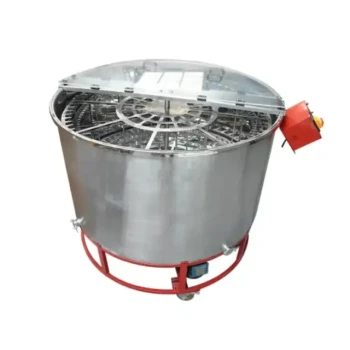
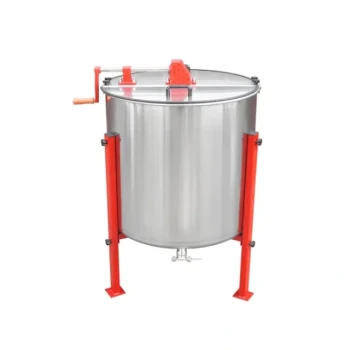
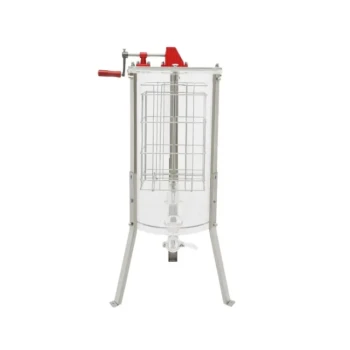
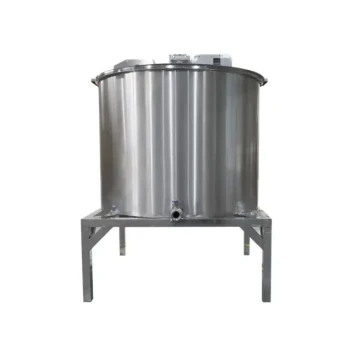
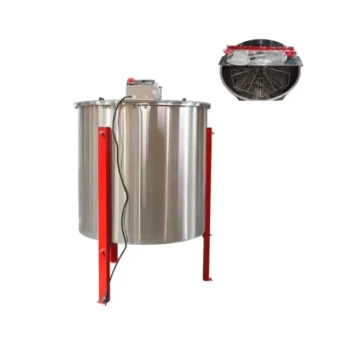
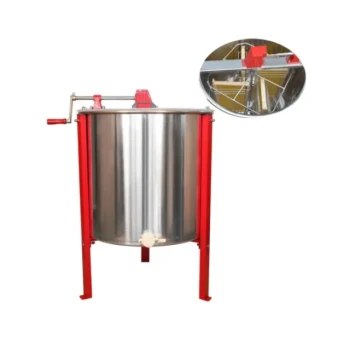
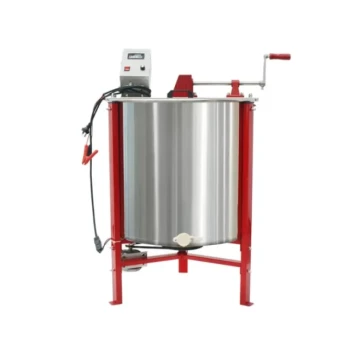
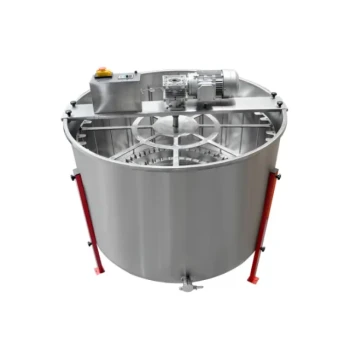
The fundamental technical advantage of a mechanical honey extractor is the utilization of centrifugal force to separate liquid honey from the comb without compromising the structural integrity of the wax. This non-destructive process preserves the honeycomb, allowing it to be immediately recycled back into the hive, which stands in stark contrast to manual crushing or squeezing methods that destroy the comb.
The primary value of mechanical extraction is not just speed, but biological efficiency. By preserving the honeycomb for reuse, you eliminate the metabolic cost of wax production for the bees, significantly increasing yield and shortening production cycles.
Preserving the Apiary's Physical Assets
The mechanical extractor addresses the most energy-intensive aspect of the hive: wax secretion.
Non-Destructive Separation
Mechanical extractors spin frames at high speeds to generate centrifugal force. This force pulls the honey out of the cells while leaving the delicate wax structure physically intact.
The Energy Equation
Bees expend significant metabolic energy to secrete wax. By returning intact, empty combs to the hive, you prevent the bees from consuming honey and energy to rebuild the nest.
Cycle Optimization
Because the bees do not need to reconstruct the comb, they can immediately resume filling cells with nectar. This significantly shortens the production cycle and increases the total honey output per season.
Enhancing Product Quality
Beyond volume, mechanical extraction offers distinct technical advantages regarding the purity and chemical composition of the final product.
Hygiene and Contamination Control
Mechanical extraction minimizes human contact and environmental exposure compared to manual squeezing. This reduction in handling lowers the risk of introducing pollutants or impurities into the batch.
Moisture and Maturity Management
This method is highly effective at separating mature honey from the comb. It helps prevent the accidental mixing of high-moisture, immature honey into the final batch, thereby elevating the overall grade and market value of the product.
Chemical Preservation
Using centrifugal force minimizes mechanical disturbance to the honey's natural components. This process prevents excessive aeration, preserving the integrity of phytochemicals such as polyphenols and alkaloids for accurate laboratory analysis.
Understanding the Trade-offs
While mechanical extraction is superior for yield and structure, it introduces specific operational requirements that differ from manual harvesting.
Dependence on Uncapping
Centrifugal force can only extract honey from open cells. Therefore, the process requires a prerequisite step of "uncapping" the combs before they enter the machine, adding a layer of labor or equipment to the workflow.
Complexity vs. Simplicity
Unlike manual crushing, which requires minimal tools, mechanical extraction relies on specialized rotating equipment. This introduces a reliance on machinery maintenance and operation to ensure the force applied is sufficient to extract honey but not so violent as to damage the frames.
Making the Right Choice for Your Goal
To determine if mechanical extraction aligns with your specific technical needs, consider your primary objectives:
- If your primary focus is Maximum Yield: Prioritize mechanical extraction to recycle combs and redirect bee energy from wax building to honey production.
- If your primary focus is Chemical Analysis: Use this method to minimize aeration and maintain the integrity of natural polyphenols and alkaloids.
- If your primary focus is Market Value: Rely on centrifugal separation to reduce impurities and avoid high-moisture contamination from immature honey.
Mechanical extraction transforms the honeycomb from a single-use consumable into a reusable asset, fundamentally changing the economics of the apiary.
Summary Table:
| Feature | Mechanical Extraction | Manual Crushing/Squeezing |
|---|---|---|
| Honey Yield | High (prevents loss in wax) | Lower (trapped in wax) |
| Comb Integrity | Non-destructive (Reusable) | Destroyed (Must be rebuilt) |
| Bee Energy | Redirected to honey production | Wasted on wax secretion |
| Purity Level | High (Minimal human contact) | Variable (High handling) |
| Harvest Speed | Rapid & Continuous | Slow & Labor-intensive |
| Key Outcome | Maximized ROI per season | High resource waste |
Elevate Your Commercial Apiary with HONESTBEE
Are you looking to scale your honey production and optimize harvest efficiency? HONESTBEE provides professional-grade beekeeping solutions tailored for commercial apiaries and global distributors. From high-capacity mechanical honey extractors and honey-filling machines to durable hive-making hardware and essential consumables, our comprehensive wholesale portfolio is designed to maximize your yield and protect your physical assets.
Ready to upgrade your operations? Our team of experts is here to supply you with the specialized tools and machinery needed to shorten your production cycles and increase market value.
Contact HONESTBEE Today for a Wholesale Quote
References
- J. Carter Loftus, Thomas D. Seeley. How Honey Bee Colonies Survive in the Wild: Testing the Importance of Small Nests and Frequent Swarming. DOI: 10.1371/journal.pone.0150362
This article is also based on technical information from HonestBee Knowledge Base .
Related Products
- Commercial Electric 12 Frame Honey Extractor Spinner Motorized Honey Extractor
- Stainless Steel Manual 8 Frame Radial Honey Extractor Machine for Beehives
- Stainless Steel 3 Frame Manual Honey Extractor Spinner for Bee Honey Extraction
- Manual Hand Crank 4 Frame Honey Extractor Centrifuge for Beekeeping
- HONESTBEE 72 Frame Industrial Electric Honey Extractor for Beekeeping
People Also Ask
- Who are commercial honey extractors designed for? Scaling Your Industrial Beekeeping Success
- What is a commercial honey extractor? The Essential High-Volume Solution for Large Apiaries
- How is honey extracted commercially? Maximize Your Apiary's Efficiency and Honey Yield
- What are commercial honey extractors used for? Boost Your Apiary's Efficiency & Profitability
- What are the advantages of motorized extractors? Boost Honey Production and Save Time