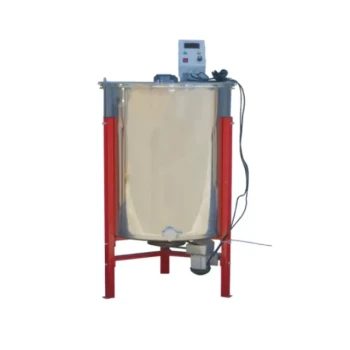
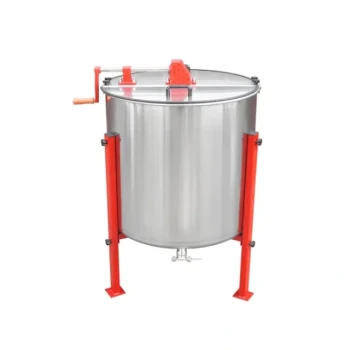
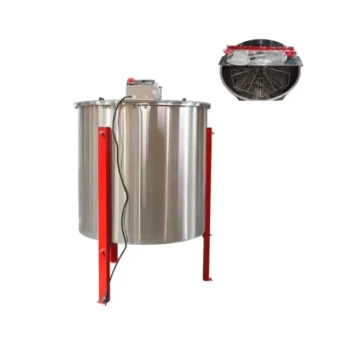
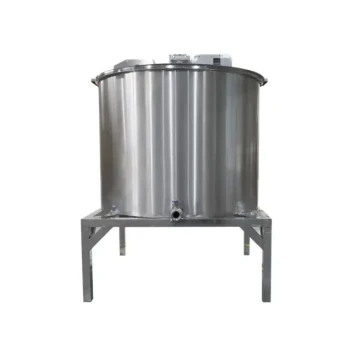
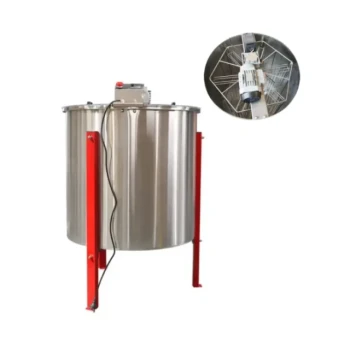
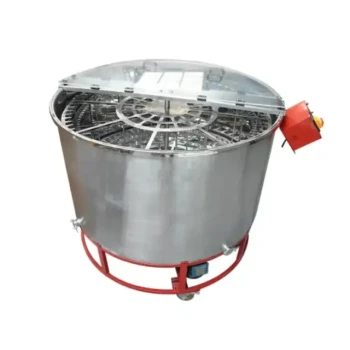
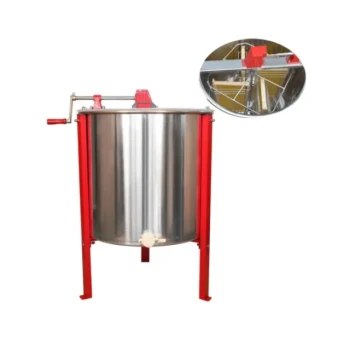
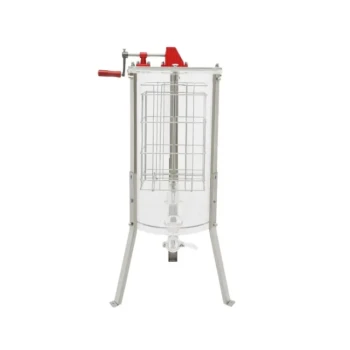
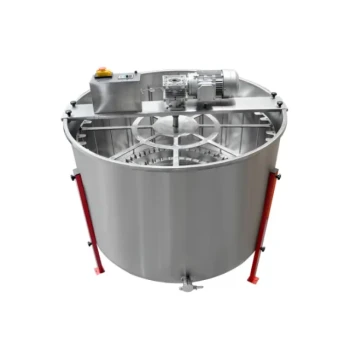
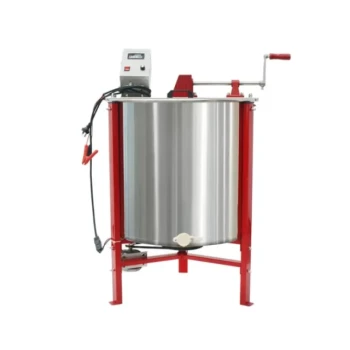
Centrifugal honey extractors function as the central mechanical component in modern apiary workflows, utilizing high-speed rotational force to expel liquid honey from the comb. This process enables the physical separation of the harvest from the hive structure without compromising the integrity of the wax cells.
Core Takeaway The defining technical value of a centrifugal extractor is not merely extraction, but asset preservation. By maintaining the structural integrity of the honeycomb, the machinery allows apiarists to return intact combs to the hive, eliminating the biological cost of wax reconstruction and significantly accelerating the colony's production turnover.
The Mechanics of Extraction
High-Speed Rotational Force
Industrial centrifugal extractors operate by spinning honeycombs at high speeds. This generates sufficient centrifugal force to draw mature honey out of the individual cells and throw it against the extractor walls for collection.
Non-Destructive Separation
Unlike traditional methods that rely on pressing or crushing, this mechanical process separates the liquid product while leaving the solid wax structure physically unchanged. This distinction transforms the honeycomb from a consumable byproduct into a reusable resource.
Impact on Biological Efficiency
Eliminating Wax Production Costs
Honeybees consume a significant amount of energy and time to secrete wax and construct new honeycombs. By using centrifugal extraction, the colony is spared this labor-intensive task.
Shortening the Production Cycle
When intact combs are returned to the hive, bees can immediately begin filling them with nectar. This bypasses the construction phase entirely, leading to a much faster turnover efficiency.
Maximizing Total Yield
The reduction in biological energy expenditure translates directly to higher output. Because the colony focuses its energy on foraging rather than building, the total annual honey yield per hive is substantially increased.
Understanding the Trade-offs: Extraction vs. Crushing
The Cost of Traditional Methods
Traditional harvesting often involves crushing and filtering, which destroys the honeycomb. While this requires less machinery, it forces the colony to restart the building process after every harvest.
The Efficiency Imperative
The "pitfall" in commercial or efficiency-focused beekeeping is failing to preserve the comb. Relying on destructive harvesting methods significantly throttles production speed, making centrifugal extraction core hardware for any operation prioritizing volume and continuous productivity.
Quality Considerations
Beyond efficiency, centrifugal extraction aids in quality control. By physically spinning the honey out rather than crushing the wax and pollen into the liquid, the process supports higher purity standards required for exportable honey.
Making the Right Choice for Your Goal
Centrifugal extraction is the industry standard for a reason, but understanding its role helps align your equipment with your production goals.
- If your primary focus is Commercial Scale: Invest in industrial-grade centrifugal extractors to maximize production turnover and reduce the recovery time for your colonies between harvests.
- If your primary focus is Colony Health: Prioritize this method to reduce the metabolic stress on your bees, allowing them to conserve energy usually spent on wax secretion.
Adopting centrifugal extraction transforms beekeeping from a linear resource-consumption model into a cyclic, high-efficiency production loop.
Summary Table:
| Technical Feature | Impact on Production | Primary Benefit |
|---|---|---|
| Centrifugal Force | Expels honey without damaging wax | Asset preservation for reuse |
| Non-Destructive Design | Eliminates the need for wax reconstruction | Faster production turnover |
| Rotational Speed Control | Supports high-purity liquid separation | Meets export-grade quality standards |
| Cyclic Workflow | Bees focus on foraging over building | Significant increase in annual yield |
Maximize Your Colony’s Productivity with HONESTBEE
At HONESTBEE, we specialize in empowering commercial apiaries and distributors with the high-performance machinery needed to scale operations. Our industrial-grade centrifugal honey extractors are engineered to minimize biological stress on your colonies while maximizing total yield.
Beyond extraction, we offer a comprehensive wholesale portfolio including hive-making machines, honey-filling lines, and a full spectrum of beekeeping tools and consumables. Whether you are outfitting a large-scale facility or sourcing for a distribution network, our expertise ensures you get the most efficient hardware for your goals.
Ready to upgrade your production turnover? Contact us today to explore our wholesale solutions!
References
- R. B. Jones. Beekeeping Around the World. DOI: 10.1080/0005772x.2000.11099467
This article is also based on technical information from HonestBee Knowledge Base .
Related Products
- electric honey extractor honey centrifuge 3 frame honey extractor stainless steel honey frame extractor
- Manual Hand Crank 4 Frame Honey Extractor Centrifuge for Beekeeping
- Professional 4 Frame Self Reversing Electric Honey Extractor for Beekeeping
- 24 Frame Honey Extractor Commercial Radial Honey Frame Extraction Machine
- Electric 4 Frame Tangential Honey Extractor
People Also Ask
- What are the characteristics of electric honey extractors? Boost Your Apiary Efficiency with Automated Technology
- What are the disadvantages of using an electric honey extractor? Weighing Cost, Power, and Comb Safety
- What are the advantages of an electric honey extractor? Boost Efficiency and Scale Your Honey Production
- What are the technical advantages of electric honey extractors? Maximize Yield and Protect Your Bee Colony
- How does an electric honey extractor affect the quality of honey? Preserve Flavor & Purity with Precision Extraction