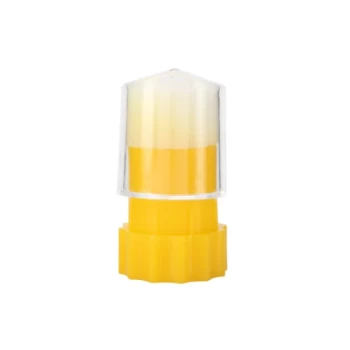
To successfully harvest high-value bee products like royal jelly and pollen, you require a modular hardware configuration that goes beyond standard honey extraction. Specifically, you must implement artificial queen cells and sterile extraction tools for royal jelly, and entrance-mounted pollen traps for pollen, supported by standardized hive architectures and cold-chain preservation consumables.
Core Takeaway Transitioning to high-value commodities requires shifting your operation from volume-based honey production to precision-based biological harvesting. The equipment you select must prioritize impurity exclusion and the preservation of biological activity (enzymes and proteins) from the moment of collection through storage.
The Hardware Architecture for Royal Jelly
Artificial Queen Cells
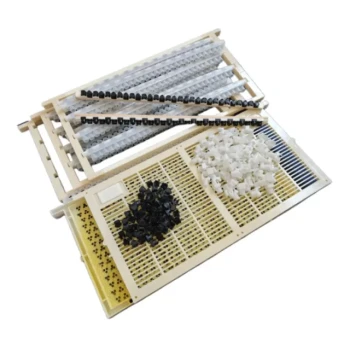
The foundation of royal jelly production is the artificial queen cell. Unlike honey stored in comb, royal jelly is secreted into queen cups.
You must install these specialized cells to simulate the environment required for queen rearing. This triggers the nurse bees to hyper-secrete jelly, concentrating the harvest in a specific, accessible location.
Precision Extraction Tools
Once the cells are filled, standard scraping methods are insufficient. You require professional extraction tools designed to harvest the jelly without damaging the larvae or the delicate wax structures.
These tools must allow for operation in a sterile environment. Because royal jelly is often used in biomedical or cosmetic applications, the equipment must prevent contamination to meet strict food safety and api-therapy standards.
Low-Temperature Preservation Consumables
Royal jelly is biologically active, containing unstable proteins and enzymes. It is highly susceptible to degradation from oxygen, light, and heat.
Your hardware configuration must include low-temperature storage consumables and light-shielding containers. These ensure the molecular structure remains stable immediately after extraction, preventing the loss of market value due to biological degradation.
The Hardware Architecture for Pollen
Entrance-Mounted Pollen Traps
For pollen collection, the primary hardware requirement is the pollen trap, typically installed at the beehive entrance.
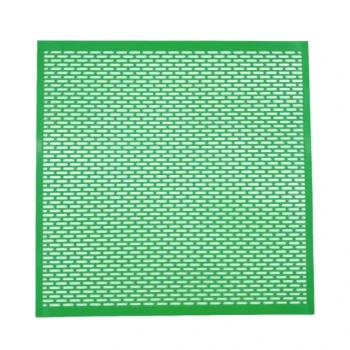
These devices force returning foragers to pass through a specific mesh or grid. This mechanical barrier gently dislodges pollen pellets from the bees' legs, causing them to fall into a collection tray below without harming the bee.
Impurity Exclusion Design
High-value pollen markets demand purity. Your collection modules must be designed to exclude external impurities and debris.
The trap mechanism acts as a primary filter. By capturing the substance immediately upon the bee's return, you prevent the introduction of hive debris that occurs when pollen is stored in the comb.
The Foundation: Standardized Hive Environments
Industrial Hive Manufacturing
The efficiency of both royal jelly and pollen collection relies on the underlying hive structure. Industrial hive-making machines produce standardized hive components.
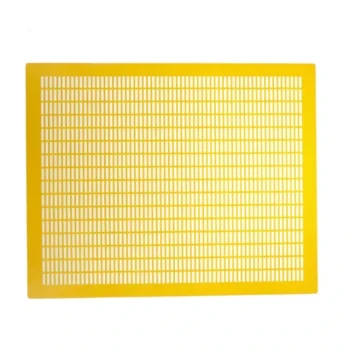
Standardization ensures that traps, grids, and artificial cell frames fit seamlessly. This reduces gaps where pests can enter and ensures a stable internal environment, optimizing the "factory floor" for your bees.
Understanding the Trade-offs
Operational Complexity vs. Yield
Moving to high-value products introduces significant operational complexity. While honey extraction is robust, royal jelly extraction is delicate and time-sensitive.
You must balance high yields with the need for strict sanitation. The introduction of sterile extraction tools requires a cleaner processing environment than a standard honey house, increasing your overhead for facility maintenance.
Resource Depletion Management
These tools are designed to harvest resources the bees intend to consume (protein in pollen) or use for reproduction (royal jelly).
Over-harvesting using highly efficient traps or cells can weaken the colony. You must monitor hive health closely, ensuring that the hardware configurations do not strip the colony of the essential nutrients required for its own survival.
Making the Right Choice for Your Goal
To maximize the return on your apiary investment, align your equipment choices with your specific market targets:
- If your primary focus is Biomedical/Cosmetic Grade Products: Prioritize sterile extraction tools and cold-chain storage consumables to protect the delicate enzymatic structure of royal jelly.
- If your primary focus is Economic Resilience: Invest in entrance-mounted pollen traps and standardized hive bodies, allowing you to rapidly switch between honey and pollen production based on market volatility.
Success in high-value apiculture is not just about collection; it is about maintaining the biological integrity of the product from the hive to the jar.
Summary Table:
| Product Type | Essential Hardware | Key Module Function | Preservation Requirement |
|---|---|---|---|
| Royal Jelly | Artificial Queen Cells | Triggers hyper-secretion | Cold-chain storage / Light-shielding |
| Royal Jelly | Precision Extraction Tools | Sterile removal from cells | Sterile environment |
| Bee Pollen | Entrance-Mounted Traps | Mechanical pellet dislodgment | Impurity exclusion design |
| All Products | Standardized Hive Bodies | Ensuring modular fit & stability | Industrial manufacturing precision |
Maximize Your Apiary’s ROI with HONESTBEE
Transitioning from honey to high-value biological products requires precision-engineered equipment. HONESTBEE caters to commercial apiaries and distributors with a comprehensive wholesale offering.
We provide the full spectrum of beekeeping tools and machinery, including:
- Advanced Hive-Making & Honey-Filling Machines for standardized operations.
- Precision Collection Modules for royal jelly and pollen harvesting.
- Essential Industry Consumables to maintain product biological activity.
Whether you are a large-scale commercial operator or a specialized distributor, our portfolio offers the hardware necessary to maintain the biological integrity of your harvest. Contact HONESTBEE today to upgrade your infrastructure with our professional wholesale solutions.
References
- Ruyida Mushtaq, Harmeet Singh. Role of Bee colonies in Honey production for Sustainable Livelihood in Anantnag District of Kashmir Valley, J & K. DOI: 10.7770/safer-v11n1-art2390
This article is also based on technical information from HonestBee Knowledge Base .
Related Products
- Removable Plastic Pollen Trap With Ventilated Tray for Bees Pollen Collector
- 30 cm Plastic Entrance Hole Bee Pollen Trap and Collector
- No Grafting Queen Rearing Kit: System for Royal Jelly Production and Queen Rearing
- Plastic Bee Pollen Trap Strips Comb Catcher Collector
- Plastic Chinese Queen Grafting Tool for Bee Queen Rearing
People Also Ask
- What are the design principles and advantages of pollen traps in the collection of bee pollen? Boost Your Apiary Yield
- What is the function of professional pollen traps in evaluating honey plants? Quantifying Pollination and Crop Potential
- What functions do pollen traps serve for bee bread production? Optimize Your Raw Material Collection
- What maintenance and pest prevention measures should be taken for pollen traps? Protect Your Hive and Harvest Quality
- How does the use of pollen traps in honeybee hives enhance crop fertilization? Boost Your Yield Through Induced Activity