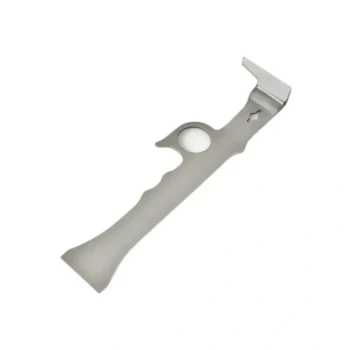
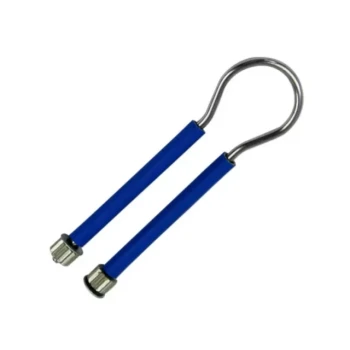
Grafting tools and specific techniques act as the necessary biological trigger to transform a honeybee colony into a high-output royal jelly production unit. By utilizing precision grafting needles and artificial queen cells, beekeepers simulate a mass queen-rearing event, compelling worker bees to secrete vast quantities of royal jelly that would simply not be produced under natural conditions.
Royal jelly production is not a passive harvest; it is an induced biological response. Specialized grafting tools standardize this process, allowing producers to scale yields from minimal natural levels to over 10 kg per colony while maintaining pharmaceutical-grade purity.
Simulating the Queen-Rearing Environment
The Biological Mechanism
Royal jelly is naturally produced in limited quantities only when a colony needs to raise a new queen. Specialized techniques utilize artificial queen cells to trick the colony into believing it must rear dozens of queens simultaneously. This induction causes worker bees to secrete significant amounts of royal jelly to feed the introduced larvae.
Synchronous Mass Rearing
To scale production, beekeepers use specialized grafting frames. These frames hold multiple rows of artificial cups—often 60 per frame—in a standardized layout. When placed in the hive, this structure organizes the colony’s efforts, enabling the synchronous rearing of larvae and facilitating the systematic harvesting of jelly.
The Role of Precision Equipment
Ensuring Larval Survival
The foundation of royal jelly production is the successful transfer of young larvae into artificial cups using professional grafting needles. This process requires extreme precision; if the larva is damaged during transfer, it will die, and the bees will stop secreting jelly for that cell. High-precision manual or semi-automatic tools are essential to maintain high survival rates.
Optimizing Extraction and Purity
Approximately four days after grafting, the royal jelly must be harvested. Specialized collection devices are employed to extract the jelly without causing mechanical damage to its composition. This equipment minimizes contamination and preserves the biological activity of the product, which is critical for meeting pharmaceutical-grade standards.
Understanding the Trade-offs
Skill vs. Output
While modern grafting tools enable mass production, they introduce a high requirement for technical skill. The process is labor-intensive and requires a steady hand; improper use of grafting needles leads to low larval acceptance rates and wasted resources.
Timing and Standardization constraints
The use of standardized frames dictates a strict operational schedule. The biology of the hive requires harvesting at precise intervals (typically the fourth day). Missing this window by even a small margin can result in the larvae consuming the jelly or the product losing its commercial potency.
Impact on Commercial Scalability
Historical Yield Increases
The necessity of these tools is proven by historical data. By optimizing hive structures and using high-efficiency consumables, production has skyrocketed from less than 0.3 kg per colony in the 1950s to over 10 kg in modern systems.
Standardized Biological Management
Grafting frames provide standardized spatial intervals between cells. This ensures nursing bees have adequate physical space to enter and exit cells for feeding. Without this engineered spacing, the density of bees required for high-yield secretion would lead to congestion and inefficiency within the hive.
Making the Right Choice for Your Goal
Whether you are optimizing for maximum volume or highest purity, the equipment dictates the result.
- If your primary focus is Commercial Scale: Prioritize standardized grafting frames and semi-automatic tools to maximize the number of cups a single colony can support simultaneously.
- If your primary focus is Product Purity: Invest in high-precision manual grafting needles and specialized extraction devices to minimize mechanical stress and contamination during the harvest.
Success in royal jelly production relies on the seamless integration of biological management and precision engineering.
Summary Table:
| Feature | Function in Royal Jelly Production | Impact on Yield & Quality |
|---|---|---|
| Artificial Queen Cells | Simulates a mass queen-rearing event | Triggers massive secretion of royal jelly |
| Precision Grafting Needles | Safe transfer of young larvae to cells | Ensures high larval survival and acceptance |
| Standardized Frames | Organizes 60+ cups in a structured layout | Enables synchronous mass rearing and scaling |
| Specialized Extractors | Efficient collection of the final product | Minimizes contamination and preserves purity |
Maximize Your Royal Jelly Yield with HONESTBEE
Transition from passive harvesting to high-output commercial production with HONESTBEE's premium range of beekeeping solutions. As a dedicated partner to commercial apiaries and distributors, we provide the specialized hardware and consumables necessary to scale your operations.
Our Value to Your Business:
- Comprehensive Inventory: From high-precision manual and semi-automatic grafting needles to hive-making and honey-filling machinery.
- Scalable Wholesale Supply: A full spectrum of beekeeping tools and essential consumables designed for efficiency.
- Industry Expertise: Hardware that ensures pharmaceutical-grade purity and optimizes the biological response of your colonies.
Ready to elevate your production from 0.3kg to 10kg+ per colony? Contact HONESTBEE today to discuss our wholesale offerings and industrial equipment solutions.
References
- An-Sig Kim, Gye-Woong Kim. Analysis of Honeybee-Keeping Management Types and Skills Level in Korea. DOI: 10.5187/jast.2011.53.1.59
This article is also based on technical information from HonestBee Knowledge Base .
Related Products
- Stainless Steel Queen Grafting Tool for Beekeeping and Bee Queen Grafting
- Plastic Chinese Queen Grafting Tool for Bee Queen Rearing
- Stainless Steel Beekeeping Queen Grafting Tool for Honey Bee Rearing
- Plastic Beekeeping Honey Bee Larvae Grafting Tools for Queen Rearing and Chinese Grafting
- Double Head Beekeeping Grafting Tools for Beekeepers
People Also Ask
- What are the benefits of using a queen grafting tool for queen rearing? Master Precision for Superior Bee Genetics
- What is grafting in queen rearing? Take Control of Your Apiary's Genetics
- What are the steps involved in using a queen grafting tool? A Guide to Successful Queen Rearing
- What is the step-by-step process for using a queen grafting tool? Master Larva Transfer for Better Queen Rearing
- What is the primary function of a queen grafting tool? Master Precise Larval Transfer for High Queen Acceptance