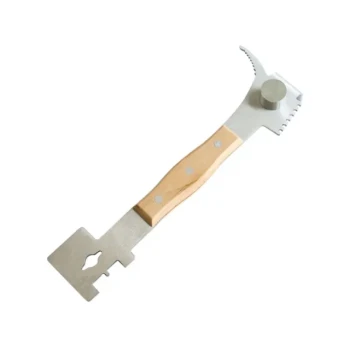
Honeybee colony splitting tools are the cornerstone of sustainable apiary regeneration. These tools enable beekeepers to perform artificial swarming, a critical technique that compensates for winter colony losses by dividing strong, surviving hives into new units. By facilitating this process, beekeepers can restore their original colony count independently, eliminating the need for costly external purchases and effectively transforming biological losses into manageable operational expenses.
By converting volatile biological losses into predictable operational tasks, splitting tools provide a cost-effective pathway to restore colony numbers. They allow apiaries to maintain self-sufficiency while significantly reducing the physical risks involved in hive reorganization.
Economic Independence and Asset Recovery
Eliminating External Dependency
The primary value of splitting tools lies in their ability to facilitate artificial swarming. Instead of purchasing new bees to replace those lost during winter—a high capital expenditure—beekeepers utilize their own biological assets.
Cost Control
Using these tools shifts the financial burden from acquiring new assets to managing existing ones. This effectively transforms a biological loss into a controlled operational expense, drastically reducing overall operating costs.
Ensuring Continuity
Splitting tools allow for the introduction of new queens into segmented colonies in the spring. This ensures the apiary can bounce back to full capacity using its own genetic stock, maintaining consistency in the apiary's population.
Operational Precision and Biological Safety
Reducing Physical Risks
Professional splitting tools differ from manual methods by enabling precise segmentation of the hive structure. This specialized approach minimizes the risk of injury to the queen and significantly reduces worker bee loss during the chaotic splitting process.
Accelerating Colony Establishment
Standardized artificial hives used in conjunction with splitting tools offer adequate preset space and optimized entrance designs. These features encourage the split colony to quickly establish a defense system in its new environment.
Promoting Rapid Recovery
By providing a structured environment immediately upon separation, these tools allow the colony to bypass a long adjustment period. The bees can begin brood rearing almost immediately, ensuring the steady and rapid expansion of the apiary.
Understanding the Trade-offs
The Necessity of Strong Stock
Splitting is an extractive process that requires a robust "donor" colony. If the original colony is not sufficiently strong or healthy, using splitting tools may weaken both the parent and the new split, leading to further losses rather than recovery.
Management Complexity
While these tools reduce financial costs, they increase the need for operational timing. Splitting must be timed perfectly with the spring season and queen availability; using these tools outside of the optimal biological window can result in colony failure.
Making the Right Choice for Your Goal
To effectively integrate splitting tools into your apiary management strategy, consider your primary operational objectives.
- If your primary focus is Cost Reduction: Prioritize splitting tools to facilitate artificial swarming, allowing you to replace winter losses without the capital expense of purchasing external packages.
- If your primary focus is Colony Health and Safety: Utilize professional tools that feature standardized entrances and preset spacing to minimize queen injury and accelerate the establishment of defenses in new hives.
Mastering the use of splitting tools turns the inevitability of colony loss into an opportunity for controlled, sustainable growth.
Summary Table:
| Key Benefit | Description | Operational Impact |
|---|---|---|
| Economic Independence | Facilitates artificial swarming using existing biological assets. | Eliminates the need for costly external bee purchases. |
| Asset Recovery | Replaces winter losses through controlled hive division. | Transforms biological losses into manageable operational tasks. |
| Risk Mitigation | Precise segmentation reduces physical injury to the queen. | Increases the survival rate of both parent and split colonies. |
| Rapid Establishment | Standardized designs with optimized entrance/spacing. | Enables faster brood rearing and defensive system setup. |
Maximize Your Apiary’s Resilience with HONESTBEE
Don't let winter losses stall your growth. At HONESTBEE, we empower commercial apiaries and distributors with the professional-grade tools needed for sustainable regeneration. From high-precision colony splitting tools and hive-making machinery to essential industry consumables, our comprehensive wholesale offering ensures you maintain economic independence and operational excellence.
Whether you are scaling up your production or supplying the next generation of beekeepers, our specialized hardware and honey-themed merchandise provide the competitive edge your business deserves.
Ready to optimize your colony management? Contact us today to explore our full spectrum of beekeeping equipment and wholesale solutions.
References
- Despina Popovska Stojanov, Robert Brodschneider. Direct Economic Impact Assessment of Winter Honeybee Colony Losses in Three European Countries. DOI: 10.3390/agriculture11050398
This article is also based on technical information from HonestBee Knowledge Base .
Related Products
- HONESTBEE Professional Long Handled Hive Tool with Precision Cutting Blade
- HONESTBEE Classic Pry Bar Hive Tool with High Visibility Finish for Beekeeping
- HONESTBEE 15-in-1 Beekeeper Multi-Tool with Hammer and Pliers for Beekeeping
- Plastic Beekeeping Honey Bee Larvae Grafting Tools for Queen Rearing and Chinese Grafting
- HONESTBEE Professional Multi-Functional Hive Tool with Ergonomic Wood Handle
People Also Ask
- Why are professional hive tools considered indispensable? Master Beekeeping Maintenance with Precision Leverage
- What is the role of professional hive tools in routine apiary maintenance? Expert Tips for Hive Health and Longevity
- What is a bee hive tool? Discover Why It’s the Most Essential Hand Tool for Every Beekeeper
- How do hive tools and queen rearing equipment facilitate the bee colony splitting process? Restore Your Apiary Faster
- Why are professional hive tools & observation equipment necessary for queen rearing evaluation? Master Your Quality