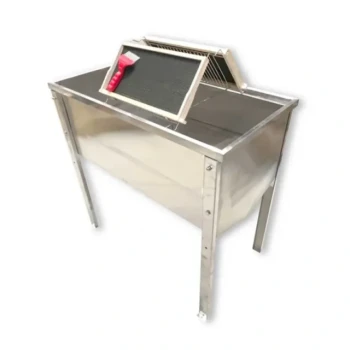
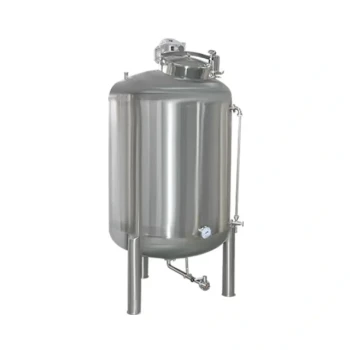
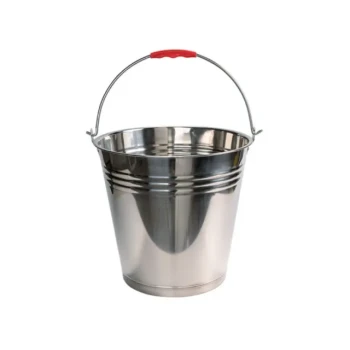
The primary purpose of industrial clarification and settling tanks is to achieve natural purification through physical sedimentation. These tanks provide a static, controlled environment where honey rests after extraction, allowing density differences to separate the product from unwanted elements. Over time, air bubbles, fine wax particles, and suspended impurities naturally float to the surface, leaving behind the clear, transparent honey required for final packaging.
The use of settling tanks is not just about storage; it is a critical quality control step that leverages gravity to ensure the final product meets strict commercial standards for transparency and purity.
The Mechanics of Natural Clarification
Leveraging Density Differences
The fundamental principle at work in these tanks is density stratification. Honey is significantly denser than the impurities typically found within it after extraction.
Separation of Impurities
Because elements like air bubbles and wax fragments are lighter than the liquid honey, they naturally rise to the top when the mixture is allowed to sit undisturbed.
The Decantation Process
This process, often referred to as decantation, allows the honey to stratify. The impurities form a foam or scum layer on the surface, which can then be easily skimmed off or separated, leaving the purified honey below.
Why This Step Matters for Quality
Ensuring Sensory Clarity
For commercial markets, transparency is a key indicator of quality. Settling tanks effectively remove the microscopic debris that causes cloudiness, resulting in a product with superior sensory appeal.
Meeting Export Standards
International technical standards often demand high levels of purity. A dedicated settling phase ensures the removal of suspended solids, helping producers meet the rigorous criteria required for export markets.
Facilitating Filtration
By allowing larger particles and bulk air to separate naturally, settling tanks reduce the burden on downstream mechanical filtration systems. This prevents filters from clogging prematurely and ensures a more consistent flow.
Understanding the Trade-offs
The Constraint of Time
The settling process is passive and relies on viscosity and gravity. It is inherently slower than active filtration, often requiring up to 48 hours to achieve optimal separation, which can act as a bottleneck in high-speed production lines.
Temperature Sensitivity
To facilitate the rising of impurities, honey must remain fluid. However, applying too much heat to lower viscosity can damage nutritional enzymes and aromatic components. Operators must strike a delicate balance between maintaining fluidity for settling and preserving the honey's biological integrity.
Making the Right Choice for Your Goal
To maximize the effectiveness of your processing line, consider how the settling phase aligns with your specific production targets:
- If your primary focus is premium export quality: Prioritize a full 48-hour decantation cycle to ensure the highest level of sensory clarity and compliance with international purity standards.
- If your primary focus is operational efficiency: Utilize settling tanks primarily to intercept bulk impurities, protecting your finer filtration equipment and ensuring optimal fluidity for automated filling systems.
By allowing gravity to do the heavy lifting, you ensure a cleaner, higher-quality product that is ready for the shelf.
Summary Table:
| Feature | Description | Impact on Honey Quality |
|---|---|---|
| Mechanism | Density Stratification & Gravity | Naturally separates wax, air, and debris from honey. |
| Process Time | Typically 24 to 48 Hours | Ensures deep clarification and removal of micro-bubbles. |
| Purity Level | High Sensory Clarity | Meets international export standards for transparency. |
| System Benefit | Filter Protection | Prevents downstream filtration equipment from clogging. |
| Key Constraint | Viscosity & Temperature | Requires careful heat management to preserve enzymes. |
Elevate Your Honey Production with HONESTBEE
At HONESTBEE, we specialize in empowering commercial apiaries and distributors with the professional tools needed to achieve market-leading purity. From precision honey-filling machines to advanced industrial settling and clarification systems, our comprehensive wholesale catalog is designed to optimize your workflow.
Whether you are scaling up your export operations or looking for reliable honey-themed cultural merchandise and specialized beekeeping hardware, we provide the expertise and machinery to ensure your product stands out.
Ready to refine your process? Contact our expert team today to discover how our tailored solutions can enhance your efficiency and product quality.
References
- Meral Kekeçoğlu, Pınar Göç Rasgele. Düzce İli Yığılca İlçesindeki Arıcılık Faaliyetleri Üzerine Bir Çalışma. DOI: 10.31467/uluaricilik.162298
This article is also based on technical information from HonestBee Knowledge Base .
Related Products
- Stainless Steel Honey Storage and Settling Tank with Double Strainer
- Heavy Duty Stainless Steel Honey Processing Machine Decrystallizing Tank
- Stainless Steel Honey Storage Tank with Lid for Honey
- Stainless Steel Uncapping Tank with Stand and Strainer
- Professional Honey Storage Tank with Agitation System
People Also Ask
- What economic role do honey storage tanks play? Boost Your Revenue Through Strategic Inventory Management
- What roles do industrial honey storage tanks and filtration meshes play in processing? Ensure Purity & Consistency
- What is the purpose of a honey storage tank? Streamline Your Honey Processing for Quality & Efficiency
- What role do settling tanks play in honey production? Achieve Pure, High-Clarity Honey Naturally
- Why are large settling tanks used in the honey clarification process? Achieve Natural Purity & Batch Consistency