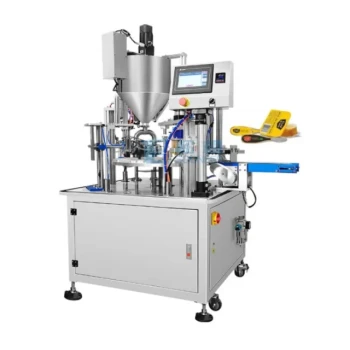
Industrial-grade processing lines are the distinct mechanism that transforms a honey cooperative from a raw material supplier into a competitive commercial entity. These systems allow for unified filtration, impurity removal, concentration, and automatic filling, ensuring the final product meets rigorous international food safety standards. By enabling the creation of high-value-added terminal products rather than low-priced bulk raw materials, these lines allow cooperatives to bypass intermediaries and sell directly to export markets.
The core value of industrial processing is economic sovereignty. It empowers cooperatives to stop selling raw ingredients at commodity prices and start selling finished, branded products that command higher margins in the global marketplace.
Transforming the Economic Model
From Bulk Commodities to Retail Products
Traditionally, cooperatives rely on selling raw honey in bulk. This offers the lowest profit margin and leaves producers vulnerable to market fluctuations.
Industrial lines convert this raw material into terminal products. This shift allows cooperatives to capture the value added during processing and packaging.
Direct Access to Export Markets
Global markets demand consistency and specific safety certifications. Manual or workshop-style processing rarely meets these thresholds.
By utilizing professional lines, cooperatives ensure their output meets international food safety standards. This opens the door to direct export relationships, bypassing local aggregators who typically take a cut of the profits.
Strengthening Bargaining Power
When a cooperative can guarantee standardized volume and quality, their leverage increases.
Professional machinery allows for scalability. Cooperatives can confidently commit to large-scale orders from major distributors, negotiating better terms because they own the means of production.
Technical Quality and Standardization
Precision and Compliance
High-precision machinery ensures every bottle contains an exact volume of honey. This minimizes raw material waste and ensures compliance with strict market measurement regulations.
Unifying Quality Across Members
A cooperative aggregates honey from many different beekeepers. Without a central line, quality varies wildly.
Industrial lines provide unified filtration and concentration. This standardizes the output, ensuring that honey from different sources blends into a consistent product that builds brand trust.
Preservation and Purity
Automated lines often include temperature-controlled decrystallization and sterile filling environments.
This technology protects the honey from external impurities and preserves its nutritional activity. A closed, sterile process is essential for maintaining organic status and extending shelf life.
Operational Efficiency
Achieving Economies of Scale
To serve a large membership base effectively, manual labor is insufficient.
Automation is the core requirement for achieving economies of scale. It allows the cooperative to process massive volumes of honey quickly, accepting more product from more members without bottlenecks.
Reducing Operational Costs
While the initial investment is high, the long-term operational costs decrease.
Integrated infrastructure reduces reliance on manual labor. This drastically lowers labor costs per unit and eliminates human error from the packaging process.
Understanding the Trade-offs
High Capital Expenditure
Industrial lines represent a significant financial barrier. Cooperatives must carefully balance the cost of equipment against projected sales volume to avoid debt that outpaces revenue.
Maintenance and Technical Skill
Transitioning to automation changes the skill set required. Cooperatives move from needing general labor to needing technicians capable of maintaining complex machinery.
If a critical component fails without local repair support, production halts entirely.
Making the Right Choice for Your Goal
Before investing in specific machinery, assess your cooperative's immediate strategic targets.
- If your primary focus is International Export: Prioritize lines with advanced sterilization and filtration capabilities to meet strict foreign food safety regulations.
- If your primary focus is Brand Building: Focus on equipment that offers flexible, high-quality packaging and labeling options to enhance shelf presence.
- If your primary focus is Volume Processing: Invest in high-throughput filtration and concentration systems to maximize the quantity of raw honey processed per day.
True leverage for a cooperative comes not just from gathering honey, but from owning the process that perfects it.
Summary Table:
| Key Benefit | Strategic Impact | Core Functionality |
|---|---|---|
| Economic Sovereignty | Direct access to export markets | Bypasses intermediaries by producing retail-ready goods. |
| Quality Standardization | Builds global brand trust | Unified filtration and concentration for consistent output. |
| Operational Efficiency | Economies of scale | Automation reduces labor costs and eliminates human error. |
| Market Compliance | Rigorous safety standards | Precision filling and sterile environments meet food regulations. |
Scale Your Honey Cooperative with HONESTBEE
Are you ready to transform your cooperative from a raw material supplier into a global brand? HONESTBEE specializes in empowering commercial apiaries and distributors with the heavy-duty infrastructure needed to dominate the market.
From industrial honey-filling machines and high-capacity concentration systems to specialized hive-making machinery, we provide the end-to-end tools required for high-volume production. We don't just supply equipment; we offer a comprehensive wholesale portfolio of beekeeping tools, industry consumables, and honey-themed merchandise to help you capture every ounce of value in the supply chain.
Take control of your production today. Contact HONESTBEE to discuss how our professional-grade machinery can optimize your efficiency and secure your economic sovereignty.
References
- Olha Kovalova. THE ROLE OF BEEKEEPING IN ACHIEVING SUSTAINABLE DEVELOPMENT OF AGRICULTURAL ENTERPRISES AND RURAL AREAS. DOI: 10.32782/2224-6282/189-46
This article is also based on technical information from HonestBee Knowledge Base .
Related Products
- Fully Automatic Honey Filling Packaging Machine for Processing Line
- Double Nozzle Small Honey Filling Machine Honey Sachet Packing Packaging Equipment
- Precision Automated Packaging Turntable Honey Spoon Filling Sealing Packing Machine
- Automatic Single-Dose Snap & Squeeze Honey Sachets Packing Machine
- Economy Small Honey Filling Machine Honey Bottle Filler Packaging Machine
People Also Ask
- Why are fully automatic honey filling and packaging lines essential? Boost Your Honey's Market Value and Quality
- What is a fully-automatic honey filler? Streamline Your Production with High-Precision Automation
- How do automated honey filling and packaging machines affect profitability? Boost Margins with HONESTBEE Technology
- How do automated honey filling and packaging machines contribute to the market value of honey products? Maximize Your ROI
- How do industrial-grade automated honey filling and packaging machines mitigate the risk of physical contamination?