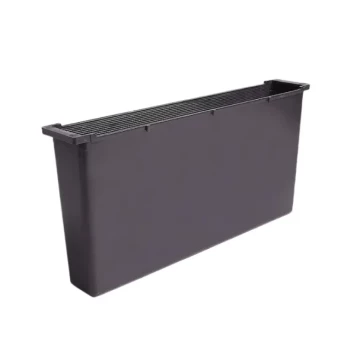
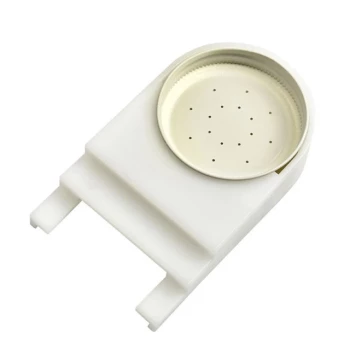
Internal feeders and protein supplements are the primary mechanism for establishing scientific consistency in honeybee research. They allow researchers to introduce standardized nutrition—specifically sugar syrup and protein—during periods when natural resources are scarce or inconsistent. By strictly controlling these inputs, scientists create valid control groups necessary to measure the specific impact of the natural environment on bee behavior and colony health.
Core Insight: In the chaotic environment of the wild, natural forage is an uncontrolled variable. Internal supplementation converts a hive into a controlled setting, allowing researchers to isolate specific factors—such as biomass growth or survival rates—by ensuring all colonies start from the same nutritional baseline.
Establishing Experimental Control
Eliminating Environmental Variables
Scientific experiments require reproducible conditions. In the wild, nectar and pollen flows fluctuate wildly based on weather, location, and season.
Relying solely on natural forage introduces random variables that can skew data. Internal feeders allow researchers to bypass this unpredictability by providing a constant, known quantity of calories and nutrients.
Creating Valid Control Groups
To understand how much the natural environment benefits a colony, you must have a comparison point.
Researchers use internal feeders to maintain specific colonies at a standardized nutritional level. These "fed" colonies act as the control group, allowing scientists to quantify exactly how much natural foraging adds to a colony's biomass and survival compared to the baseline.
Standardizing "Scarce" Conditions
Experiments often need to run during times of the year when natural food is unavailable, such as late autumn or winter.
Supplements allow the experiment to continue uninterrupted during these periods of scarcity. Without this intervention, colonies might collapse from starvation, resulting in a loss of data rather than a measurable result.
The Physiological Necessity of Internal Feeding
Protecting the Test Subjects
For an experiment to yield data, the subjects must survive the testing period.
Internal feeders are designed to provide food directly inside the hive structure. This eliminates the need for bees to leave the cluster to forage, which is critical during cold snaps when outdoor activity could lead to freezing and death.
Maintaining Colony Function
A colony needs energy not just to survive, but to function as a superorganism.
Protein supplements and syrup provide the energy reserves required to maintain the hive's core temperature. This energy is also vital for continuous brood rearing, ensuring the colony population remains stable enough to provide statistically significant data.
Understanding the Trade-offs
The Limitation of Artificial Diets
While supplements are necessary for control, they are not perfect replicas of natural pollen and nectar.
Researchers must account for the fact that sugar syrup lacks the complex micronutrients found in honey. This means the "control" group is surviving on a simplified diet, which is a variable that must be acknowledged in the final analysis.
Behavioral Alterations
Providing food internally changes the behavior of the colony.
Bees with an internal food source may forage less than those forced to scavenge. This reduction in foraging activity preserves bee longevity but may alter the social dynamics within the hive compared to a truly wild colony.
Applying This to Research Design
If your primary focus is quantifying natural resources:
- Use internal feeders to keep a control group alive during scarcity, then measure the difference in growth between them and free-foraging groups during flows.
If your primary focus is colony survival studies:
- Use protein supplements to ensure the colony has the biological building blocks for brood rearing, isolating "starvation" from other mortality factors like disease.
Controlled inputs are the only way to turn the complex biology of a honeybee colony into a readable, quantifiable dataset.
Summary Table:
| Feature | Purpose in Research | Impact on Experimental Data |
|---|---|---|
| Internal Feeders | Provides a constant, known quantity of calories | Eliminates environmental variables and unpredictable nectar flows. |
| Protein Supplements | Supplies essential nutrients for brood rearing | Isolates starvation from other mortality factors like disease. |
| Controlled Inputs | Establishes a standardized nutritional baseline | Creates valid control groups to quantify the value of natural forage. |
| Internal Placement | Ensures food access within the hive cluster | Protects test subjects from cold-weather foraging fatalities. |
Scale Your Apiary Research with HONESTBEE
Precision in beekeeping research requires high-quality, reliable equipment. At HONESTBEE, we specialize in supporting commercial apiaries and distributors with a comprehensive range of professional tools and machinery.
Whether you need precision hive-making machinery, efficient honey-filling solutions, or bulk supplies of specialized beekeeping hardware and consumables, we provide the industrial-grade equipment necessary to maintain controlled environments and maximize productivity.
Ready to elevate your operation or expand your wholesale inventory? Contact us today to discover how our global manufacturing expertise can benefit your business.
References
- William G. Meikle, Andrew B. Barron. Using within-day hive weight changes to measure environmental effects on honey bee colonies. DOI: 10.1371/journal.pone.0197589
This article is also based on technical information from HonestBee Knowledge Base .
Related Products
- Professional In-Hive Bee Feeder HONESTBEE Frame for Beekeeping
- HONESTBEE Entrance Bee Feeder Professional Hive Nutrition Solution for Beekeeping
- In-Hive Dual Compartment Frame Bee Feeder for Targeted Colony Nutrition
- White Plastic 0.5L Beekeeping Entrance Feeder for Bees
- HONESTBEE Entrance Bee Feeder Efficient Hive Front Liquid Feeding Solution for Beekeeping
People Also Ask
- When should beekeepers stop feeding their bees? Let Your Bees Tell You
- Why is the use of a beekeeping feeder for syrup supplementation important? Boost Colony Growth and Survival
- What are the common types of internal and external feeders used in beekeeping? Choose the Right Feeder for Your Hive
- What is a feeder in the context of beekeeping? Optimize Your Hive Nutrition and Growth
- How do specialized feeders contribute to effective artificial feeding? Scientific Apiary Management & Colony Health