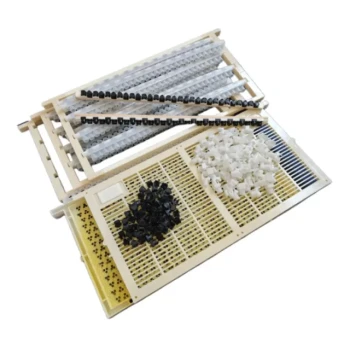
Specialized queen breeding equipment and controlled insemination facilities are the backbone of effective colony restoration. These technologies are essential because they allow apiarists to move beyond reliance on chance, enabling the deliberate cultivation of high-quality queen bees to replace those in damaged or lost colonies. By controlling the reproductive environment, these tools ensure that new queens inherit superior genetic traits, directly boosting colony productivity and adaptability to environmental stressors.
The core value of these facilities lies in predictability and quality control; they transform colony restocking from a passive waiting game into an active, strategic process that maximizes the survival rates of the next generation.
The Engine of Colony Recovery
Restocking a colony is not merely about increasing numbers; it is about establishing a reproductive engine that can sustain the hive long-term.
Ensuring Generational Replacement
The primary function of breeding equipment is to support effective generational replacement. When a colony is damaged, the introduction of a high-quality queen from an established breeding program ensures that the new workforce is robust enough to rebuild resources.
Maximizing Population Growth
Young queens produced in these specialized facilities typically exhibit superior egg-laying capacity. This rapid brood production is critical for generating a large population of healthy worker bees before critical seasonal shifts.
Enhancing Winter Survival
High-quality queens secrete higher levels of royal jelly and produce stronger winter bees. This directly enhances the colony's resilience and stability, significantly increasing the likelihood of the hive surviving the winter months.
Precision Genetics and Disease Resistance
Controlled insemination facilities offer a distinct advantage over natural mating: the ability to isolate and amplify specific, beneficial behaviors.
Selecting for "Hygienic Behavior"
Advanced breeding programs use monitoring tools to identify genetic lines that possess innate hygienic behavior. These are bees capable of detecting and removing damaged or infected brood before diseases spread.
Reducing Chemical Dependency
By artificially selecting for these hygienic traits, beekeepers can enhance the population's natural resistance to threats like Varroa mites. Over time, this biological defense reduces the apiary's reliance on chemical interventions, leading to a more sustainable operation.
Understanding the Trade-offs
While controlled insemination offers precision, it introduces biological compromises that an objective manager must recognize.
The Risk of Reduced Diversity
Artificial insemination eliminates the natural competition found in drone congregation areas. This can restrict the genetic diversity of the queen's fertilization, potentially making the colony less adaptable to unforeseen changes than naturally mated colonies.
Potential for Reduced Longevity
The artificial process relies heavily on the operator's selection of drones. If the sperm volume is insufficient or lacks viability, it can shorten the queen’s lifespan. A queen with a reduced reproductive life span will require replacement sooner, adding to the management burden.
Making the Right Choice for Your Goal
To utilize these technologies effectively, you must align them with your specific apiary objectives.
- If your primary focus is Rapid Colony Restoration: Prioritize queens from controlled facilities to guarantee high egg-laying rates and immediate population booms.
- If your primary focus is Disease Management: Utilize controlled insemination to introduce specific hygienic traits that naturally combat Varroa mites and viruses.
- If your primary focus is Long-Term Genetic Health: Balance artificial methods with natural mating strategies to maintain necessary genetic diversity and ensure queen longevity.
Ultimately, the goal of using specialized breeding equipment is not just to restock a hive, but to engineer a colony that is genetically equipped to survive the challenges of the modern environment.
Summary Table:
| Key Feature | Benefit for Colony Restocking | Impact on Apiary |
|---|---|---|
| Genetic Selection | Precise control over inherited traits | Enhanced disease resistance (Hygienic Behavior) |
| Artificial Insemination | Guaranteed mating and egg-laying capacity | Faster population growth and winter survival |
| Breeding Equipment | Standardized queen cell production | Higher success rates in generational replacement |
| Controlled Environment | Reduced reliance on seasonal/weather chance | Predictable and strategic colony recovery |
Elevate Your Queen Breeding Success with HONESTBEE
To achieve superior colony restoration and long-term genetic resilience, you need equipment built for precision and scale. HONESTBEE specializes in supporting commercial apiaries and distributors with a comprehensive range of professional beekeeping tools and machinery.
From advanced queen rearing kits to industrial honey-filling machines and essential consumables, our portfolio is designed to maximize your operation's efficiency and output. Whether you are scaling up your breeding program or supplying the next generation of beekeepers, we provide the hardware and industry expertise you need to succeed.
Ready to optimize your apiary’s performance?
Contact HONESTBEE Today for Wholesale Solutions
References
- I. Živělová, Eliška Svobodová. The Impact of Subsidies on the Development of Beekeeping in the Czech Republic. DOI: 10.7160/aol.2022.140110
This article is also based on technical information from HonestBee Knowledge Base .
Related Products
- Retractable Chinese Queen Rearing Grafting Tools Equipment
- Queen Bee Artificial Insemination Instrument Equipment for Instrumental Insemination
- Plastic Chinese Queen Grafting Tool for Bee Queen Rearing
- No Grafting Queen Rearing Kit: System for Royal Jelly Production and Queen Rearing
- Stainless Steel Queen Grafting Tool for Beekeeping and Bee Queen Grafting
People Also Ask
- Which specialized tools are necessary for implementing standardized queen rearing? Scale Your High-Yield Apiary
- Why are specialized queen rearing tools necessary to mitigate winter hive losses? Boost Apiary Survival and Recovery
- How do queen-rearing tools facilitate the sustainability and expansion of a commercial apiary? Drive Scalable Growth
- In what ways do modern queen rearing equipment and grafting tools improve competitiveness? Boost Breeding Success Rate
- What role do specialized queen rearing tools and consumables play in modern large-scale apiculture? Drive Production & Scale