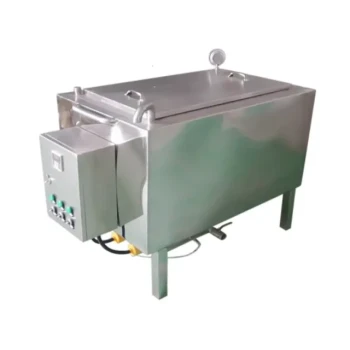
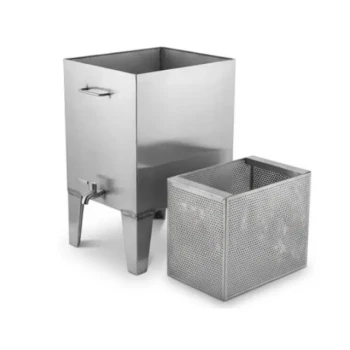
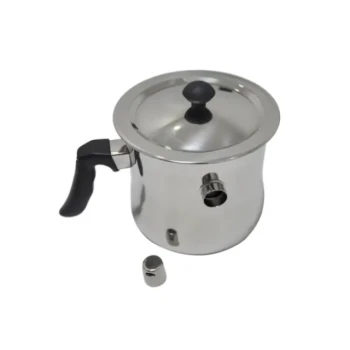
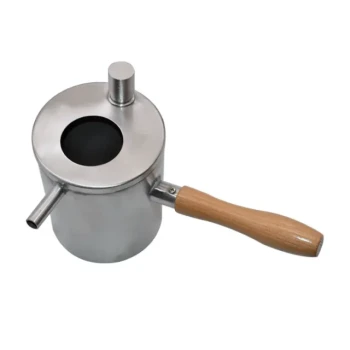
Beeswax recycling transforms a waste product into a strategic financial asset. It significantly drives apiary profitability by reclaiming old combs to eliminate the recurring cost of purchasing new foundation sheets, while simultaneously unlocking a secondary revenue stream through the sale of processed wax products.
By investing in processing equipment, beekeepers shift their operation from a linear consumption model to a circular, self-sustaining system. This maximizes the value of every hive byproduct, significantly lowering overhead while fortifying colony health through improved biosecurity.
The Economic Mechanics of Wax Reclamation
Reducing Direct Operational Costs
The primary financial benefit of recycling is the elimination of consumable expenses. Instead of purchasing external beeswax foundation sheets annually, beekeepers utilize melting and pressing equipment to turn waste comb into new inventory.
This establishes a resource circularity where the apiary provides its own infrastructure. The savings on foundation purchases scale directly with the size of the operation, significantly lowering the cost per hive.
Creating Secondary Revenue Streams
Beyond cost savings, processed beeswax creates an auxiliary income channel. High-quality, refined beeswax is a high-demand raw material for the cosmetic and pharmaceutical industries.
Professional processing equipment allows beekeepers to refine harvest residues into high-purity blocks. This allows the business to monetize a byproduct that might otherwise be discarded or undervalued.
Improving Production Efficiency
Industrial-grade foundation sheets, produced by pressing machines, act as precise templates for bee colonies. These standardized sheets guide bees to build straight, orderly combs more rapidly than they would on natural or irregular bases.
This structural stability improves the efficiency of honey storage and larval development. Uniform combs also streamline hive management and extraction processes, saving labor hours and boosting overall operational throughput.
The Financial Value of Biosecurity
Mitigating Pathogen Risks
Profitability is not just about income; it is about avoiding loss. External beeswax sources can carry pathogens that threaten colony survival.
The recycling process involves high-temperature sterilization during the melting phase. This effectively minimizes the risk of cross-infection between colonies, acting as an insurance policy against disease outbreaks that could devastate apiary stock.
Avoiding Chemical Contamination
Sourcing wax externally carries the risk of introducing pesticide residues into your hives. By recycling internal wax, you maintain a secure biosecurity boundary.
Using dedicated internal processing equipment ensures that the foundation introduced to the colony is free from unknown contaminants. Healthy, uncontaminated colonies are more productive and require fewer costly interventions.
Understanding the Trade-offs
Capital Expenditure vs. Long-Term Savings
While the long-term savings are clear, the initial investment in professional melting devices and foundation machines can be significant. Smaller hobbyist operations may find the ROI period too long to justify the upfront capital cost compared to buying foundation.
Operational Overhead
Recycling is labor-intensive. It requires time to collect, clean, melt, filter, and press the wax. Beekeepers must weigh the opportunity cost of labor—time spent processing wax is time not spent managing hives or marketing honey.
Making the Right Choice for Your Goal
To determine if investing in beeswax processing aligns with your apiary’s strategy, consider your primary objectives:
- If your primary focus is Cost Reduction: Prioritize equipment that allows you to produce standardized foundation sheets, effectively removing a major annual expense from your balance sheet.
- If your primary focus is Revenue Diversification: Invest in high-efficiency melting and filtration systems to produce pharmaceutical-grade raw wax blocks for sale to external markets.
- If your primary focus is Colony Health: Adopt a closed-loop recycling system immediately to eliminate the introduction of external pathogens and pesticides.
Ultimately, beeswax recycling equipment is not just a tool for waste management; it is a fundamental lever for maximizing the economic efficiency and biological security of a commercial apiary.
Summary Table:
| Benefit Category | Impact on Profitability | Key Processing Equipment |
|---|---|---|
| Cost Reduction | Eliminates the recurring expense of purchasing new foundation sheets. | Wax Melters, Foundation Machines |
| Revenue Growth | Creates secondary income through the sale of refined, high-purity wax blocks. | Filtration Systems, Refining Tanks |
| Operational Efficiency | Standardized combs streamline hive management and speed up honey production. | Foundation Pressing Machines |
| Risk Mitigation | High-temp sterilization reduces pathogen spread and pesticide contamination. | Specialized Melting Devices |
Maximize Your Apiary’s Revenue with HONESTBEE
At HONESTBEE, we empower commercial apiaries and distributors with the industrial-grade tools needed to transform hive byproducts into high-value assets. Our comprehensive wholesale catalog includes everything from specialized hive-making and honey-filling machinery to advanced beeswax processing equipment and essential consumables.
Don't let your valuable wax go to waste. Partner with us to implement a circular, self-sustaining system that lowers your overhead and protects your colony health. Contact us today to discuss our wholesale solutions and discover how our beekeeping technology can scale your business efficiency.
References
- Diogo de Barros Mota Mélo, Roger Beelen. Apicultura no Estado de Alagoas: um estudo sobre práticas desenvolvidas por apicultores em Município do Agreste Alagoano. DOI: 10.22256/pubvet.v5n2.1001
This article is also based on technical information from HonestBee Knowledge Base .
Related Products
- Manual Beeswax Flat Sheet Machine for Beeswax Processing
- Electric Commercial Beeswax Melter for Factory Use
- Electric Beeswax Flat Sheet Machine with Operating Tray for Wax Processing
- Electric Flatting and Embossing Machine with Tray for Beekeeping
- Fully Automatic Beeswax Embossing Machine Foundation Mill
People Also Ask
- What is the primary function of the double-roller extrusion system? Master Precision Beeswax Foundation Production
- How do cultural merchandise processing machines contribute to the economic value chain? Boosting Apiary Profitability
- What are some practical tips for managing equipment and workspace when processing beeswax? Essential Studio Setup Tips
- How do specialized beeswax processing machines maximize the value of beekeeping by-products? Boost Your Apiary's ROI
- What role does beeswax processing equipment play in development of by-products? Turn Apiary Waste into High-Value Profit