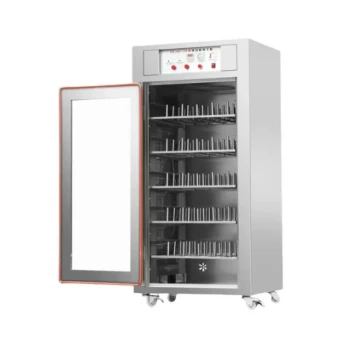
High-precision temperature regulation is the single most critical factor in drying bee-bread because the product's value is derived from heat-sensitive bioactive compounds. To preserve the potassium and specific nutrients essential for cardiovascular health, drying equipment must strictly maintain an environment that never exceeds 45°C, ensuring the final product meets pharmaceutical and nutritional quality standards.
The core challenge of drying bee-bread is removing significant moisture without "cooking" the product. Precise regulation allows you to stabilize the material against spoilage while retaining the chemical integrity that makes it commercially valuable.
Preserving Nutritional Integrity
The 45°C Thermal Limit
The primary reference establishes a clear biological ceiling for processing: 45°C.
Exceeding this temperature, even briefly, can cause the degradation of vital nutritional components. Equipment that fluctuates above this limit renders the bee-bread unsuitable for pharmaceutical or high-grade nutritional supplement use.
Protecting Bioactive Compounds
Bee-bread is prized for its specific chemical composition, particularly its richness in potassium and substances that support cardiovascular health.
These compounds are extremely volatile when exposed to heat. Precise regulation ensures that while moisture is removed, the structural integrity of these antioxidants and proteins remains intact.
Maintaining Enzymatic Activity
Beyond basic nutrients, the drying process must preserve the biological activity within the pollen.
Studies indicate that maintaining a stable lower temperature, such as 35°C, maximizes the preservation of enzymatic activities. Fluctuating temperatures can denature these enzymes, reducing the therapeutic efficacy of the final product.
Managing Moisture and Spoilage
The Initial Moisture Burden
Freshly harvested bee-bread presents a significant processing challenge due to its high moisture content, typically ranging between 24% and 28%.
At these levels, the material is highly susceptible to microbial growth and fermentation. If the temperature is too low or the drying too slow, the product will spoil before it dries.
Achieving Stability
The goal of the drying process is to reduce moisture content to a safe target range, generally 10-14%, or even below 10% for maximum longevity.
Reaching this dryness level inhibits microbial activity. The equipment must balance the heat required to drive this evaporation against the strict thermal limits of the material.
The Role of Airflow and Dynamics
Surface Vaporization Dynamics
Temperature regulation must be paired with kinetic energy control. During the first stage of drying, the process is limited by surface vaporization.
Heat alone is often insufficient for efficient drying at low temperatures.
The Necessity of Uniform Wind Speed
To compensate for low temperatures, specialized equipment must provide high and uniform initial wind speed.
This airflow intensifies surface evaporation, rapidly carrying away moisture that migrates from the interior. This mechanical removal of moisture reduces the total duration of the drying cycle without requiring a temperature increase that would damage the product.
Understanding the Trade-offs
Process Time vs. Product Quality
The most significant trade-off in precision drying is time.
Drying at safer, lower temperatures (e.g., 35°C) can extend the process significantly, potentially taking up to three days. Attempting to accelerate this process by raising the temperature sacrifices nutritional density for speed.
Complexity of Equipment
Standard drying ovens are generally unsuitable for this task.
Achieving high-precision control requires specialized systems capable of modulating heat injection and airflow simultaneously. This increases the initial investment complexity but is necessary to produce a marketable commodity.
Making the Right Choice for Your Goal
To maximize the value of your bee-bread production, align your drying parameters with your end-product requirements:
- If your primary focus is Pharmaceutical Grade Quality: Strictly maintain temperatures between 35°C and 45°C to preserve potassium and bioactive stability, accepting a longer drying cycle.
- If your primary focus is Process Efficiency: maximize air velocity and uniformity during the initial drying stage to accelerate surface evaporation without raising the temperature.
Successful bee-bread drying is not about applying heat; it is about managing a delicate equilibrium between moisture removal and nutrient preservation.
Summary Table:
| Parameter | Ideal Range / Limit | Why It Matters |
|---|---|---|
| Max Thermal Ceiling | 45°C (113°F) | Prevents degradation of potassium and heat-sensitive proteins. |
| Optimal Bioactivity | 35°C (95°F) | Maximizes enzymatic activity and long-term therapeutic efficacy. |
| Initial Moisture | 24% - 28% | High risk zone for microbial growth and rapid spoilage. |
| Target Final Moisture | 10% - 14% | Inhibits fermentation and ensures commercial shelf-stability. |
| Airflow Requirement | High & Uniform | Accelerates evaporation to shorten cycles without increasing heat. |
Maximize the Value of Your Bee-Bread Harvest with HONESTBEE
Producing pharmaceutical-grade bee-bread requires more than just heat—it requires precision engineering. At HONESTBEE, we specialize in supporting commercial apiaries and distributors with high-performance beekeeping machinery designed to protect your product's nutritional integrity.
Why partner with HONESTBEE?
- Precision Technology: Our drying and processing equipment ensures strict thermal control to preserve vital bioactive compounds.
- Full Spectrum Supply: From hive-making and honey-filling machines to essential industry consumables, we provide everything needed for large-scale operations.
- Expert Support: We help you balance process efficiency with premium product quality to increase your market competitiveness.
Ready to upgrade your production line with professional-grade tools?
Contact our wholesale experts today to discuss your equipment needs!
References
- Sergei Oskin, Dmitry Tsokur. Improving the efficiency of the bee-bread drying process. DOI: 10.1088/1755-1315/1052/1/012104
This article is also based on technical information from HonestBee Knowledge Base .
Related Products
- High Quality Honey Dehumidifier Dryer Thickening Machine for Beekeeping
- Professional Bee Frame Machine for Side Bar Shaping
- Fully Automatic Beeswax Embossing Machine Foundation Mill
- Mini Desktop Bee Hive Frame Forming Making Machine
- 0.5T Capacity Honey Dehumidifier Dryer with Vacuum Heating and Thickening Filtering Machine
People Also Ask
- Can you dehumidify honey? A Beekeeper's Guide to Preventing Fermentation
- How to dry up honey? The Safe Guide to Stabilizing Honey and Preventing Fermentation
- How can the moisture content of honey be reduced? A Guide to Safe, Effective Drying Methods
- How to remove humidity from honey? Protect Your Harvest from Fermentation
- What is the process for using a dehumidifier to lower honey's moisture content? Expert Drying Techniques