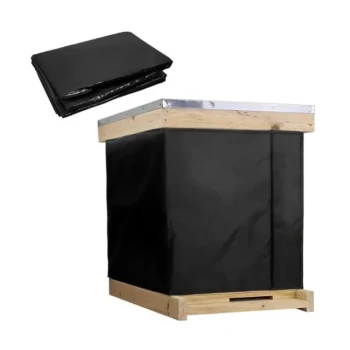
Applying insulation and volume reduction during early spring is fundamentally about stabilizing the internal microclimate against external weather fluctuations. To ensure successful queen rearing, the colony requires a constant internal nest temperature of 34°C, which is difficult to maintain naturally during cold spells. These interventions minimize heat loss, enabling the queen to maintain a consistent laying rate of 20 to 50 eggs per day.
To maximize queen quality and egg production, the brood area must maintain a specific physiological high temperature. By artificially reducing the hive's volume and adding insulation, you allow the colony to conserve the metabolic energy required to sustain this critical 34°C threshold.
The Biological Necessity of Heat Stability
The 34°C Threshold
The primary driver for these interventions is the strict temperature requirement of the brood nest. Consistent queen egg-laying depends entirely on maintaining a steady internal temperature of 34°C.
Supporting Daily Egg Production
When this temperature is stabilized, the queen's physiological processes function optimally. This allows for a consistent output of between 20 to 50 eggs per day, setting the pace for colony growth.
Counteracting Early Spring Volatility
Early spring climates are notoriously unstable, characterized by sudden drops in external temperature. Without intervention, these fluctuations can penetrate the hive, disrupting the nest's thermal equilibrium and halting the rearing process.
Mechanics of Volume Reduction and Insulation
Minimizing Heat Loss
The core principle behind both volume reduction and insulation is the minimization of heat loss. By reducing the physical space the bees must heat, you lower the energy burden on the colony.
The Role of Thermal Coatings
Applying thermal insulation coatings to the brood box strengthens its heat retention properties. This specific barrier mitigates the impact of low external temperatures, preventing the cold from chilling the brood area.
Improving Internal Thermal Regulation
These methods do not just block cold; they stabilize the internal environment. This improved regulation allows the colony to direct energy toward brood rearing rather than emergency heat generation.
Impact on Queen and Colony Quality
Earlier Entry into Rearing State
Effective insulation allows the colony to enter the queen-rearing state earlier in the season. This head start is crucial for maximizing the productive period of the spring flow.
Enhanced Queen Metrics
The benefits of thermal regulation extend to the physical quality of the queens produced. Colonies managed with these techniques produce a significantly higher number of queen cells.
Superior Physical Development
Beyond quantity, the quality of the individual queens improves. Data indicates that protected hives produce longer queen cells and queen bees with a higher initial birth weight.
Understanding the Trade-offs
Monitoring for Overheating
While retaining heat is critical in early spring, beekeepers must remain vigilant as the season progresses. If external temperatures rise unexpectedly, aggressive insulation could theoretically lead to internal overheating if not monitored.
Ventilation and Moisture
Reducing volume and sealing the hive for warmth can inadvertently reduce airflow. It is essential to ensure that while heat is retained, moisture—a byproduct of bee respiration—does not accumulate to dangerous levels within the tighter space.
Optimizing Your Spring Strategy
The decision to insulate and reduce volume should be driven by your specific production goals for the season.
- If your primary focus is Volume of Production: Prioritize maintaining the 34°C threshold to ensure the queen sustains the maximum rate of 20 to 50 eggs per day.
- If your primary focus is Queen Genetics and Quality: Utilize thermal coatings to increase the likelihood of longer queen cells and higher birth weights for your new queens.
By mechanically assisting the colony with thermoregulation, you convert metabolic energy into biological growth.
Summary Table:
| Feature | Impact on Queen Rearing | Key Benefit |
|---|---|---|
| Temperature Stability | Maintains constant 34°C internal threshold | Ensures consistent laying (20-50 eggs/day) |
| Volume Reduction | Concentrates colony metabolic heat | Reduces energy expenditure on thermoregulation |
| Thermal Coatings | Mitigates external cold penetration | Prevents brood chilling during spring cold spells |
| Enhanced Metrics | Increases queen cell length and birth weight | Produces higher-quality, more robust queens |
Elevate Your Apiary’s Productivity with HONESTBEE
To achieve superior queen rearing results, professional equipment is as vital as biological management. HONESTBEE specializes in supporting commercial apiaries and distributors with high-performance beekeeping solutions. Whether you need specialized hive-making machinery, honey-filling equipment, or a full spectrum of wholesale beekeeping tools and consumables, we provide the hardware necessary to scale your operation.
Partner with us to optimize your production efficiency and bring high-quality honey-themed merchandise to your market. Contact HONESTBEE today to discuss your wholesale needs and see how our comprehensive machinery portfolio can transform your beekeeping business.
References
- R.Jamolov B.Boboyev Sh.O'ktamjonov. THE SIGNIFICANCE OF BREEDING OF ROYAL BEES IN THE DEVELOPMENT OF BEEKEEPING AND INCREASE OF FAMILY PRODUCTIVITY IN FERGANA VALLEY. DOI: 10.5281/zenodo.7219744
This article is also based on technical information from HonestBee Knowledge Base .
Related Products
- Professional Insulated Plastic Bee Hives
- Professional Insulated Winter Hive Wrap for Beekeeping
- Inner Beehive Cover for Beekeeping Bee Hive Inner Cover
- Stainless Steel Round Beehive Air Vents for Ventilation
- Metal Hive Feet Bee Hive Stand for Ant Protection
People Also Ask
- What are the advantages of plastic bee hives? Boost Efficiency & Durability for Your Apiary
- Are plastic bee hives any good? Unlock Durability & Efficiency for Your Apiary
- How do plastic bee hives compare to wooden hives in handling? Reduce Strain & Boost Efficiency
- Are plastic bee hives good? Durable, Low-Maintenance Hives for Modern Apiaries
- What are the disadvantages of plastic beehives? Key Operational and Environmental Risks Exposed