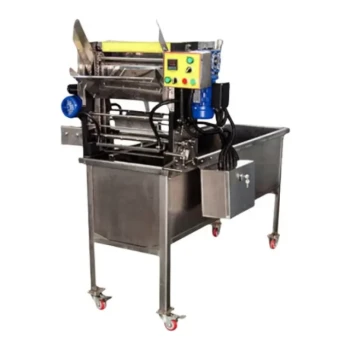
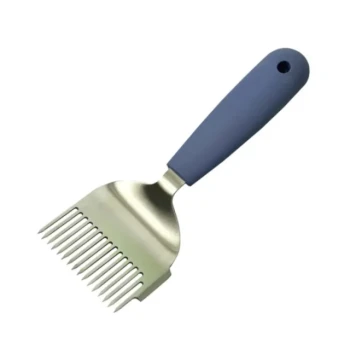
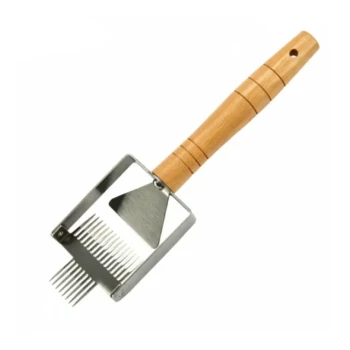
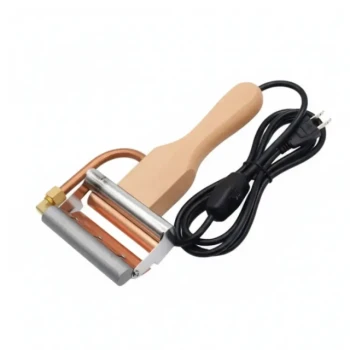
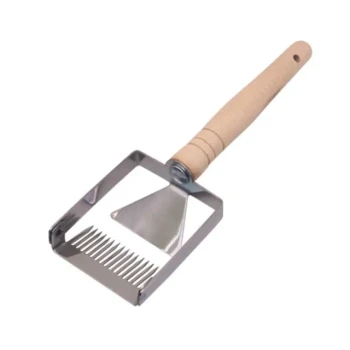
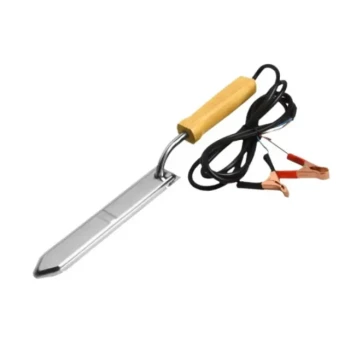
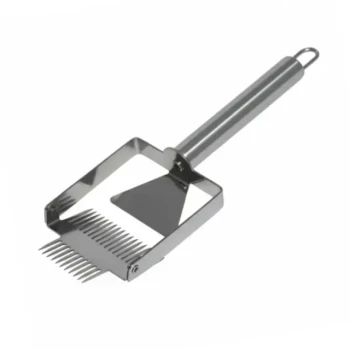
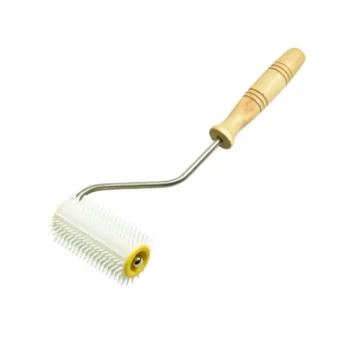
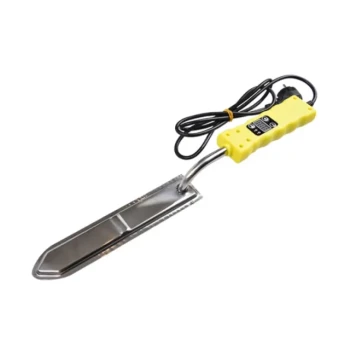
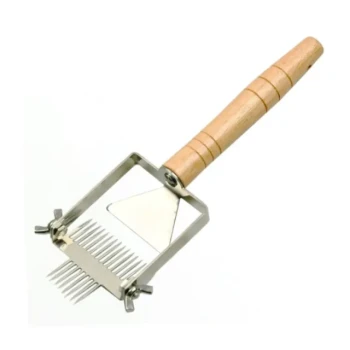
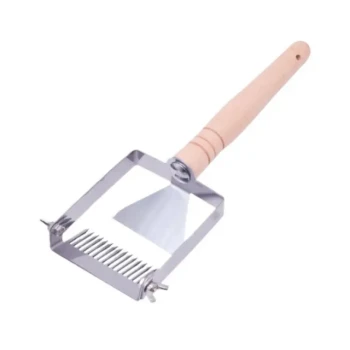
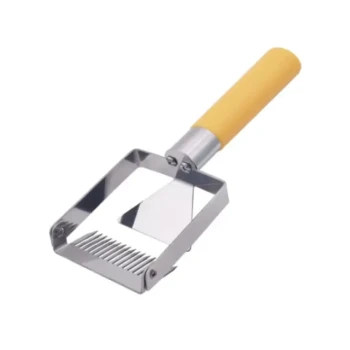
Mechanized uncapping equipment is the critical gateway to scalable honey production. Its primary function is to systematically remove the wax operculums—the protective seals bees place over honeycomb panels. By precisely stripping this layer, the machinery eliminates the physical barrier that traps honey, allowing it to flow freely during the subsequent centrifugal extraction or pouring stages.
The Bottom Line: Mechanized uncapping does more than just expose honey; it serves as a dual-purpose processing step that facilitates high-volume extraction while simultaneously isolating beeswax as a lucrative industrial byproduct.
The Physiology of Extraction
Removing the Wax Barrier
Bees seal mature honey within the comb using a specific wax structure known as an operculum.
This seal is airtight and sturdy. Without removing it, the centrifugal force used in extractors is ineffective, as the honey remains physically locked inside the cell. Mechanized equipment automates the removal of these seals with a consistency that manual tools cannot match at speed.
Enabling Centrifugal Force
The efficiency of a honey extractor relies entirely on the successful preparation of the frame.
Once the equipment strips the wax layer, the honey is exposed. This allows the centrifuge to spin the liquid out of the cells without resistance, emptying the comb rapidly.
Economic and Operational Advantages
Harvesting a Secondary Commodity
The primary reference highlights a critical economic advantage: beeswax recovery.
Mechanized uncapping doesn't just cut the wax away; it enables the efficient separation of the cappings from the honey. This allows producers to collect the beeswax, which can be processed and sold as a high-value industrial byproduct, adding a second revenue stream to the operation.
Precision and Comb Preservation
While manual tools like cold knives or scratchers are effective for small batches, they rely heavily on operator skill.
Mechanized equipment offers standardized precision. By stripping the wax layer at a consistent depth, the machinery maximizes honey release while minimizing damage to the underlying cell structure.
Understanding the Trade-offs
Balancing Depth and Integrity
The effectiveness of uncapping equipment depends on the depth of the cut.
If the cut is too shallow, honey remains trapped in the cells due to the natural downward slope of the honeycomb. If the cut is too deep, it damages the structural integrity of the comb.
The Importance of Reuse
Preserving the comb is vital for long-term apiary health.
When the machinery is calibrated correctly to remove only the operculum, the empty frames can be returned to the hive. This allows bees to refill existing cells rather than expending energy rebuilding the wax structure from scratch.
Making the Right Choice for Your Goal
To maximize the utility of uncapping equipment, align your process with your specific production targets:
- If your primary focus is maximum honey yield: Ensure the equipment is calibrated to fully remove the operculum, preventing trapped honey due to the sloped cell angle.
- If your primary focus is revenue diversification: Utilize equipment that includes separation features to cleanly harvest beeswax as a distinct, sellable commodity.
- If your primary focus is apiary sustainability: Prioritize precision settings that slice the cap cleanly without tearing the cell walls, ensuring the comb is immediately reusable by the colony.
Mechanized uncapping transforms a biological barrier into an operational asset, ensuring both the honey and the wax are harvested efficiently.
Summary Table:
| Feature | Manual Uncapping | Mechanized Uncapping |
|---|---|---|
| Processing Speed | Slow, labor-intensive | High-speed, automated |
| Consistency | Variable (operator-dependent) | Precision-calibrated cuts |
| Beeswax Recovery | Difficult to separate | Integrated separation/harvesting |
| Comb Preservation | High risk of cell damage | Minimal damage, ready for reuse |
| Production Scale | Hobbyist/Small scale | Commercial/Industrial scale |
Maximize Your Honey Production with HONESTBEE
Transitioning to mechanized uncapping is a game-changer for commercial apiaries and distributors looking to scale operations. At HONESTBEE, we provide a comprehensive wholesale offering of professional-grade beekeeping machinery, including high-precision uncapping systems, honey-filling machines, and specialized hive-making hardware.
Our equipment is designed to streamline your workflow, maximize honey yield, and help you recover high-value beeswax for secondary revenue streams. Whether you are outfitting a large-scale facility or looking to supply the industry with top-tier consumables and tools, HONESTBEE delivers the expertise and hardware you need to succeed.
Ready to upgrade your extraction efficiency? Contact us today to discuss your equipment needs!
References
- Jan Darvine C. Ojeda, Adrián Toncovich. An ERP implementation on a beekeeping and honey value chain. DOI: 10.14488/bjopm.1550.2023
This article is also based on technical information from HonestBee Knowledge Base .
Related Products
- Automatic Honey Frame Uncapper Machine for Beekeeping
- Professional Multi-Function Uncapping Fork with Integrated Blade for Beekeeping
- Professional Multi-Function Uncapping Fork with Ergonomic Rubber Grip
- Double-Sided Pivoting Honey Uncapping Fork with Scraper for Beekeeping
- Portable Uncapping Tank Holder Uncapping Bench for Beekeeping
People Also Ask
- What is the primary goal when choosing an uncapping method? Maximize Honey Yield & Comb Integrity
- What is the process of uncapping frames in beekeeping? Master the Best Methods for Maximum Honey Yield
- How are honey frames prepared before extraction? Master the Hive-to-Honey-House Process
- What is the process of uncapping honey frames before extraction? Expert Guide to Efficient Honey Harvesting
- What specialized tools are used to uncap honey frames prior to extraction? Top Uncapping Tools for Efficient Harvesting