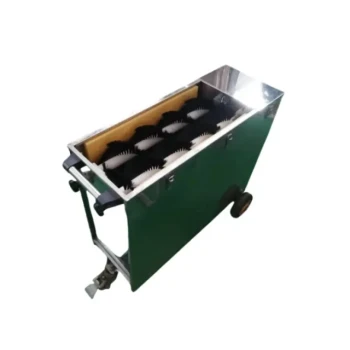
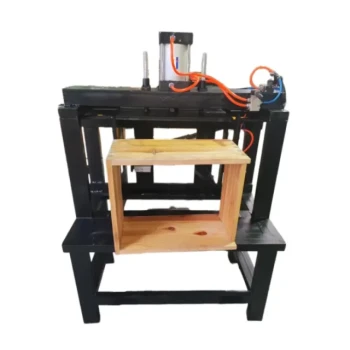
The procurement of industrial-grade equipment acts as the fundamental catalyst for modernizing beekeeping by replacing inconsistent, labor-intensive practices with standardized, high-efficiency workflows. This transition is critical because it directly improves honey extraction speeds, significantly boosts colony survival rates, and ensures the product purity required to enter high-end international markets.
The shift to modern beekeeping is not merely about buying new tools; it is about establishing a standardized infrastructure. Industrial-grade equipment provides the necessary consistency and scalability to transform an apiary from a subsistence activity into a scientifically managed, commercial enterprise.
The Foundation of Standardization
The primary barrier to modernizing traditional beekeeping is the lack of uniformity. Industrial manufacturing solves this by introducing rigorous specifications to the physical hive.
Interchangeability of Components
Industrial hive-making machinery produces components with precise, consistent specifications. Unlike traditional hollow logs or hand-woven hives, machine-made parts are fully interchangeable. This allows beekeepers to swap frames and hive bodies between colonies instantly, streamlining management and reducing equipment costs.
Enabling Scientific Management
Standardized equipment serves as the material foundation for scientific workflows. When every hive has the exact same dimensions, complex biological tasks—such as colony splitting, pest inspection, and disease treatment—can be executed using a repeatable, uniform protocol across thousands of units.
Reducing Operational Risk
Precision manufacturing creates tighter, more secure physical connections between hive components. This structural integrity minimizes the risk of bees absconding (leaving the hive) and protects the colony from external threats, directly contributing to higher survival rates compared to fragile traditional shelters.
Efficiency and Economies of Scale
To transition from small-scale operations to commercial enterprises, apiaries must decouple labor hours from output. Industrial equipment is the lever that makes this possible.
Maximizing Extraction and Purity
Industrial-grade processing machinery significantly outperforms manual extraction methods. It not only speeds up the harvest but also ensures a higher degree of product purity. High-quality extraction tools prevent contamination, making the final product viable for strict international trade chains.
Facilitating Migratory Beekeeping
Modernization often requires moving bees to follow seasonal floral blooms, a practice known as migratory beekeeping. Advanced transport equipment and durable, machine-made hives allow apiaries to move thousands of colonies rapidly over long distances without structural failure, maximizing both honey production and pollination service revenue.
Durability in Extreme Climates
Industrial manufacturing utilizes processes that enhance the durability of equipment against environmental stressors. In regions with harsh conditions, such as Mediterranean climates, industrially produced gear withstands the elements far better than traditional materials, protecting the beekeeper's capital investment.
Understanding the Trade-offs
While the benefits of industrialization are clear, the transition involves specific challenges that must be managed.
High Initial Capital Intensity
Transitioning to industrial-grade equipment requires a significant upfront financial commitment compared to the low cost of traditional, locally sourced materials. The return on investment relies on the beekeeper's ability to successfully leverage the equipment to increase volume and reach premium markets.
The Maintenance Skill Gap
Moving from manual tools to mechanized processing and transport infrastructure changes the required skill set. Operators must be proficient not only in bee biology but also in the maintenance and operation of complex machinery to prevent downtime.
Making the Right Choice for Your Goal
The specific equipment you prioritize depends on the scale and immediate objectives of your transition.
- If your primary focus is rapid expansion: Prioritize standardized hive manufacturing machinery to ensure every new colony has identical, interchangeable housing that supports scientific splitting.
- If your primary focus is entering the global market: Prioritize industrial extraction and processing equipment to guarantee the product purity and volume consistency required by international buyers.
- If your primary focus is maximizing yield per colony: Prioritize modern transport infrastructure to enable migratory beekeeping, allowing your bees to chase peak floral blooms across different regions.
Industrial-grade equipment turns the unpredictable art of traditional beekeeping into a predictable, scalable science.
Summary Table:
| Feature | Traditional Beekeeping | Industrial-Grade Beekeeping | Impact on Business |
|---|---|---|---|
| Equipment | Non-standard/Handmade | Machine-made/Interchangeable | Reduces costs & simplifies hive management |
| Labor | High/Manual Intensity | Automated/Mechanized | Decouples labor hours from production volume |
| Yield & Purity | Inconsistent Quality | High Purity/Large Scale | Enables entry into premium global markets |
| Mobility | Stationary/Fixed | Migratory-ready | Maximizes pollination and floral bloom access |
| Durability | Low/Climate Sensitive | High/Industrial Materials | Protects long-term capital investment |
Transform Your Beekeeping Operation with HONESTBEE
Transitioning from traditional methods to a high-yield commercial enterprise requires more than just tools—it requires a partner who understands the scale of your ambition. HONESTBEE specializes in supporting commercial apiaries and distributors by providing the full spectrum of professional beekeeping solutions.
From precision hive-making machinery and industrial honey-filling systems to essential consumables and honey-themed cultural merchandise, we equip you with the technology needed to standardize your workflows and maximize your ROI.
Ready to scale your production and access international markets? Contact HONESTBEE Today to explore our wholesale equipment catalog and expert machinery solutions.
References
- Gileard Minja, Theresia J. Nkumilwa. The Role Of Beekeeping On Forest Conservation And Poverty Alleviation In Moshi Rural District,Tanzania. DOI: 10.19044/esj.2016.v12n23p366
This article is also based on technical information from HonestBee Knowledge Base .
Related Products
- Queen Bee Artificial Insemination Instrument Equipment for Instrumental Insemination
- Stainless Steel J Hook Hive Tool for Beekeeping
- Stainless Steel Queen Grafting Tool for Beekeeping and Bee Queen Grafting
- HONESTBEE Professional Mini J-Hook Hive Tool for Beekeeping
- Professional Stainless Steel J-Hook Hive Tool
People Also Ask
- Why is maintaining sanitary conditions important during artificial insemination? Protect Your Queen from Fatal Infections
- Why are artificial insemination instruments critical in bee hybridization? Master Genetic Control & Pure Breeding
- What is the core value of bee artificial insemination instruments in breed improvement? Achieve Precise Genetic Control
- Why is professional bee artificial insemination equipment considered a core tool for genetic control in honeybee breeding? Ensure 100% Purity
- Why is high-purity CO2 used for queen bee artificial insemination? Unlock Precision Breeding & Faster Egg-Laying