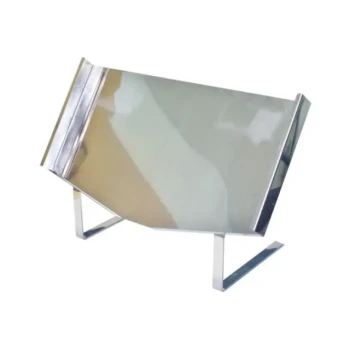
Elevated hive stands function as a crucial defensive infrastructure in commercial beekeeping operations. Their primary role is to create a physical separation between the hive and the soil, serving as a barrier against ground-dwelling pests and predators that would otherwise disrupt or destroy the colony.
Core Takeaway By raising the apiary's foundation, stands act as a passive defense mechanism that secures the colony's living space. This hardware prevents ground-level intrusions, significantly lowering the risk of colony loss or absconding due to environmental stress and predation.
The Mechanics of Hive Defense
Creating a Physical Barrier
The fundamental purpose of an elevated stand is to deny access to the hive entrance. Ground-dwelling intruders—ranging from insects to larger predators—are physically blocked from easily entering the colony.
By lifting the hive, you interrupt the direct path from the soil to the brood and honey stores. This simple elevation turns the hive into a fortress rather than an accessible target sitting on the forest or field floor.
Reducing Colony Absconding
Pest interference does more than just damage resources; it causes psychological stress to the colony. Constant harassment from intruders can force a colony to abandon the hive entirely, a behavior known as absconding.
Elevated stands minimize this interference. By maintaining a secure perimeter, the colony remains stable and focused on production rather than defense or relocation.
Protecting the Commercial Asset
Safeguarding Standardized Hardware
Commercial beekeeping relies on standardized production units. As noted in the supplementary context, the industry depends on high-precision hives and interchangeable frames to manage large-scale operations efficiently.
The elevated stand protects this investment. While the hive body provides the internal architecture for the bees, the stand ensures that this "hardware foundation" is not compromised by external biotic threats originating from the ground.
Ensuring Production Stability
In commercial environments, consistency is key. Whether utilizing stationary hives for local floral resources or migratory systems, the goal is to minimize physiological stress on the bee population.
Ground intrusions introduce unpredictability and stress. By using stands to eliminate this variable, producers can better rely on the stability of their colonies for honey production and pollination services.
Operational Considerations and Trade-offs
Infrastructure Costs vs. Risk Mitigation
Implementing elevated stands across a large-scale commercial operation requires a significant upfront investment in materials and labor. You must weigh this capital expenditure against the potential financial loss of replacing colonies destroyed by pests.
Maintenance and Stability
Introducing stands adds another layer of hardware that requires maintenance. Stands must be durable enough to support heavy, honey-laden hives without shifting or collapsing, which could be catastrophic. Poorly constructed stands can introduce instability, negating the protection they were meant to provide.
Making the Right Choice for Your Goal
When designing your apiary layout, consider your specific threats and operational scale.
- If your primary focus is Pest Exclusion: Prioritize stands with materials that are difficult for insects and rodents to climb, ensuring a distinct separation from ground vegetation.
- If your primary focus is Asset Longevity: View the stand as an insurance policy for your high-precision woodenware, preventing moisture damage and rot that often occurs with direct ground contact.
Elevated stands are not merely accessories; they are foundational security assets that stabilize the biological and mechanical investments of a commercial apiary.
Summary Table:
| Feature | Benefit for Commercial Apiaries | Impact on Production |
|---|---|---|
| Physical Separation | Blocks ground-dwelling pests and predators | Lower risk of colony loss |
| Moisture Reduction | Protects woodenware from rot and decay | Extends hardware lifespan |
| Stress Mitigation | Prevents colony absconding from harassment | Stabilizes honey output |
| Stable Foundation | Supports heavy, honey-laden standardized hives | Enhances operational efficiency |
Maximize Your Apiary’s Defense with HONESTBEE
At HONESTBEE, we understand that commercial beekeeping success starts with a secure foundation. We specialize in catering to commercial apiaries and distributors, providing a comprehensive wholesale range of high-precision beekeeping tools, hive-making machinery, and essential consumables.
From durable hive stands to advanced honey-filling machines and unique honey-themed cultural merchandise, we supply everything your business needs to scale efficiently. Our solutions are designed to protect your biological and mechanical investments, ensuring long-term stability and profitability.
Ready to upgrade your infrastructure? Contact us today to discuss your wholesale needs!
References
- Cooper Schouten, Mawe Bacchi Gonapa. History of Beekeeping in Papua New Guinea. DOI: 10.1080/0005772x.2020.1760070
This article is also based on technical information from HonestBee Knowledge Base .
Related Products
- Metal Hive Feet Bee Hive Stand for Ant Protection
- Professional Ant-Proof Beehive Stand with Integrated Moat for Beekeeping
- Metal Bee Hive Stand Bee Box Stand for Beekeeping
- Plastic Bee Hive Stand for Beekeeping
- Professional Galvanized Steel Frame Rest for Beehives
People Also Ask
- What are the benefits of elevating a bee hive with a stand or base? Protect Your Colony and Your Back
- How does a beehive stand protect against predators and pests? Essential Strategies for Colony Security
- How should the height of a beehive stand be determined? Find Your Ergonomic Sweet Spot
- What to stand a beehive on? The Best Foundation for a Healthy, Manageable Apiary
- What is the best base for a beehive? Choose the Right Stand for Colony Health