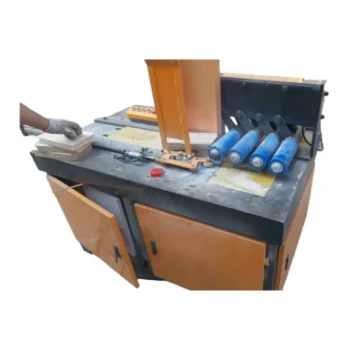
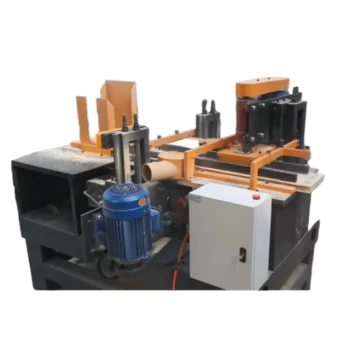
The significance lies in operational independence. By utilizing woodworking machinery for self-manufacturing and repair, commercial beekeepers achieve technical autonomy and significantly lower long-term hardware expenses. This capability allows for the customization of hive structures to specific local climates and operational needs, rather than relying exclusively on generic market products.
By mastering woodworking machinery, beekeepers transform hive acquisition from a passive expense into a strategic advantage. This approach bridges the gap between cost-effective self-sufficiency and the rigorous standardization required for industrial scalability.
Economic and Strategic Advantages
Achieving Technical Autonomy
Relying solely on external suppliers for hive bodies and frames creates vulnerability in the supply chain. By integrating woodworking machinery, beekeepers gain full control over their equipment inventory. This ensures that repairs can be conducted immediately without waiting for shipments, maintaining operational continuity.
Reducing Long-Term Costs
While machinery requires an upfront investment, the ability to self-manufacture drastically cuts the unit cost of beehives over time. You are paying for raw materials rather than the manufacturer's labor, markup, and shipping. Furthermore, the ability to repair damaged components extends the lifecycle of existing hardware, maximizing the return on investment.
Customization for Local Climates
Standardized market products are designed to be "good enough" for general conditions, but they may not be optimized for your specific environment. Self-manufacturing allows you to tweak designs to suit local micro-climates. You can adjust wall thickness for better insulation or modify ventilation inputs to handle specific humidity levels, ensuring the equipment is optimized for production.
The Role of Precision in Commercial Operations
Ensuring Component Interchangeability
While customization is a key benefit, commercial operations still require strict consistency within their own inventory. High-quality woodworking machinery enables the production of components with industrial-level precision. This ensures that frames, supers, and hive bodies are completely interchangeable, which is critical for efficiency during honey harvesting and migratory beekeeping.
Enhancing Hive Health and Sealing
Precision cutting minimizes gaps in the hive structure, leading to superior sealing properties. Tighter joints improve thermal insulation, helping the colony maintain stable internal temperatures during overwintering. A well-sealed hive also provides a robust physical defense against pests like hornets and reduces the mechanical stress on the colony.
Facilitating Mechanized Management
Modern beekeeping increasingly relies on mechanized handling and automated monitoring. Machinery ensures that hives meet the uniform specifications necessary for loading onto transport trucks or integrating with automatic honey extraction lines. This structural consistency is also vital for implementing precise monitoring protocols, such as physical heat treatments for Varroa mites.
Understanding the Trade-offs
Customization vs. Standardization
A common pitfall is over-customizing to the point where equipment becomes incompatible with standard industry tools. While you should tailor hives to your climate, ensure that critical dimensions—such as frame rests and external box dimensions—remain compatible with standard extractors and excluders.
The Investment Curve
Achieving the "technical autonomy" mentioned in the primary reference requires a learning curve and maintenance of the machinery itself. Beekeepers must balance the time spent manufacturing against the time needed for colony management. This model is most effective when manufacturing is done during the off-season to prepare for the active production months.
Making the Right Choice for Your Goal
To leverage woodworking machinery effectively, align your manufacturing strategy with your specific business objectives:
- If your primary focus is Cost Reduction: Prioritize the repair of existing woodenware and the manufacture of simple, high-volume components like lids and bottom boards to maximize material savings.
- If your primary focus is Scalability: Focus on setting strict dimensional standards to ensure every self-made component is instantly interchangeable with your existing stock to facilitate rapid field work.
- If your primary focus is Colony Health: Utilize your machinery to create thicker hive walls or specialized ventilation systems that offer better thermal regulation than standard commercial hives.
True efficiency in commercial beekeeping comes from having the tools to adapt your hardware to your environment, rather than forcing your colony to adapt to the hardware.
Summary Table:
| Strategic Factor | Benefit of Self-Manufacturing | Impact on Commercial Operations |
|---|---|---|
| Cost Control | Elimination of labor markups & shipping fees | Drastically lower long-term unit costs and ROI |
| Supply Chain | Technical autonomy and immediate repairs | Operational continuity without supplier delays |
| Customization | Climate-specific wall thickness & ventilation | Enhanced colony survival and thermal insulation |
| Precision | Strict component interchangeability | Seamless integration with automated extraction lines |
| Durability | High-quality sealing and tighter joints | Better defense against pests and environmental stress |
Revolutionize Your Beekeeping Operation with HONESTBEE
Transition from passive purchasing to strategic manufacturing with HONESTBEE. As a premier provider for commercial apiaries and distributors, we supply the full spectrum of beekeeping tools and industrial machinery—from precision hive-making equipment to automated honey-filling lines.
By partnering with us, you gain more than just equipment; you gain the technical autonomy to lower costs, customize your hardware for local climates, and ensure the industrial scalability of your business. Whether you need specialized hardware or essential industry consumables, our comprehensive wholesale offering is designed to enhance your efficiency.
Ready to scale your production? Contact our expert team today to find the perfect machinery solutions for your commercial success.
References
- Agnès Fortier, Pierre Alphandéry. L’autonomie entre marché, rapport à la nature et production de soi. Approche sociologique des pratiques apicoles. DOI: 10.4000/developpementdurable.14580
This article is also based on technical information from HonestBee Knowledge Base .
Related Products
- Manual Beeswax Comb Foundation Machine Wax Foundation Mill Embossing Machine
- Fully Automatic Beeswax Embossing Machine Foundation Mill
- Manual Beeswax Flat Sheet Machine for Beeswax Processing
- Economy Manual Beeswax Embossing Mill Wax Foundation Machine Roller
- Electric Beeswax Flat Sheet Machine with Operating Tray for Wax Processing
People Also Ask
- What are the primary technical challenges faced by beeswax foundation production machinery? Tackling Lipophilic Residues
- What are the advantages of implementing a pulley and belt drive system in beeswax foundation machinery? Master Quality.
- What role does a foundation machine play in the recycling and resource utilization of beeswax within an apiary?
- Why is the introduction of a beeswax foundation machine considered an important step in improving honey yields?
- How do beeswax foundation machines facilitate the internal recycling of beeswax? Build a Self-Sustaining Apiary