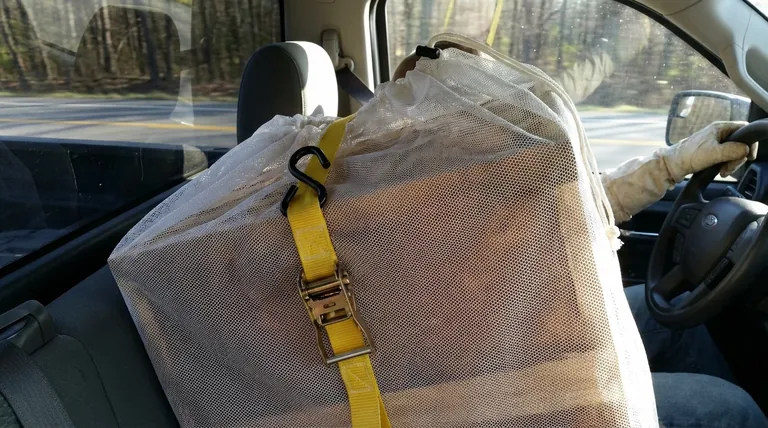
It’s a familiar scene for any beekeeper. You're driving, a new nucleus colony secured in the back. The low, steady hum is reassuring. Then, a single, high-pitched buzz slices the air near your ear.
In that instant, your focus shatters. Adrenaline spikes. Is it just one? Are there more? This isn't merely an annoyance; it's the symptom of a systemic failure. The container you trust to hold thousands of agitated insects has a flaw. And at 60 miles per hour, one flaw is all it takes.
The Psychology of a Boxed Swarm
We often think of bees "leaking" from a nucleus box. This misframes the problem. From the bees' perspective, they are not passively leaking. They are actively escaping.
The vibration of the vehicle, the sudden darkness, and the unfamiliar motion are intense stressors. A colony's instinct under threat is to investigate and secure its environment or find a way out. They become relentless, exploratory engines, probing every millimeter of their confinement for an exit.
What we see as a simple transport box, they experience as a compromised space under duress. Their escape is not an accident; it's a biological imperative.
An Inevitable Flaw in a Temporary System
The core issue is that a nucleus hive box—whether cardboard, wood, or plastic—is designed as a temporary home, not a hermetically sealed transport vessel. Its primary function is to facilitate colony development, not to be a fortress on wheels.
Designed for Housing, Not for Transit
Nuc boxes are built for function and economy. This means they have inherent gaps.
- Seams and Corners: Tiny crevices where panels meet.
- Ventilation Holes: Essential for air, but also potential exits.
- Entrance Closures: Often imperfect seals.
To a human eye, the box looks secure. To a determined bee, it’s a puzzle with multiple solutions.
The Cost of a Single Defect
The danger of a single escaped bee isn't just the distraction. It represents a single point of failure in your transport system. If one bee can get out, more can follow.
The risks escalate quickly:
- Driver Safety: A bee inside a moving vehicle creates a hazardous distraction, risking an accident.
- Colony Integrity: Escaped bees are lost bees. If the queen is among them, the entire nucleus colony is compromised, representing a total loss.
The Engineering Elegance of Secondary Containment
The solution isn't to build an impossibly perfect nuc box. It's to add a layer of redundancy. This is the simple genius of the Nuc Mesh Transport Bag. It accepts the inherent flaws of the primary container and neutralizes the risk with a secondary system.
Solving for the Right Problem: Ventilation
The most obvious DIY solution—a plastic garbage bag—is also the most dangerous. It traps heat and moisture, quickly creating an environment that can overheat and kill the colony.
The Nuc Mesh Bag solves the right problem. It provides secure containment while allowing for critical airflow. The durable, breathable mesh ensures the colony remains at a stable temperature, turning a high-risk situation into a safe and controlled process.
Designing for Human Factors: Simplicity
When handling a live hive, complexity is the enemy. Fumbling with tape and straps while wearing gloves increases the chance of error.
The mesh bag is designed for confidence and speed. It slides easily over the entire nuc box, and a simple cinch cord pulls it tight. The task is done in seconds. This isn't just about convenience; it’s about reducing the opportunity for mistakes during a critical procedure.
A Professional Framework for Risk Mitigation
While incredibly effective, the mesh bag is a tool. And like any professional tool, understanding its application and limits is key to its success. It’s not a magic bullet, but a component of a secure transport protocol.
- It's a containment system, not a structural one. Your nuc box should still be properly assembled and the entrance secured as well as possible.
- It's designed for single nucs. For commercial operations moving multiple colonies, each nuc requires its own bag to ensure containment and airflow.
- Inspect before use. The mesh is durable, but a quick check for tears or damage ensures its integrity before you enclose a colony.
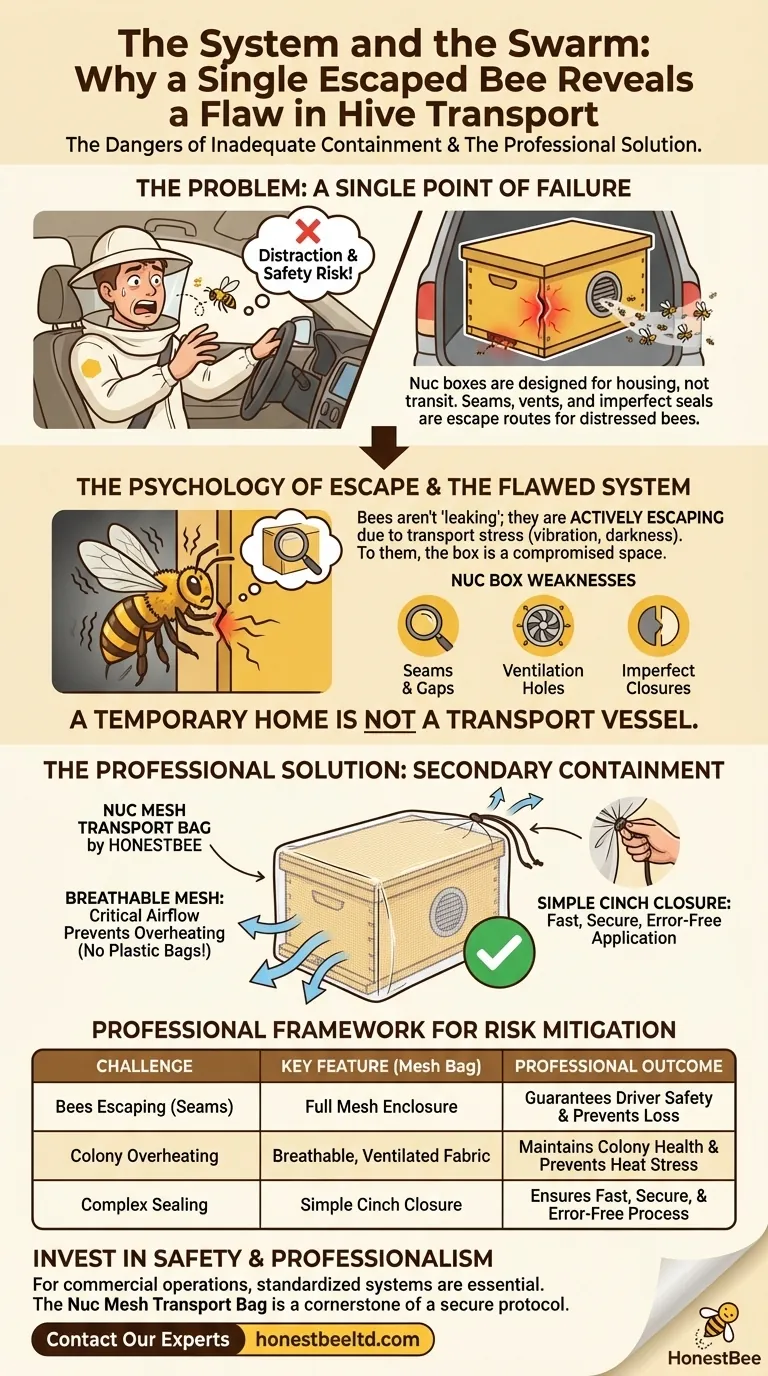
The following table breaks down the problem-solution-outcome framework:
| Challenge | Key Feature | Professional Outcome |
|---|---|---|
| Bees escaping through box seams | Full Mesh Enclosure | Guarantees driver safety and prevents bee loss. |
| Colony overheating during transit | Breathable, Ventilated Fabric | Maintains colony health and prevents heat stress. |
| Complex, slow, or unreliable sealing | Simple Cinch Closure | Ensures a fast, secure, and error-free process. |
For commercial apiaries and distributors, where efficiency, repeatability, and safety are non-negotiable, standardized systems are the bedrock of a successful operation. The Nuc Mesh Transport Bag, supplied by HONESTBEE, is an essential component of that system.
Investing in the right containment protocol is an investment in the safety of your drivers, the viability of your colonies, and the professionalism of your brand. Contact Our Experts
Visual Guide
Related Products
- 5 Frame Wooden Nuc Box for Beekeeping
- Automatic Heat Preservation 6 Frame Pro Nuc Box for Honey Bee Queen Mating
- 4 Frame Plastic Nuc Boxes for Beekeeping Bee Nuc Box
- Steel Round Disc Entrance Reducer for Flexzion Bee Hive Nuc Box Gate
- Styrofoam Mini Mating Nuc Box with Frames Feeder Styrofoam Bee Hives 3 Frame Nuc Box
Related Articles
- How Smaller Nuc Box Frames Improve Brood Health Through Thermal Regulation
- The Thermodynamics of a New Colony: Why a Smaller Nuc Box Is a Stronger Start
- Architecting Royalty: The Nuc Box as a Queen's Crucible
- How to Successfully Requeen Hives Using the 5-Frame Nuc Method: A Beekeeper’s Guide
- Designing for Instinct: Why the Nuc Box is the Perfect Swarm Trap





